You are likely a suitable hair transplant candidate if you have stable, patterned hair loss, a healthy donor zone with adequate density, and no significant medical or psychological contraindications. Those three factors, assessed together, are what clinicians weigh at consultation. According to StatPearls, ideal candidates present with stable patterned loss, a healthy scalp, and sufficient donor density — and scarring alopecias or active inflammatory disease are contraindications that typically rule surgery out.
If you are unsure whether you qualify, the most common reasons patients are declined are:
- Active scarring (cicatricial) alopecia or untreated inflammatory scalp disease
- Uncontrolled systemic illness such as poorly managed diabetes
- Severe psychological contraindications, particularly body dysmorphic disorder (BDD)
- Inadequate donor hair to cover the recipient area meaningfully
If any of these apply to you, the right next step is not to seek a quick online alternative. Speak to a dermatologist or trichologist first, stabilise the underlying condition, and then revisit surgical options with a qualified hair-restoration specialist.
Key takeaways
A hair transplant is most likely to succeed when candidacy is assessed thoroughly, donor supply is planned conservatively, and medical therapy supports the surgical result long term.
| Point | Details |
|---|---|
| Three decisive factors | Stable patterned loss, adequate donor density, and no significant medical or psychological contraindications determine candidacy. |
| Consultation is the key step | A thorough assessment including scalp exam, trichoscopy, and donor density measurement is what clinically confirms suitability. |
| NHS funding is very limited | The NHS classifies hair transplants for androgenetic alopecia as cosmetic; an IFR may apply only in exceptional cases such as trauma or burns. |
| Graft counts vary widely | Illustrative ranges run from 800–1,200 grafts for a small restoration to 3,000 or more for advanced cases; donor supply is finite. |
| Clinicgroup’s role | Clinicgroup connects UK patients with verified clinics in Albania and Dubai, handling clinic matching, travel logistics, and aftercare. |
Table of Contents
- Who makes a good hair transplant candidate?
- What happens at the consultation — how clinics decide
- Medical and psychological contraindications to be aware of
- FUE, DHI, and FUT: how does technique affect who is suitable?
- What to expect: procedure steps and recovery timeline
- How many grafts do you need, and what density is realistic?
- Costs and what the NHS will fund in the UK
- What to ask at consultation and clinic red flags
- How Clinicgroup helps UK patients find verified hair-transplant clinics
- Sources
- FAQ
Who makes a good hair transplant candidate?
The qualities of a strong hair transplant candidate come down to biology, timing, and realistic expectations. Clinical reviews confirm that careful candidate selection, perioperative medical optimisation, and clear counselling are the foundations of safe, satisfying outcomes.
Age and timing
Most surgeons prefer to operate on patients in their mid-20s or older. The reason is straightforward: hair loss in younger patients is often still progressing, and transplanting into an unstable pattern risks a result that looks unnatural within a few years as surrounding native hair continues to thin. ISHRS FUE guidelines specifically recommend caution for patients under approximately 25 years because future progression is unpredictable. That said, age alone is not disqualifying — a 22-year-old with documented stability and a conservative plan may be a reasonable candidate, while a 35-year-old with rapidly progressing diffuse loss may not be.
Pattern and stability of loss
Androgenetic alopecia (male or female pattern baldness) is the most common indication. What matters most is stability: loss that has not changed significantly over 12 months or more is far easier to plan around. Surgeons use the Norwood scale for men and the Ludwig scale for women to map the extent of loss and project future progression. A patient at Norwood 3 with stable loss for an extended period is in a very different position from a patient at Norwood 2 who has lost significant ground in the past six months.
Donor zone availability
The donor area — typically the occipital and temporal scalp — must contain enough follicular units to cover the recipient zone without leaving visible thinning behind. StatPearls notes that clinicians measure occipital donor densities in follicular units per cm² to estimate the maximum safe harvest. Hair calibre matters too: coarser, wavier hair provides better visual coverage per graft than fine, straight hair against a light scalp. A patient with high-density, coarse hair can achieve strong coverage with fewer grafts than someone with fine, low-density hair.
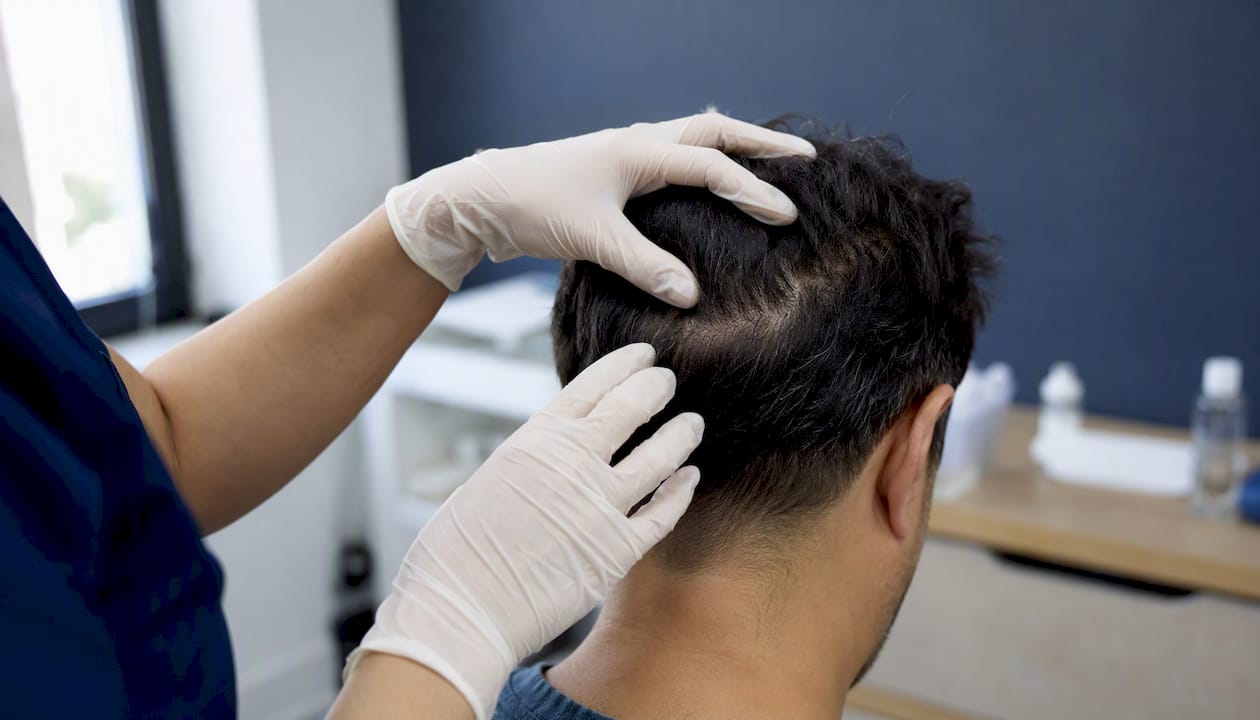
Consider two contrasting scenarios. A 28-year-old man with a stable Norwood 3 recession, good occipital density, and coarse dark hair is a strong candidate for a single session restoring the frontal zone. A 24-year-old with a Norwood 2 pattern that has progressed noticeably over 18 months and fine, sparse donor hair is better served by medical therapy first, with surgery deferred until stability is confirmed.
What happens at the consultation — how clinics decide
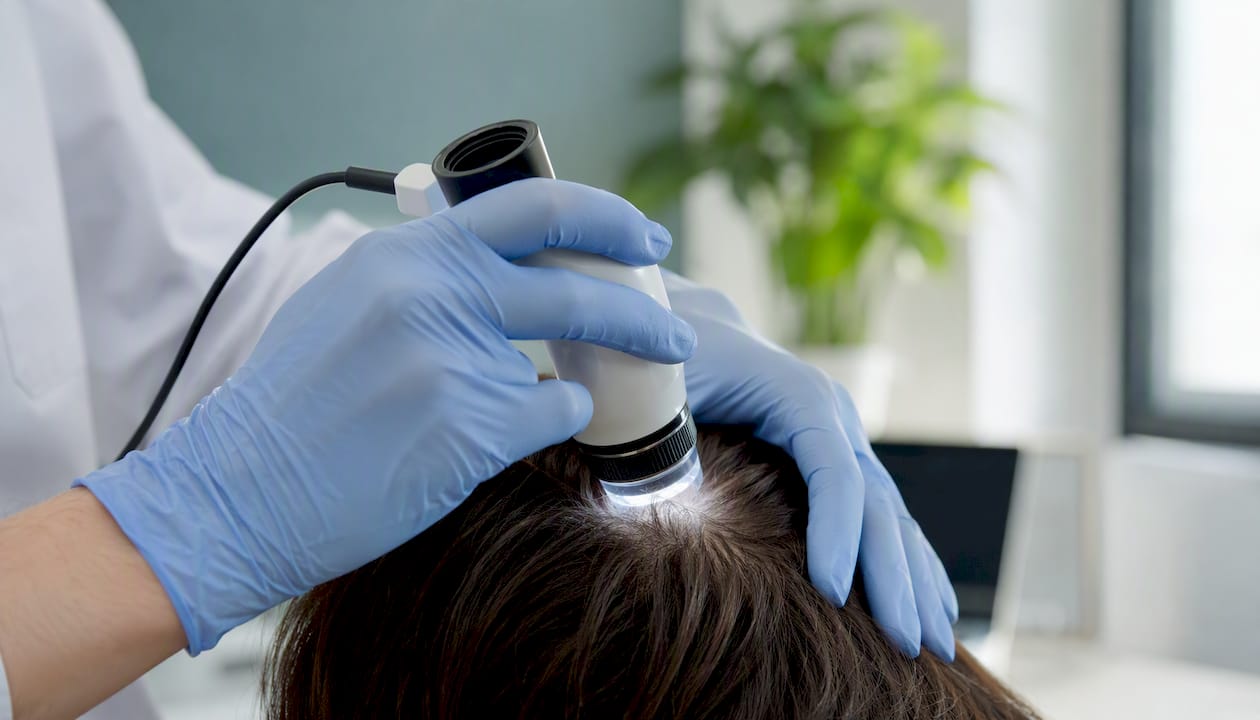
The consultation is the decisive step. A thorough assessment, not a sales conversation, is what separates a responsible clinic from one you should walk away from. As the Indian Journal of Plastic Surgery review notes, a surgeon who takes time to explain donor limits and decline unsuitable patients is demonstrating quality care.
The assessment sequence
- Medical and hair history — duration and pattern of loss, family history, prior treatments (medical or surgical), and any relevant systemic conditions.
- Medication review — current prescriptions, supplements, and over-the-counter products, particularly anticoagulants, immunosuppressants, and finasteride or minoxidil.
- Scalp examination — visual and tactile assessment of the recipient and donor zones, checking for inflammation, scarring, or signs of active disease.
- Trichoscopy or dermoscopy — handheld or video-assisted magnification to assess miniaturisation (the progressive thinning of individual hair shafts that signals ongoing androgenetic alopecia) and to detect early scarring changes.
- Donor density measurement — using a handheld densitometer or folliscope to count follicular units per cm² and estimate the safe harvest volume.
- Scalp biopsy (when indicated) — if the diagnosis is unclear or scarring alopecia is suspected, a small biopsy provides histological confirmation before any surgical planning proceeds.
Finasteride is FDA-indicated for men only. Women who are or may become pregnant must not handle crushed or broken finasteride tablets, due to the risk of harm to a male fetus. It can also cause sexual side effects (reduced libido, erectile dysfunction) in a minority of men, which usually resolve after stopping treatment. Discuss these risks with a physician before starting.
What to bring to your consultation
- A written summary of your medical history and any diagnosed conditions
- A full list of current medications and supplements
- Photographs showing your hairline at different stages over the past two to five years
- Notes on any prior hair treatments, including PRP, laser, or previous transplant sessions
- Questions prepared in advance (see the checklist further below)
Medical and psychological contraindications to be aware of
Some conditions make a hair transplant unsafe, unlikely to succeed, or inadvisable until they are addressed. Understanding these protects you from a poor outcome.
Absolute contraindications
- Active cicatricial (scarring) alopecia — conditions such as lichen planopilaris or frontal fibrosing alopecia destroy follicles and can cause transplanted grafts to fail; research on scarring alopecias suggests waiting 2–5 years of confirmed disease stability before considering surgery, and even then outcomes require conservative counselling
- Untreated inflammatory scalp disease (for example active seborrhoeic dermatitis or psoriasis affecting the donor or recipient zone)
- Uncontrolled systemic illness — poorly managed diabetes, active autoimmune disorders, or significant cardiovascular disease that increases anaesthetic or wound-healing risk
- Active scalp infection at the time of surgery
Psychological contraindications
- Body dysmorphic disorder (BDD) — patients with BDD often have unrealistic perceptions of their appearance and are unlikely to be satisfied with any surgical outcome; mental-health screening is an ethical responsibility, not an optional extra
- Active trichotillomania — compulsive hair-pulling behaviour must be in remission before transplantation is considered
Relative contraindications
These do not automatically rule out surgery but require careful discussion and often a period of stabilisation:
- Age under 25 with unstable or rapidly progressing loss
- Poor donor density that cannot adequately cover the recipient area
- Diffuse unpatterned alopecia (DUPA), where loss affects the donor zone itself
- Heavy smoking, which impairs wound healing and graft survival
- Certain medications (for example high-dose anticoagulants) that may need temporary adjustment under medical supervision
Medical stabilisation — typically 6–12 months on finasteride and/or minoxidil — can shift some patients from relative contraindication to suitable candidate by reducing miniaturisation and confirming stability. Some centres recommend 12 months for greater confidence.
Pro Tip: If a surgeon declines you, resist the temptation to book immediately with the next clinic you find online. Seek a second opinion from a qualified hair-restoration specialist, ideally one affiliated with the International Society of Hair Restoration Surgery (ISHRS), who can confirm whether the refusal was clinically sound or overly conservative.
FUE, DHI, and FUT: how does technique affect who is suitable?
Technique rarely creates candidacy where biology fails. If your donor supply is insufficient or your scalp disease is active, no surgical method changes that. What technique does affect is scarring profile, harvest pattern, donor-zone planning, and the number of grafts achievable per session.
- FUE (Follicular Unit Extraction) — individual follicular units are extracted one by one using a small punch device. It leaves no linear scar, suits patients who wear their hair short, and allows precise targeting of the donor zone. The trade-off is a slightly lower graft yield per session compared with FUT in some hands, and the risk of overharvesting if the safe donor area is not mapped carefully. For a detailed comparison of FUE vs DHI, Clinicgroup’s guide covers the procedural differences in depth.
- FUT (Follicular Unit Transplantation / strip) — a strip of scalp is excised from the donor zone, dissected into individual grafts, and implanted. It leaves a linear scar but can yield a high graft count in a single session, making it useful for patients needing large restorations who do not plan to wear very short hair.
- DHI (Direct Hair Implantation) — a variation of FUE in which grafts are implanted directly using a Choi pen without pre-made recipient sites. It suits patients seeking high-density placement in smaller areas and can be preferable for patients with existing hair in the recipient zone, as it minimises trauma to surrounding follicles. Clinicgroup’s complete DHI guide covers the procedure and patient journey in detail.
Patients with afro-textured hair require a surgeon experienced with curly follicles, which curve beneath the scalp surface and carry a higher transection risk during FUE extraction. Technique selection in this group demands specialist assessment.
For advanced Norwood 5–7 cases, multi-stage planning combining FUT and FUE, or incorporating body-hair harvest, can expand graft supply — but this changes the candidacy conversation significantly and typically requires multiple sessions.
What to expect: procedure steps and recovery timeline
Recovery from a hair transplant is staged. Short-term wound healing takes days to weeks; the visible growth you are hoping for takes considerably longer.
| Timeframe | What happens | Typical care |
|---|---|---|
| — | Grafts placed; scalp swollen and crusted; mild discomfort | Sleep at 45°, avoid touching grafts, gentle saline spray as directed |
| Week 2 and beyond | Crusting resolves; shock loss begins (transplanted and some native hair sheds) | Gentle washing resumes; avoid strenuous exercise for 2–4 weeks |
| Month 3–6 | New hair shafts emerge; texture initially fine and irregular | Continue medical therapy (finasteride/minoxidil) if prescribed |
| Month 9 and beyond | Density increases noticeably; hair thickens and matures | Follow-up assessment; discuss second session if planned |
| Month 12–18 | Final density reached; full assessment of result | Ongoing medical therapy to protect non-transplanted hair |
Common side effects and when to contact your clinic
- Shock loss (temporary shedding of transplanted and surrounding hair) — expected and usually resolves
- Scalp swelling, particularly around the forehead, in the first 3–5 days
- Numbness or reduced sensation in the donor or recipient zone, typically temporary
- Crusting and mild itching during the healing phase
- Infection — uncommon but requires prompt attention; contact your clinic if you notice increasing redness, warmth, or discharge
Practical recovery notes for international patients
Flying within the first few days post-procedure is generally not advised; most clinics recommend staying in the destination city for at least 5–7 days. Strenuous activity, swimming, and direct sun exposure should be avoided for 4 weeks. If you are on finasteride or minoxidil, do not stop without medical advice — discontinuation can accelerate the loss you are trying to protect.
How many grafts do you need, and what density is realistic?
Graft needs depend on the size of the recipient area, donor density, and hair characteristics. A single number applied to every patient is misleading, and surgeons who quote a graft count before examining your scalp in person should be treated with caution.
Illustrative planning ranges (not guarantees) give a useful frame:
- Small forelock or hairline refinement: approximately 800–1,200 grafts
- Moderate frontal restoration (Norwood 3–4): approximately 1,500–2,500 grafts
- Large restoration (Norwood 5–6): 3,000 grafts or more, often across multiple sessions
Factors that limit achievable density
- Donor density measured in follicular units per cm² — lower baseline density means fewer grafts available for harvest without visible thinning in the donor zone
- Hair calibre: fine hair requires more grafts to achieve the same visual coverage as coarser hair
- Contrast between hair colour and scalp tone — high contrast (dark hair, light scalp) makes thinning more visible and requires denser placement
- Prior harvesting: if you have had a previous transplant, the remaining safe donor area is reduced
- Safe donor area limits: overharvesting causes permanent visible thinning that is difficult to reverse, so expert surgeons plan conservatively
Patient expectations often exceed what a single session can deliver. StatPearls notes that surgeons focus on strategic framing and placement rather than attempting to restore teenage density. Donor supply is finite and should be treated as a lifetime resource, as clinical guidance consistently emphasises. Medical therapy such as finasteride and topical minoxidil plays an important role in protecting non-transplanted hair and preserving the surgical result long term.
Costs and what the NHS will fund in the UK
For the vast majority of UK patients, a hair transplant is a self-funded procedure. The NHS classifies hair transplantation for androgenetic alopecia as cosmetic and does not routinely fund it. NHS Scotland’s referral protocol states explicitly that grafting for routine male or female pattern baldness is not routinely provided, and referrals are considered only where specific criteria apply, such as trauma or congenital absence of hair.
Across England, regional NHS policy documents similarly classify hair transplants for androgenetic alopecia as cosmetic and set out local rules for wigs, hairpieces, and exceptional funding requests.
What an Individual Funding Request (IFR) covers
An IFR may be considered in genuinely exceptional circumstances — for example, hair loss resulting from burns, trauma, or a medical treatment such as chemotherapy where psychological impact is severe and documented. The threshold is high, and approval is not guaranteed. Patients pursuing an IFR need a referring clinician to make the case to their Integrated Care Board (ICB).
Cost considerations for self-funding patients
- Graft-based pricing is common; always ask for a total itemised quote, not just a per-graft figure
- Confirm what is included: surgeon fee, clinic facility fee, anaesthesia, post-operative medications, and follow-up appointments
- For international patients, factor in travel, accommodation, and any aftercare consultations on return to the UK
- Ask explicitly about revision and refund policies before signing any agreement
Pro Tip: Always request a written, itemised quote. A quote that bundles everything into a single figure makes it impossible to compare clinics fairly or to understand what aftercare is actually included.
What to ask at consultation and clinic red flags
A good consultation is diagnostic, not a sales pitch. The surgeon should be gathering information, not closing a deal. Use the checklist below during any in-person or video consultation.
Questions to ask
- What are the surgeon’s qualifications, and are they a member of the ISHRS or a recognised national hair-restoration body?
- Will the surgeon personally perform the critical steps (extraction and implantation), or will technicians carry out the procedure unsupervised?
- What is the estimated graft count, and how was that figure calculated?
- What is the long-term plan if my hair loss continues to progress after surgery?
- What follow-up schedule is included, and what is the revision policy if results are unsatisfactory?
- Is medical therapy (finasteride, minoxidil) recommended alongside surgery, and for how long?
Red flags that should prompt caution
- Guaranteed results or promises of specific density outcomes
- Pressure to book or pay a deposit during the first consultation
- Unclear or bundled pricing with no itemised breakdown
- No written aftercare plan or post-operative instructions
- No discussion of medical alternatives or the option to defer surgery
- Technician-led procedures with minimal surgeon involvement
| Question | Why it matters |
|---|---|
| Who performs extraction and implantation? | Unsupervised technician-led surgery is a known quality risk |
| What happens if loss progresses? | Confirms the clinic plans for your long-term result, not just today’s session |
| What is included in aftercare? | Identifies hidden costs and gaps in post-operative support |
| What is the revision policy? | Protects you if the result falls short of what was discussed |
How Clinicgroup helps UK patients find verified hair-transplant clinics
Clinicgroup connects UK patients with verified clinics in Albania and Dubai that operate to European standards of care. The platform’s role is to handle the complexity of international treatment so that patients can focus on the clinical decision.
- Clinic matching — Clinicgroup identifies verified partner clinics whose specialists hold recognised qualifications and whose facilities meet European clinical standards
- Verified specialists — board-certified surgeons with documented experience in FUE, DHI, and related procedures
- Travel and accommodation support — partner hotels, airport transfers, and itinerary planning are coordinated as part of the patient journey
- Packaged aftercare — post-operative follow-up is built into the treatment package, not treated as an optional extra
- Second-opinion facilitation — patients who are uncertain about a diagnosis or a proposed treatment plan can access a second clinical opinion through the platform
Clinicgroup does not make medical guarantees or promise specific outcomes. What it does offer is a structured, transparent pathway to clinics that have been vetted for quality, safety, and patient communication. For UK patients researching hair transplant treatment in Albania, the platform provides clinic profiles, verified reviews, and direct access to the booking process.
A patient-first perspective from Clinicgroup
Safety and realistic expectations are the two principles that should govern every hair-transplant decision. A procedure performed on the wrong candidate, at the wrong time, or by an unverified surgeon can cause permanent donor-zone damage and lasting dissatisfaction. The consultation checklist in this guide exists precisely because the quality of that first clinical conversation predicts the quality of everything that follows.
Clinicgroup’s view is that medical therapy and surgery are complementary, not competing. Many patients benefit from a period of stabilisation on finasteride or minoxidil before committing to surgery, and some find that medical therapy alone delivers sufficient improvement to defer the decision indefinitely. Shared decision-making, with a surgeon who explains donor limits honestly and declines unsuitable patients when appropriate, is the standard every patient deserves.
Ready to find a verified hair-transplant clinic?
UK patients considering a hair transplant abroad often find that the cost savings are significant without any compromise on clinical standards. Clinicgroup’s verified clinics in Albania and Dubai offer FUE and DHI procedures performed by board-certified specialists, with transparent pricing, travel support, and structured aftercare included.
The process is straightforward: Clinicgroup matches you with a suitable clinic based on your specific needs, arranges a consultation (in person or by video), coordinates travel and accommodation, and supports your aftercare on return to the UK. Savings compared with UK private clinic pricing are typically substantial, and every partner clinic has been independently verified for quality and safety.
To take the next step, visit Clinicgroup’s hair transplant treatment page or contact the team directly to discuss clinic matching and availability.
Sources
The following sources were used to prepare this guide. Discuss any specific clinical questions with your treating clinician.
- Hair Transplantation - StatPearls - NCBI Bookshelf
- Hair Transplant: Patient Candidacy, Medical Optimization, and Surgical Considerations - PubMed
- Thieme E-Journals - Indian Journal of Plastic Surgery / Full Text
- July 15, 2019 FUE Guidelines
- Hair transplantation - NHS Scotland referral protocol
- BSW ICB CP030 Wigs & Hairpieces (NHS policy document)
This article is general information, not a substitute for advice from a qualified doctor. Consult a qualified healthcare professional about your own circumstances before acting on anything here.
FAQ
Who is a suitable candidate for a hair transplant?
A suitable candidate typically has stable, patterned hair loss (androgenetic alopecia), adequate donor-zone density, and no active scalp disease or significant medical contraindications. Age, hair calibre, and psychological suitability are also assessed at consultation.
How many grafts are needed for a full frontal restoration?
Graft requirements vary, but a moderate frontal restoration at Norwood 3–4 typically requires approximately 1,500–2,500 grafts. Larger restorations at Norwood 5–6 may require 3,000 or more, often across multiple sessions.
Will the NHS fund a hair transplant in the UK?
Not for androgenetic alopecia. NHS policy classifies this as cosmetic, and funding is reserved for exceptional cases such as hair loss caused by trauma, burns, or congenital absence. An Individual Funding Request may be considered in genuinely exceptional circumstances.
What disqualifies someone from having a hair transplant?
Active scarring alopecia, uncontrolled systemic illness, active scalp infection, body dysmorphic disorder, and inadequate donor hair are the most common disqualifying factors. Relative contraindications such as young age with unstable loss or poor donor density may be addressed through medical stabilisation before surgery is reconsidered.
How does Clinicgroup help UK patients access hair transplant surgery?
Clinicgroup matches UK patients with verified clinics in Albania and Dubai, coordinates travel and accommodation, and ensures structured aftercare is included in the treatment package. The platform does not make medical guarantees but provides a transparent, patient-first pathway to board-certified specialists.