TL;DR:
- Patients must thoroughly verify healthcare providers and confirm aftercare plans before booking treatments abroad. Proper preparation, including GP consultation and checking insurance, reduces risks and ensures safe outcomes. Careful planning and verification make international medical travel safer and more successful.
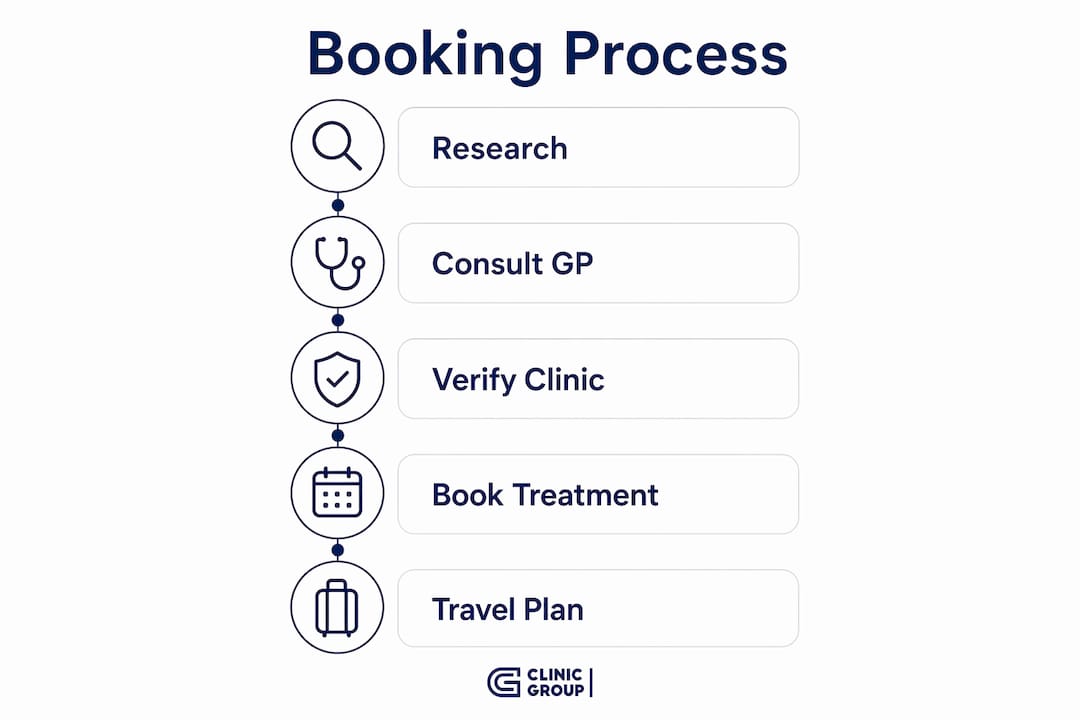
The international treatment booking process is the structured series of steps that enables patients to safely arrange and undergo medical or dental treatments abroad, from selecting a verified clinic to organising aftercare on return home. Over half a million British patients sought treatment abroad in 2024, a 50% increase since 2022. That figure reflects a clear shift in how UK patients approach healthcare. Getting the process right matters. Rushing it, or skipping key steps, can lead to complications, financial loss, and limited recourse. This guide covers every stage, from preparation through to recovery, so you can make informed decisions with confidence.
What preparations are essential before the international treatment booking process begins?
Preparation is the foundation of safe overseas healthcare bookings. Patients who skip this stage are far more likely to encounter problems during or after treatment.
Start with your GP. A consultation before you travel confirms you are medically fit for the procedure and gives you an accurate picture of your current health. Your GP can also provide a summary of your medical history in English, which overseas clinics will need before they can assess your suitability.

The NHS recommends scheduling travel health risk assessments at least 12 weeks before departure for medical travel. That window allows time to address any health concerns, complete required vaccinations, and review your fitness for both the procedure and the flight.
Before confirming any booking, work through this checklist:
- Consult your GP and obtain a written medical summary in English.
- Review your travel insurance carefully. Confirm it explicitly covers medical treatment abroad, not just emergency evacuation.
- Check FCDO travel advice for your destination. Travel insurance is often invalidated if you travel against FCDO advisories, leaving no coverage for treatment or trip disruptions.
- Research local healthcare infrastructure at your destination, including hospital facilities and emergency services.
- Assess your recovery needs and confirm you can meet them in the destination country before flying home.
Pro Tip: Request your medical records from your GP surgery at least four weeks before your planned travel date. NHS practices can take up to 30 days to process subject access requests.
How do you verify overseas clinics and surgeons before booking?
Verifying your provider is the single most important step in cross-border treatment arrangements. Many patients fail to check overseas surgeons’ credentials because many countries lack independent verification systems comparable to the UK’s General Medical Council (GMC) or General Dental Council (GDC). That gap places the responsibility squarely on you.
Follow these steps to assess any overseas provider:
- Check surgeon qualifications. Ask for proof of specialist training and registration with the relevant national medical authority. Compare this to GMC or GDC equivalents where possible.
- Verify clinic accreditation. Look for recognition from internationally respected bodies such as Joint Commission International (JCI) or equivalent European accreditation standards.
- Request a detailed treatment plan. Patients should ask clinics for written treatment plans, risk disclosures, post-operative recovery information, and aftercare policies before confirming any booking.
- Confirm English-speaking staff. Clear communication with your clinical team is non-negotiable. Misunderstandings about dosage, recovery instructions, or complications can have serious consequences.
- Read independent reviews. Look beyond the clinic’s own website. Patient forums, verified review platforms, and professional bodies provide more reliable accounts.
- Identify red flags. High-pressure sales tactics, vague pricing, and reluctance to share credentials are all warning signs. Walk away from any provider that cannot answer your questions clearly.
There is no central reporting body for malpractice complaints against surgeons abroad, as exists in the UK. That means your legal recourse after a poor outcome is limited. Thorough verification before booking is your primary protection.
Pro Tip: Ask the clinic to confirm in writing which surgeon will perform your procedure. Some facilities advertise senior specialists but assign less experienced practitioners on the day.
The table below outlines what to look for when comparing providers:
| Evaluation criterion | What to check |
|---|---|
| Surgeon credentials | Specialist registration with a recognised national medical authority |
| Clinic accreditation | JCI certification or equivalent European standard |
| Treatment transparency | Written plan, itemised costs, and risk disclosure provided upfront |
| Aftercare provision | Defined follow-up protocol, including remote consultation options |
| Communication | English-speaking clinical staff and a named patient coordinator |
What are the steps to book treatment and organise travel?
Once you have verified your provider, the medical travel process moves into the booking and logistics phase. This stage requires you to coordinate clinical, travel, and financial decisions simultaneously.
- Contact the clinic or a trusted facilitator. Clinicgroup connects patients with verified clinics in Albania and Dubai, handling appointment scheduling and clinic matching on your behalf.
- Confirm the treatment itinerary in writing. This should include the procedure date, the name of your surgeon, the facility address, and the full cost breakdown. Verbal agreements are not sufficient.
- Clarify payment terms. Understand what deposit is required, what the cancellation policy covers, and whether the quoted price includes all fees such as anaesthesia, consumables, and follow-up appointments.
- Book flights with flexibility in mind. Choose refundable or changeable tickets where possible. Factor in the recommended recovery period before flying, which varies by procedure.
- Arrange accommodation near the clinic. Recovery-appropriate accommodation reduces the risk of complications from unnecessary travel in the days immediately after treatment.
- Prepare your documentation pack. This should include your medical records, treatment plan, insurance documents, FCDO travel advice printout, and emergency contact details for both the clinic and your UK GP.
The table below outlines the key documents to prepare before departure:
| Document | Purpose |
|---|---|
| GP medical summary | Provides the overseas clinic with your full health background |
| Treatment plan (written) | Confirms agreed procedure, costs, and aftercare responsibilities |
| Travel insurance certificate | Proves coverage for medical treatment and potential complications |
| FCDO travel advice | Confirms your destination is safe and your insurance remains valid |
| Emergency contact list | Includes clinic, UK GP, insurer, and next of kin details |
For practical guidance on scheduling appointments abroad, Clinicgroup provides step-by-step support from first enquiry through to confirmed booking.
How should you plan for recovery and aftercare after treatment abroad?
Recovery planning is where many patients underestimate the complexity of international health service booking. The procedure itself is only part of the process. What happens afterwards determines your long-term outcome.
Key considerations for aftercare include:
- Understand your minimum recovery period before flying. This varies significantly by procedure. Dental implant placements typically require 48–72 hours before flying, while surgical procedures may require 7–14 days or longer. Confirm this with your surgeon in writing.
- Clarify aftercare responsibilities before you leave. Ask the clinic exactly what follow-up they provide, whether remotely or in person, and at what cost. Do not assume aftercare is included in your quoted price.
- Know the limits of NHS emergency cover. The NHS will treat genuine emergencies on return, but NHS costs for treating complications from elective surgery abroad ranged from £1.58 to £19,549 per patient in 2024 prices, depending on severity. Non-emergency corrective treatment is not automatically funded.
- Check your insurance for corrective treatment exclusions. Many private health insurance plans exclude corrective treatments related to procedures done abroad. Read the ‘foreign procedure’ clauses carefully before you travel.
- Arrange remote follow-up consultations. Many reputable clinics offer video consultations post-treatment. Confirm this is available and schedule your first follow-up before you fly home.
- Brief your UK GP on your return. Share your treatment plan and discharge notes so your GP can monitor your recovery and refer you appropriately if complications arise.
Pro Tip: Carry a printed copy of your treatment plan and discharge summary at all times during your return journey. UK A&E departments can treat you more effectively when they have your clinical records immediately to hand.
For a full overview of what to expect, the aftercare services guide from Clinicgroup covers NHS responsibilities, remote care options, and patient obligations in detail.
What common mistakes should you avoid in the booking process?
The most costly errors in overseas healthcare bookings are avoidable. They share a common cause: patients moving too quickly without completing due diligence.
- Rushing the verification stage. Booking a clinic based on price alone, without checking credentials or accreditation, is the most frequent mistake. Speed is not a virtue when your health is at stake.
- Ignoring FCDO travel advice. Travelling to a destination under an FCDO advisory invalidates most travel insurance policies. Check the FCDO website immediately before booking and again before departure.
- Underestimating recovery time. Booking a return flight too soon after a surgical procedure increases the risk of complications such as deep vein thrombosis (DVT) or wound infection. Always confirm the safe flying window with your surgeon.
- Failing to obtain records in English. Medical records issued in a foreign language are of limited use to UK clinicians treating complications. Request English-language documentation as a condition of booking.
- Misunderstanding NHS responsibilities. The NHS is not a safety net for elective procedures chosen abroad. Rushing bookings without verification or ignoring insurance restrictions are common errors that lead to complications and significant personal financial exposure.
- Not budgeting for corrective treatment. If something goes wrong, the cost of corrective procedures falls largely on you. Factor a contingency budget into your financial planning from the outset.
“Patients often assume that if something goes wrong abroad, the NHS will step in and cover everything. The reality is more complicated. Emergency care is available, but non-emergency corrective treatment is not automatically funded, and private insurance frequently excludes procedures performed overseas. Understanding this before you book is not optional. It is the foundation of responsible medical travel planning.”
Key takeaways
Safe and effective cross-border treatment arrangements require thorough preparation, verified providers, and a clear aftercare plan before a single booking is confirmed.
| Point | Details |
|---|---|
| Prepare at least 12 weeks ahead | Book a GP consultation and travel health risk assessment well before departure. |
| Verify every provider independently | Check surgeon credentials and clinic accreditation; no central international register exists. |
| Confirm aftercare in writing | Clarify who provides follow-up care, at what cost, and whether remote consultations are available. |
| Check insurance exclusions carefully | Many policies exclude corrective treatment for procedures performed abroad. |
| Never travel against FCDO advice | Doing so invalidates most travel insurance and leaves you without financial protection. |
What I have learned from working with patients on international bookings
The patients who have the best experiences abroad share one trait: they treat the booking process as seriously as the treatment itself. They ask hard questions, request documentation, and do not let price be the deciding factor.
What surprises many patients is how much of the risk sits in the planning phase, not the operating theatre. A poorly chosen clinic or an overlooked insurance clause can cause more long-term harm than the procedure itself. The clinical outcome is important, but the framework around it determines whether that outcome is sustainable.
At Clinicgroup, we see patients who have done their research and patients who have not. The difference in their experiences is stark. Those who arrive with verified providers, clear treatment plans, and confirmed aftercare arrangements recover with far less stress and far fewer complications. Those who book in haste, drawn by low prices and glossy websites, are the ones who call us from A&E departments asking what their options are.
My honest advice is this: take the time to book treatments safely. Use a facilitator with a verifiable track record. Ask for everything in writing. And never assume that a problem abroad will be someone else’s responsibility to fix when you get home.
— Clinic
How Clinicgroup supports your international treatment booking
Clinicgroup connects patients with board-certified specialists and accredited clinics in Albania and Dubai, covering treatments from dental implants and veneers to hair transplants, plastic surgery, and wellness programmes. Every clinic in the network meets European standards of care, with transparent pricing and no hidden fees. Clinicgroup handles clinic matching, travel logistics, partner hotel arrangements, and aftercare coordination, so patients have a single point of contact from first enquiry to full recovery. For patients considering cosmetic or surgical treatments abroad, the team provides personalised guidance and safe booking support. Contact Clinicgroup to discuss your treatment options and receive a clear, honest assessment of what your care abroad will involve.
FAQ
What is the international treatment booking process?
The international treatment booking process is the structured sequence of steps patients follow to arrange safe medical or dental treatment abroad, covering provider verification, logistics, and aftercare planning.
How far in advance should I start planning treatment abroad?
The NHS recommends completing travel health risk assessments at least 12 weeks before departure. Starting your research and provider verification at the same time gives you sufficient time to address any issues before committing to a booking.
Does the NHS cover complications from treatment abroad?
The NHS treats genuine emergencies on return, but non-emergency corrective treatment is not automatically funded. NHS costs for treating complications from elective surgery abroad ranged from £1.58 to £19,549 per patient in 2024 prices, depending on severity.
Will my travel insurance cover treatment abroad?
Standard travel insurance may cover emergency situations, but many policies exclude corrective treatments for procedures performed overseas. Check your policy for ‘foreign procedure’ clauses and confirm coverage before booking.
How do I verify an overseas surgeon’s qualifications?
Ask for written proof of specialist registration with the relevant national medical authority and check for clinic accreditation from a recognised body such as Joint Commission International. No central international register equivalent to the UK’s GMC exists, so personal due diligence is required.