A polished clinic profile is not proof of safe, accountable care. To understand how to find a verified clinic abroad, confirm the clinic’s identity, check the treating professionals’ credentials through independent registers, and obtain written details of who provides care, what follow-up is arranged and what insurance covers. Verification means looking for evidence, not relying on a reassuring label.
If you’re unsure which claims are supported by evidence, or who is responsible for your care once you travel, it’s sensible to pause before deciding. This guide provides a repeatable checklist to help you assess credentials, care arrangements and patient support, and to request clear written information before making a commitment.
It also explains the difference between a directory and the independent clinic responsible for treatment. Clinic Group connects UK and EU patients with partner clinics, while clinical decisions and care remain with the treating clinic. The guidance applies to treatments involving travel, but every patient’s needs and risks are different. This article is general information, not medical advice, and no treatment outcome can be guaranteed.
Key Takeaways
- Use a step-by-step checklist to learn how to find a verified clinic abroad, from confirming its identity to reviewing credentials and care arrangements.
- Compare clinics using evidence of clinical accountability, credentials and written plans, rather than relying on ratings alone.
- Before travelling, clarify who will provide follow-up care, how to contact the clinic and what your insurance covers.
- Understand how Clinic Group’s directory and coordination support can help with case review, clinic matching and a written plan.
- Consider an optional second opinion to help you assess the proposed treatment before making a decision.
What does it mean for a clinic abroad to be verified?
Verification means checking evidence about a clinic’s identity, relevant credentials and responsibility for care. It isn’t a guarantee that a clinic is right for you, that a particular treatment is suitable or that you’ll achieve a specific outcome. For eye care, checks should relate to the proposed procedure and the people who will assess and treat you.
A clinic listing identifies a provider; vetting records checks made about that provider; regulatory accreditation is a separate, formal recognition issued by an external body. These terms aren’t interchangeable. A listing or screening process can help you begin your research, but it doesn’t replace checking the evidence and discussing your individual needs with the treating clinic.
Medical tourism involves travelling for care, so it’s useful to understand both its potential benefits and risks. The Medical tourism overview provides wider context, but your decision should rest on details about the specific clinic, treatment and care arrangements.
What should a clinic’s verification cover?
Start by confirming the clinic’s legal identity and the name of the organisation that will provide treatment. A trading name, directory profile or patient coordinator may not be the same as the legal entity responsible for clinical care. Ask for the treating organisation’s full name and address in writing, then check that these details match across the clinic’s documents and communications. For example, established international dental clinics such as Implantološki centar Smile provide direct contact details and clear facility information, allowing prospective patients to verify credentials and discuss treatment plans before travelling.
Next, review current credentials relevant to the proposed eye treatment. Identify who issued each credential, what it covers and whether it applies to the clinic, the individual practitioner or a particular service. Where possible, check the information with the issuing body or the appropriate professional register in that country. A general claim about experience is less informative than evidence tied to the procedure you’re considering.
Is a directory listing the same as clinical accreditation?
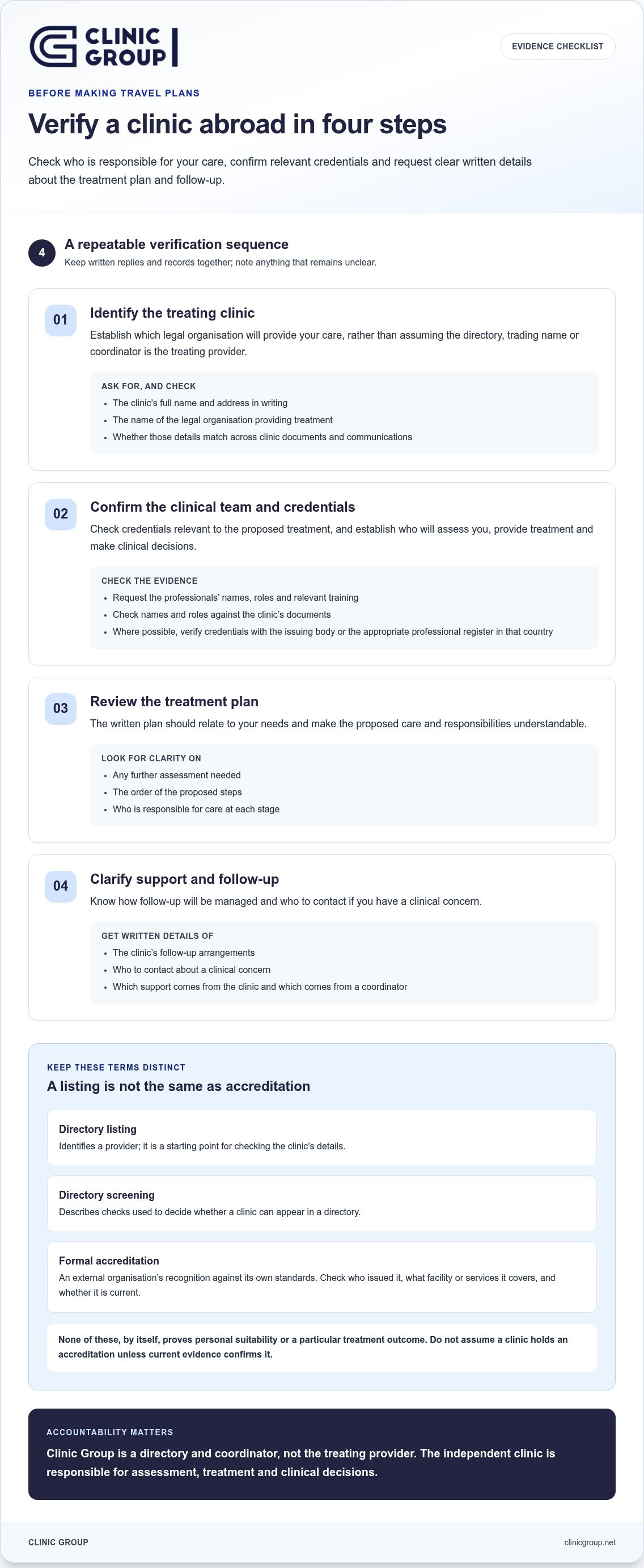
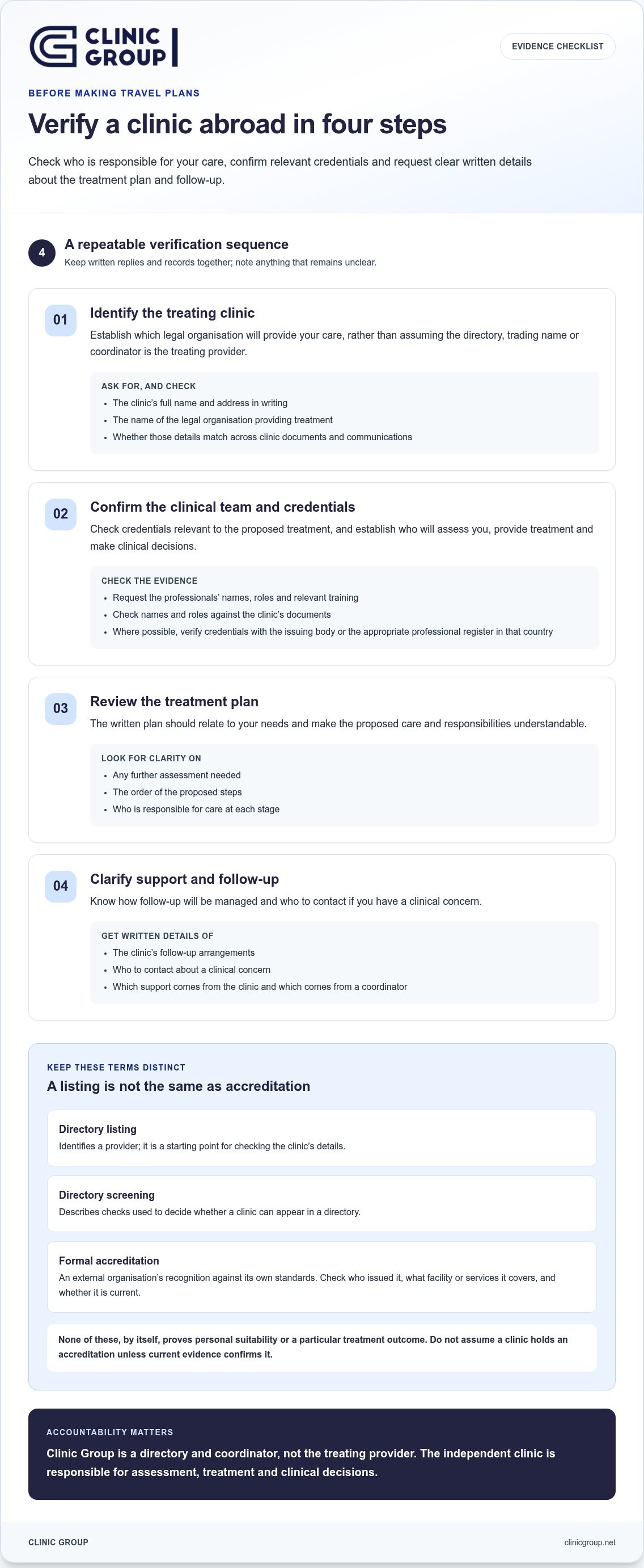
No. Directory screening and formal accreditation are different forms of evidence. Screening describes checks used to decide whether a clinic can appear in a directory; accreditation is granted by an external organisation against its own standards. Neither should be treated as proof of a particular result or personal suitability. Don’t assume a listed partner holds JCI or another accreditation unless current evidence confirms it.
Check the scope and validity of any accreditation claim, including which organisation and services it covers. If a certificate names a hospital group, for example, establish whether it applies to the specific facility where your care would take place. Clinic Group’s guide to what makes a clinic verified explains why evidence and accountability matter when assessing a listing.
For eye care, distinguish the platform that introduces or coordinates your enquiry from the independent clinic responsible for assessment, treatment and clinical decisions. Clinic Group is a directory and coordinator, not the treating provider. Its eye clinic directory includes Oculus Eye Clinic; a listing is a starting point for reviewing the clinic’s details, not a substitute for confirming treatment-specific credentials and accountability.
These distinctions make how to find a verified clinic abroad a practical evidence-checking task, rather than a decision based on a label or polished profile. The treating clinic should be identifiable, its relevant credentials traceable, and its responsibility for your care clear before you consider travelling.
How can you verify a clinic abroad step by step?
Turn your initial research into a documented check before making travel plans. Keep copies of the clinic’s replies and records, note any points that remain unclear, and make sure the person coordinating your enquiry is not mistaken for the clinician responsible for care.
Verification needs treatment-specific evidence and clear written answers about who will assess, treat and support you. Use this sequence to organise your checks:
- Identify the treating clinic. Record its full name and address, and establish which legal organisation will provide your eye care. If a directory or coordinator handles your enquiry, ask which independent clinic will assess and treat you.
- Confirm the clinical team. Obtain the names, roles and relevant training of the professionals involved, along with documentation that supports their stated experience. Ask who will assess you, who will carry out the proposed treatment, and who will make clinical decisions.
- Review the treatment plan. Check that the proposed care relates to your needs, and that the plan explains any further assessment, the order of proposed steps and the clinical responsibilities at each stage.
- Clarify support and follow-up. Find out how the clinic will manage follow-up, whom to contact with a clinical concern and what support is provided by the clinic rather than a coordinator. Keep these details with your treatment documents.
Which credentials and records should you check?
Request relevant records directly from the clinic and check that names and roles match across its documents. For any accreditation claimed, identify the issuing organisation, the services or facility it covers, and whether it is current. Don’t treat a general certificate or a directory profile as evidence of every practitioner’s qualifications. The guide to researching clinic credentials offers further guidance on assessing these records.
What should a written treatment plan include?
A useful plan sets out the proposed treatment, what assessment is needed before a decision is final, the expected sequence and the named clinical responsibilities. It should also make clear which details depend on an in-person examination. An online discussion can help organise your questions, but it cannot replace an assessment that the treating clinician considers necessary. Don’t assume a proposed plan is final until the clinic has assessed your individual circumstances.
Ask for an itemised written quote alongside the plan, so you can see what has been proposed and clarify any items you don’t understand. Keep the quote and plan together, and request written clarification if the documents use different treatment descriptions or name different organisations. Avoid relying on a verbal summary as the only record of what has been discussed.
Working through these steps gives you a repeatable way to judge how to find a verified clinic abroad without treating a listing as a substitute for evidence. To explore Clinic Group’s clinic directory, compare the information available with the questions in this checklist.
How can you compare clinics without relying on ratings alone?
A useful comparison focuses on evidence you can verify and answers you can understand. Ratings may help you learn about other patients’ experiences, but they can’t establish a clinician’s credentials, confirm who is accountable for care or predict your own outcome. Compare each clinic against the same criteria, and record gaps rather than filling them with assumptions.
Use this compact framework to assess the information side by side:
| What to compare | What clear evidence looks like | What to clarify |
|---|---|---|
| Clinical accountability | The independent clinic and treating organisation are named, with clinical roles explained. | Who assesses you, provides treatment and manages clinical follow-up? |
| Credentials | Relevant, treatment-specific records identify the holder and issuing body. | What does each credential cover, and is it current? |
| Written plan | The proposed care and assessment steps are set out in writing. | Which details depend on an in-person assessment? |
| After-care and support | Clinical follow-up is distinguished from practical coordination. | Who handles clinical concerns, communication and travel arrangements? |
Compare the quality of the explanations, not the confidence of the sales language. A specific answer that identifies a responsible clinic and explains a proposed assessment is more useful than a broad claim about quality. If one clinic’s information is incomplete, note what is missing and whether the response resolves the gap. Don’t treat a polished profile as a substitute for documented evidence.
Which comparison criteria matter before you decide?
For eye care, check whether each clinic explains who will assess and treat you, and whether its information relates to the procedure under consideration. Review the credentials and proposed follow-up as separate items. Also assess practical support: clear communication, translation arrangements and travel coordination may make planning easier, but they are not evidence of clinical quality and do not replace care from the treating clinic.
How should you interpret reviews and accreditation claims?
Reviews can offer context about patient experience, such as communication or appointment coordination. They don’t verify qualifications or prove that a treatment is suitable for you. Accreditation claims also need context: check the issuing organisation, the facility or service covered, and whether the evidence is current. A credential’s presence alone doesn’t establish that it applies to the specific eye care being discussed.
Keep your comparison balanced. One clinic may explain its process clearly whilst another provides more detail about follow-up; neither difference, on its own, establishes which treatment will produce a better result. The guide to comparing verified clinic options offers a broader framework for weighing evidence without relying on ratings alone.
This is a practical way to approach how to find a verified clinic abroad: compare accountability, relevant evidence and written arrangements, while keeping practical support in its proper place. For an overview of Clinic Group’s directory and partner clinics, browse the clinic directory and treatment information.
What should you confirm about after-care, travel and insurance?
Before arranging travel, get a clear picture of what happens after treatment and who is responsible at each stage. The independent treating clinic is responsible for clinical care; a directory or patient coordinator may help with practical arrangements, but that support does not replace clinical follow-up. Keep written answers together with your treatment plan so you can refer to them during your journey and after you return home.
How can you plan follow-up care before travelling?
Ask the treating clinic to set out its follow-up arrangements in writing. Clarify when reviews are planned, whether they take place in person or remotely, and who will respond if you have a concern. Record the appropriate contact route during your stay and after you return to the UK. If a clinic offers written warranty terms, read what they cover, any exclusions and how to raise a claim. A warranty is not a guarantee of a clinical result.
Plan for the possibility that you may need further advice or assessment after returning home. Don’t assume that another healthcare service will automatically provide corrective treatment for a complication following elective care abroad. Understand the treating clinic’s follow-up plan and your insurance position before booking, including what steps to take if you need clinical advice once home.
What travel support can and cannot tell you
Accommodation, transfers, translation and appointment coordination are practical arrangements, and what is provided depends on the relevant clinic arrangements. They can help you organise a trip, but they don’t establish whether treatment is clinically suitable or replace an assessment, treatment or after-care from the independent clinic. For eye care, keep the clinic’s clinical contact details separate from contacts for travel or coordination support.
Check your travel insurer’s policy before committing. Standard travel insurance may not cover planned elective treatment or complications related to it. Ask the insurer specifically about the treatment you’re considering, medical complications, changes to travel plans and any exclusions. If you’re considering eye care treatment options, check that the cover applies to your circumstances and obtain the insurer’s response in writing.
Use this checklist before booking:
- Obtain the treating clinic’s written plan, including assessment needs and named clinical responsibilities.
- Request an itemised written quote and clarify what each item covers.
- Save the follow-up schedule, clinical contact routes and any warranty terms offered by the clinic.
- Confirm insurance cover for elective treatment and possible complications directly with your insurer.
- Keep travel coordination details distinct from the clinic’s clinical contact information.
Clear arrangements won’t remove every uncertainty, but they help you understand who to contact and what support is planned. These checks are a practical part of how to find a verified clinic abroad, alongside reviewing credentials and the written treatment plan.
How can Clinic Group help you find a verified partner clinic?
Clinic Group is a medical-tourism directory and coordination platform that connects UK and EU patients with independent partner clinics. It can help you explore clinic options and organise the steps around an enquiry, while the selected clinic remains responsible for clinical assessment, treatment decisions and care. This distinction matters: coordination can make the process easier to follow, but it doesn’t replace advice from the treating clinical team.
For patients considering eye care, the journey can begin with a search for a relevant partner clinic and a free case review. The review helps clarify your needs and the information a clinic may require to consider your case. It isn’t a diagnosis or a substitute for an in-person assessment where one is needed.
What happens during a Clinic Group consultation?
During a consultation and case review, you can outline the treatment you’re considering and share relevant information for discussion. Clinic matching can then connect your enquiry with a suitable independent partner option. The treating clinic assesses your case and is responsible for deciding whether a proposed treatment is appropriate for you.
You can review the clinic’s written plan and quote, and an optional second opinion may help you consider the proposal from another clinical perspective. Read the documents carefully and direct clinical questions to the treating clinic. Patients pay the independent clinic for treatment; Clinic Group coordinates and does not provide clinical care.
Support may also include travel coordination and help with communication around the patient journey. These practical services should be understood separately from clinical follow-up: the clinic is responsible for explaining its after-care arrangements and how patients can raise clinical concerns.
What are sensible next steps before making a decision?
Take time to compare the written information with the checks in this guide. If a plan uses unfamiliar terms, leaves out a clinical responsibility or doesn’t explain follow-up, ask for clarification in writing before making travel arrangements. A careful review gives you a clearer basis for deciding whether to proceed, seek another opinion or pause.
Before booking, confirm the treating clinic’s identity and relevant credentials, obtain an itemised written quote, understand the after-care arrangements and check your insurance cover for elective treatment and possible complications. Make sure you know which organisation handles clinical questions and which contacts are for coordination or travel support.
Clinic Group’s role is to support informed consideration of partner-clinic options, not to promise a particular result. This article provides general information, not medical advice. Treatment suitability and outcomes vary, and no outcome can be guaranteed; discuss your circumstances with the independent clinic responsible for your care.
Make your next step an informed one
Choosing whether to travel for eye care is a personal decision, and it’s reasonable to take time before committing. Use the questions raised by your research to identify what you still need to understand, then discuss your individual circumstances with the independent clinic responsible for assessment and treatment. A directory can help you explore options, but it can’t decide whether a procedure is suitable for you.
Clinic Group describes its listed partners as verified clinics and offers consultation and coordination support; clinical care is provided by the independent partner clinic. Verification and careful planning can help you make a more informed choice, but they can’t guarantee a particular outcome. This article is general information, not medical advice.
If you’re ready to explore partner-clinic options, you can take the next step at your own pace and review the information available before deciding whether to proceed.
With clear information and time to consider your choices, you can move forward with greater confidence in your decision.
Frequently Asked Questions
How do I check whether a clinic abroad is registered?
A practical first step in how to find a verified clinic abroad is to ask for the clinic’s full legal name and registration details, then check these against the relevant country’s official public register or health authority source. Confirm that the registered organisation matches the one named in your treatment documents, not just a marketing name or booking intermediary. Check the clinicians’ credentials separately, as facility registration doesn’t identify who will assess or treat you.
Is clinic accreditation the same as a verified clinic?
No. Accreditation is recognition against standards set by an external body, and its scope applies to the organisation, site or service named in the evidence. A directory’s verification refers to checks made as part of its own screening process. A listing may reflect identity checks without demonstrating accreditation. Check who issued any accreditation, what it covers and whether it is current; neither a listing nor a certificate guarantees suitability or a particular result.
Can I rely on online reviews when choosing a clinic abroad?
Reviews can provide insight into reported patient experiences, but they can’t establish clinical credentials or predict your outcome. Look for specific comments about communication, appointments or the type of care you’re considering, and note when the feedback was posted. A high average score alone may not tell you who treated the reviewer or whether their circumstances were similar to yours. Treat reviews as context, not as a substitute for verifiable records.
Can an online consultation verify that a clinic is suitable for me?
No. An online consultation can help you explain your needs and discuss a possible next step, but it cannot by itself establish that a treatment is suitable. For eye care, a clinician may need to assess you in person before making a decision. Share relevant medical information accurately, ask what further assessment is needed, and don’t treat an early discussion or proposed plan as a final clinical decision.
Does travel insurance cover complications from elective treatment abroad?
Not necessarily. Cover depends on your policy, and standard travel insurance may exclude planned treatment or related complications. Before booking, tell your insurer what treatment you’re considering and ask specifically about complications, changes to travel and any exclusions that may apply. Read the policy wording and keep the insurer’s response in writing. Don’t assume that cover for an ordinary holiday also applies to a trip involving elective care.
Will public healthcare automatically treat complications after elective treatment abroad?
No. Don’t assume that a public healthcare service will automatically provide corrective treatment for a complication following elective care abroad. Access to assessment or treatment depends on your circumstances and the decisions of the relevant service. Before travelling, understand the treating clinic’s follow-up arrangements and check what your insurance covers. If you become concerned about your health, seek appropriate medical help; this general information can’t determine what care you may need or receive.
What documents should I have before booking treatment abroad?
Keep copies of the clinic’s written treatment plan, an itemised quote, the treating organisation’s identity and relevant clinician credentials. Also retain consent information, follow-up instructions, clinical contact details and any written warranty terms offered by the clinic. Ask your insurer for written confirmation of relevant cover and save travel arrangements separately. A single organised folder, whether digital or printed, can make it easier to find the right information when needed.

Article by
Clinic Group Editorial Team
The Clinic Group editorial team publishes clear, practical guides for UK and EU patients researching medical travel — from dental implants and hair transplants to plastic surgery and eye care — with a focus on verified clinics, transparent “from” pricing, and safe planning.
Disclaimer
This article is for general information only and is not medical advice, diagnosis, or a substitute for an in-person consultation with a qualified clinician. Treatment suitability, risks, timelines, and costs vary by individual. Clinic Group connects patients with independent clinics; those clinics are responsible for clinical care. Always verify credentials, obtain a written treatment plan and itemised quote, and confirm aftercare arrangements and travel insurance cover (elective procedures are often excluded) before booking. Outcomes cannot be guaranteed.