TL;DR:
- Booking an international dental appointment involves preparing your clinical records, comparing verified clinics, and scheduling your treatment around your travel plans. Proper documentation and timely communication with clinics help ensure accurate quotes and smooth treatment proceedings abroad. Coordinating aftercare and sharing treatment details with your home dentist are essential for long-term success and management.
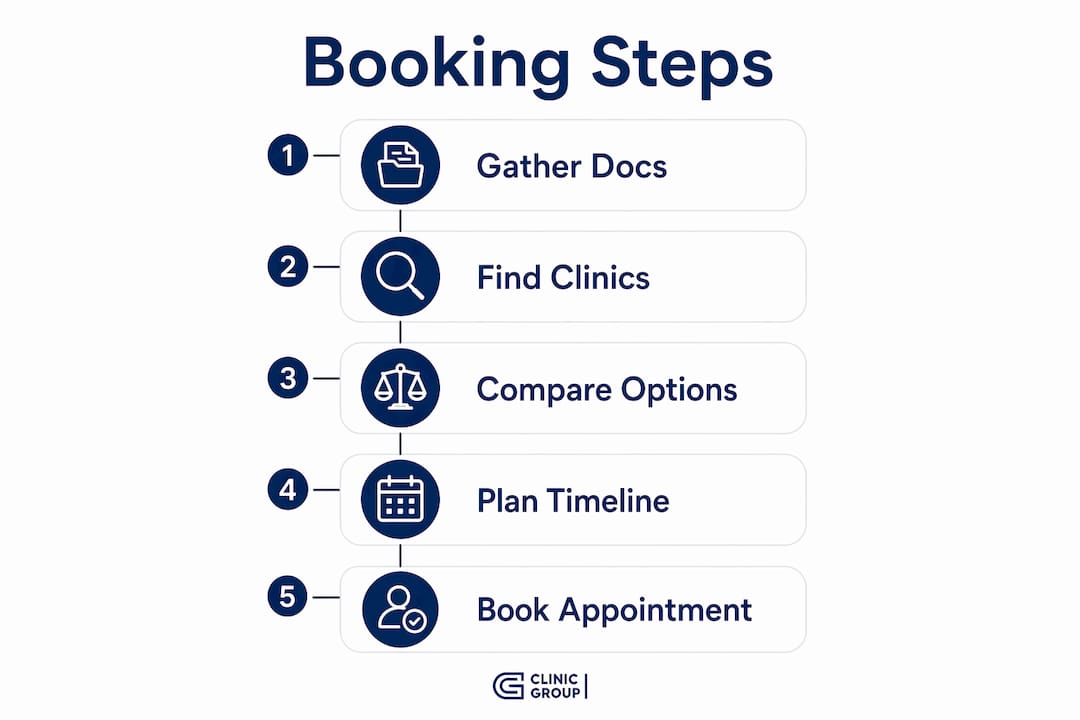
Booking a dental appointment internationally is defined as the process of identifying, contacting, and confirming treatment with a verified overseas clinic before you travel. Done correctly, it saves you significant money compared to UK dental costs while delivering care that meets European clinical standards. The key is preparation: obtaining your clinical records, comparing itemised quotes from multiple clinics, and planning your travel around your treatment timeline rather than the other way around. This guide walks you through every step, from gathering documents to coordinating aftercare with your home dentist.
How to book a dental appointment internationally: start with your documents
The single most important step before you contact any clinic abroad is assembling your clinical records. Sharing your full case file with overseas clinics, including your dental chart, health history, and recent photographs, allows them to confirm treatment plans before you book flights. This prevents last-minute changes and protects you from arriving to find the quoted treatment is no longer appropriate.
Here is what to gather before you reach out to any clinic:
- Written treatment plan from your UK dentist. Ask your current dentist for a written plan that includes the proposed treatments, tooth references, and a price benchmark. This gives overseas clinics a clear clinical starting point.
- Recent dental X-rays. X-rays within 12–18 months are the standard expectation. Older imaging may require the overseas clinic to take new scans, which adds time and cost.
- Dental chart and tooth diagram. A numbered chart showing existing restorations, missing teeth, and problem areas gives clinics the precision they need to quote accurately.
- Health history and medication list. Include any allergies, current medications, and relevant medical conditions. This is not optional for complex treatments such as dental implants.
- Digital formats. Save X-rays as DICOM or high-resolution JPEG files. Save written documents as PDFs. Most reputable clinics abroad accept these formats by email or WhatsApp before your first consultation.
The role of digital technology in modern dental clinics means that high-quality imaging can now be reviewed remotely with accuracy. Clinics in Albania and Dubai, for example, routinely assess case files sent from UK patients before confirming treatment eligibility.
Pro Tip: Ask your UK dentist specifically for a “referral letter” or “clinical summary.” This phrasing prompts them to include tooth numbers, existing restorations, and treatment recommendations, rather than a vague summary.

How do you find and compare verified dental clinics abroad?
Finding the right clinic is not simply a matter of searching online and choosing the cheapest option. Contacting 3–5 clinics and requesting itemised written quotes is the recommended approach. That range gives you enough data to spot outliers, whether suspiciously low or unexpectedly high, and to assess how each clinic communicates.
Follow this process when reaching out:
- Identify destinations that match your treatment needs. Albania, Turkey, Hungary, and Dubai are among the most established destinations for dental tourism. Albania in particular offers European-standard care at significantly lower costs than the UK.
- Send your clinical documents with your initial enquiry. Do not ask for a quote without attaching your records. Clinics that quote without reviewing your case file are a red flag.
- Request itemised written quotes. Each quote should list individual treatments, materials (including implant brands such as Straumann or Nobel Biocare), laboratory fees, and any consultation charges.
- Expect a response within 24–48 hours. Reputable clinics respond in English with detailed information. Slow or vague responses indicate poor patient communication.
- Verify credentials independently. Checking clinic accreditations and surgeon qualifications before committing is non-negotiable. Look for board-certified specialists and clinics that display their accreditations publicly.
Pro Tip: Read independent patient reviews on platforms such as Google Maps or Trustpilot rather than relying solely on testimonials displayed on the clinic’s own website.
When comparing quotes, use this framework:
| Comparison Factor | What to Look For |
|---|---|
| Itemised pricing | Each treatment listed separately with materials specified |
| Implant brand | Named brands such as Straumann, Nobel Biocare, or Osstem |
| Treatment duration | Number of visits and total days required in-country |
| Guarantees | Written warranty on implants, crowns, or prosthetics |
| Communication quality | Prompt, clear responses in English |
| Patient reviews | Independent reviews with verifiable detail |
Understanding how dental pricing works internationally helps you read these quotes accurately. A lower headline price that excludes laboratory fees or follow-up consultations is not a genuine saving.
What is the right timeline for planning your dental trip?
Booking travel 4–8 weeks ahead is the standard recommendation for straightforward procedures such as crowns or veneers. Complex treatments, including full-arch implants or bone grafting, require 8–12 weeks of lead time to allow for proper planning, material ordering, and laboratory work.
Your scheduling should follow this structure:
- Confirm your treatment plan before booking flights. Sequencing clinical assessment before travel is the single most effective way to avoid last-minute changes. Clinics may adjust the plan after reviewing your documents, and you do not want to have already committed to non-refundable flights.
- Book flexible flights. Choose fares that allow date changes. Treatment timelines can shift after in-person diagnostics, and rigid bookings create unnecessary pressure.
- Arrive one day before your first appointment. Travel fatigue affects your ability to absorb clinical information. Arriving a day early means you attend your first consultation rested and prepared.
- Build recovery days into your schedule. Allow at least two to three days after treatment before your return flight, particularly for surgical procedures. Swelling, sensitivity, or unexpected follow-up needs are common.
- Confirm your appointment one week before travel. Contact the clinic directly to reconfirm timing, location, and any pre-appointment instructions.
| Treatment Type | Recommended Booking Lead Time | Minimum Days In-Country |
|---|---|---|
| Single crown or veneer | 4–6 weeks | 5–7 days |
| Multiple crowns or bridges | 6–8 weeks | 7–10 days |
| Single dental implant | 8–10 weeks | 7–10 days |
| Full-arch implants | 10–12 weeks | 10–14 days |
Standard travel insurance typically excludes elective dental procedures. This means that if a complication arises from planned dental work abroad, you may face significant out-of-pocket costs. Specialist dental tourism insurance covers these scenarios and is strongly recommended for any procedure beyond a routine check-up.
Pro Tip: When booking accommodation, choose a hotel or apartment within 15 minutes of the clinic. Post-treatment discomfort makes longer transfers genuinely difficult, and proximity reduces stress on appointment days.
What happens when you arrive at the clinic?
Your first appointment abroad is a clinical assessment, not the start of treatment. The clinic will review your documents, conduct an in-person examination, and in many cases perform a CBCT scan to produce a three-dimensional image of your jaw structure. This is standard practice for implant planning and gives the treating dentist far more information than a standard two-dimensional X-ray.
After the initial diagnostics, the clinic will confirm or adjust your treatment plan. Expect this process to take one to two hours. The confirmed plan should include:
- A written treatment schedule with dates and appointment times
- A full cost breakdown with payment milestones
- Implant brand documentation and warranty terms
- Aftercare instructions for each stage of treatment
- Remote support contact details, typically via WhatsApp or email
Pre-travel consultations via WhatsApp or video reduce surprises at this stage. Clinics that have already reviewed your records and communicated clearly before your arrival are far better prepared to deliver a smooth first appointment. Clarity on payment responsibilities at this point protects both you and the clinic from misunderstandings later.
How should you coordinate aftercare with your home dentist?
Aftercare is where many patients underestimate the work involved in scheduling dental visits overseas. Informing your home dentist before you travel is the right starting point. Your UK dentist needs to know what treatment you are having, which materials are being used, and what the overseas clinic’s warranty terms are.
On your return, follow these steps:
- Share your full treatment report. The overseas clinic should provide a written clinical report, including X-rays taken during treatment. Bring printed and digital copies home.
- Book a review appointment 6–8 weeks after returning. Your home dentist can assess healing, check the fit of any restorations, and flag any concerns early.
- Schedule annual monitoring. For implants and complex restorations, annual check-ups are the standard for long-term success. Your UK dentist can manage this ongoing monitoring.
- Keep all warranty documentation. For complex treatments such as implants, warranty documentation is your protection if revision work is needed. Store it alongside your treatment report.
Many overseas clinics offer ongoing remote support via WhatsApp. This is particularly useful in the weeks immediately after treatment, when questions about healing or discomfort are common. Use this channel actively rather than waiting until a problem becomes serious.
Pro Tip: Treat your treatment report as a clinical passport. It contains everything your UK dentist, any future overseas clinic, or an insurance provider needs to understand your dental history at a glance.
The aftercare checklist for returning patients covers this process in detail, including how to manage follow-up appointments and communicate between your overseas and home dental teams.
Key takeaways
Booking international dental appointments successfully depends on preparing your clinical records first, comparing verified clinics carefully, and building a realistic travel schedule around your treatment needs.
| Point | Details |
|---|---|
| Prepare documents first | Gather X-rays, dental charts, and a written treatment plan before contacting any clinic abroad. |
| Contact multiple clinics | Request itemised quotes from 3–5 verified clinics and compare pricing, materials, and guarantees. |
| Sequence correctly | Confirm your treatment plan before booking flights to avoid costly last-minute changes. |
| Plan travel carefully | Book 4–12 weeks ahead depending on complexity, and build recovery days into your schedule. |
| Manage aftercare actively | Share your treatment report with your home dentist and book a review appointment 6–8 weeks after returning. |
What we have learned from helping patients book dental care abroad
At Clinicgroup, we have supported hundreds of patients through the process of finding and booking dental care overseas. The most consistent mistake we see is patients who book flights before confirming their treatment plan. It sounds obvious in hindsight, but the pressure to secure cheap fares leads people to commit to travel before a clinic has even reviewed their records. When the treatment plan changes after in-person diagnostics, which it sometimes does, those patients face either non-refundable losses or rushed decisions.
The second pattern we see regularly is patients who undervalue their clinical documents. Treatment plans function as a passport for your dental case internationally. A well-prepared case file does not just help clinics quote accurately. It signals to the clinic that you are an informed patient, and informed patients consistently receive more thorough responses and more transparent pricing.
We also recommend that every patient arranges specialist dental tourism insurance before travelling, regardless of how straightforward the procedure appears. Specialist coverage for elective procedures abroad is not expensive relative to the treatment cost, and it removes a significant source of financial risk. Standard travel policies do not cover planned dental work, and finding that out after a complication is a deeply unpleasant experience.
The patients who have the best outcomes are those who treat the booking process as a clinical project rather than a travel booking. They prepare thoroughly, ask direct questions, and stay engaged throughout. That approach is not complicated. It simply requires knowing the right steps in the right order.
— Clinic
How Clinicgroup can help you book verified dental care abroad
Clinicgroup connects patients from the UK and across Europe with verified dental clinics in Albania and Dubai, where European standards of care are delivered at a fraction of UK costs. Our dental treatments include implants, crowns, veneers, and full-arch restorations, all provided by board-certified specialists in accredited facilities. We handle clinic matching based on your specific treatment needs, assist with travel logistics and partner hotel arrangements, and provide transparent pricing with no hidden fees. Our team supports you from your first enquiry through to aftercare coordination, so you are never managing the process alone. If you are ready to explore your options, visit our treatments page to start your booking process today.
FAQ
What documents do i need to book a dental appointment abroad?
You need a written treatment plan from your UK dentist, recent dental X-rays (within 12–18 months), a dental chart, and a health history including medications and allergies. Save these as PDFs and DICOM or JPEG files to share with overseas clinics by email.
How far in advance should i book a dental trip overseas?
Book 4–8 weeks ahead for standard procedures such as crowns or veneers, and 8–12 weeks ahead for complex treatments such as dental implants or full-arch restorations. Confirming your treatment plan before booking flights is the most important step.
Does travel insurance cover dental treatment abroad?
Standard travel insurance typically excludes elective dental procedures. Specialist dental tourism insurance is recommended, as it covers complications arising from planned international dental work and provides worldwide protection.
How do i verify that an overseas dental clinic is trustworthy?
Check the clinic’s accreditations, surgeon qualifications, and implant brands used. Read independent patient reviews on Google Maps or Trustpilot, and request itemised written quotes. Reliable clinics display their credentials openly and respond promptly with detailed information.
How do i manage aftercare when i return to the UK?
Share your full treatment report and clinical X-rays with your home dentist on return, and book a review appointment 6–8 weeks later. Keep all warranty documentation for implants and complex restorations, and use the overseas clinic’s remote support channel for any immediate post-treatment questions.