Cheap composite bonding abroad may be worth exploring if you want to change the appearance of a small chip, gap or uneven edge. Whether bonding is suitable depends on your teeth and oral health, so an in-person dental assessment is essential. Compare written treatment plans, aftercare and travel arrangements, not just the headline offer.
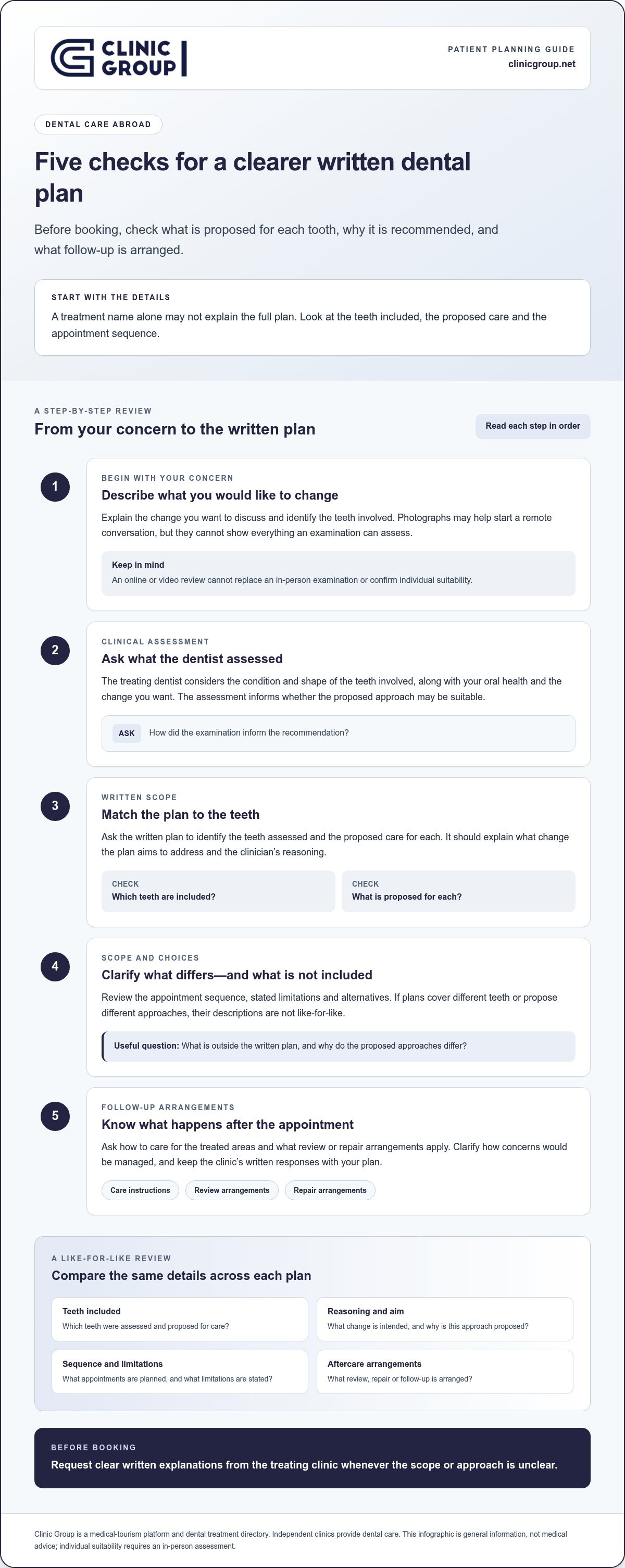
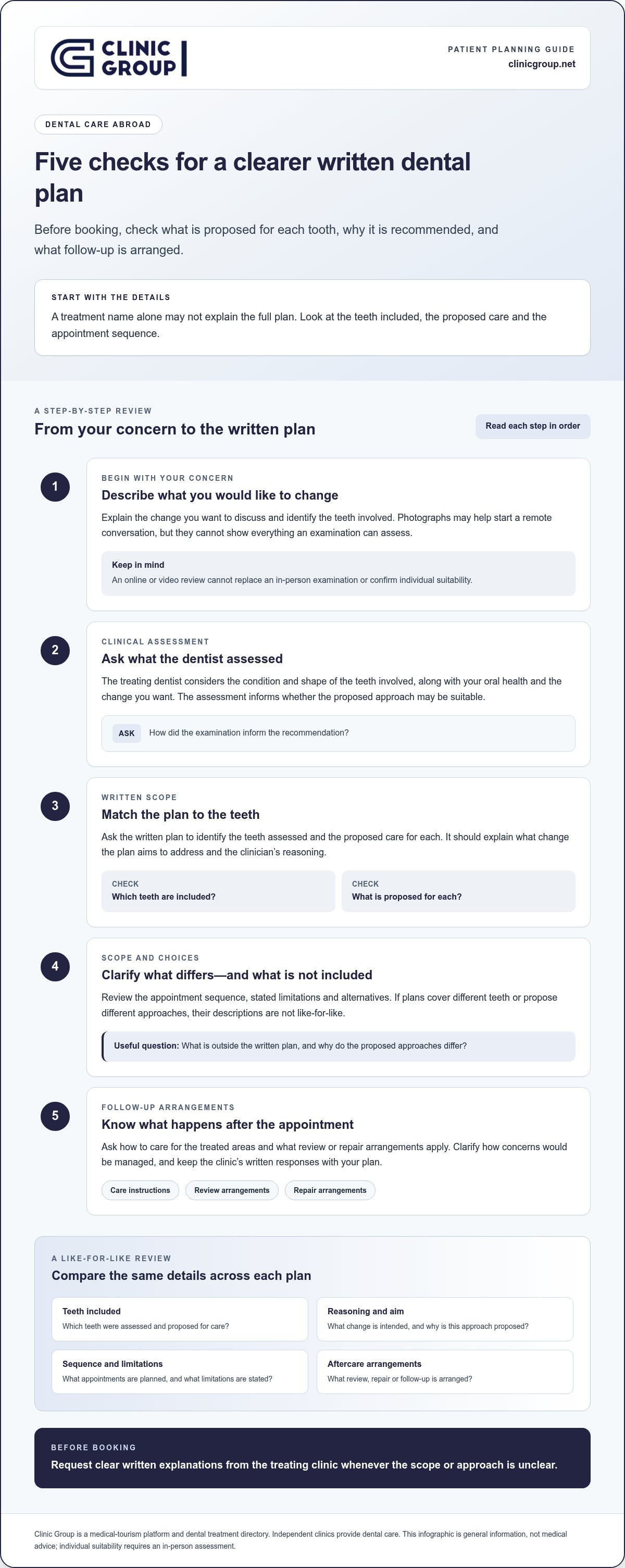
Offers can describe different numbers of teeth or include different services, making headline comparisons misleading. A useful written plan explains what the dentist proposes, why it may address your concern and what follow-up is arranged. Ask for an itemised quote alongside the plan so you can understand its scope.
This guide explains what composite bonding may change, how it differs from veneers and what to clarify before travelling. It also covers questions about the clinician, clinical care, records and follow-up after you return to the UK. Clinic Group is a medical-tourism platform and dental treatment directory that connects patients with verified partner clinics. Independent clinics provide dental care. This is general information, not medical advice, and treatment outcomes cannot be guaranteed.
Key Takeaways
- Understand which cosmetic changes composite bonding may address and why a dentist needs to assess your teeth to determine whether it is suitable.
- Compare bonding with porcelain veneers by looking at the approach, tooth preparation and maintenance, rather than assuming one option suits everyone.
- When considering cheap composite bonding abroad, compare the written treatment scope and included services, not just a headline offer.
- Use a preparation checklist to review your plan, travel arrangements, appointment timing, follow-up, records and insurance.
- Clinic Group’s directory and coordination support can help you explore verified partner clinics and discuss a written plan.
What is composite bonding abroad, and what can it change?
Composite bonding is a cosmetic dental treatment in which tooth-coloured composite resin is applied to selected tooth surfaces, shaped and hardened to change their appearance. A dentist may discuss it for small chips, gaps or uneven edges. Whether it can address your concern depends on an in-person assessment of your teeth and oral health.
What happens during composite bonding?
The process begins with an assessment of your teeth and the change you would like to make. The dentist considers the condition and shape of the teeth involved before discussing a suitable resin shade. Shade matters: the aim is to blend the material with the surrounding teeth, rather than simply selecting the lightest colour.
In general, the clinician applies composite resin to selected tooth surfaces, bonds it in place and shapes it. The bonded area is then finished and smoothed. The precise steps depend on the individual case and the clinic’s plan, so this is not a fixed protocol for every patient. The treating clinician determines the approach after examining you and discussing the proposed changes.
Dental bonding is a general term for attaching material to a tooth; this article provides background on the technique and its uses. For patients considering dental care abroad, Clinic Group’s guide to dental implants in Albania offers further context, although implants are a different treatment from bonding.
Who might discuss bonding with a dentist?
Someone concerned about a small chip, slight gap or uneven-looking edge might ask a dentist about bonding. These are examples of reasons to discuss the treatment, not a checklist for deciding whether it is suitable. The condition of your teeth, the change you want and the clinician’s examination all inform the decision. If bonding does not address your concern, the dentist may discuss another approach.
Before a consultation, describe what you would like to change and identify the teeth involved. Photographs may help start a remote conversation, but they cannot show everything a dental examination can assess. An online or video case review can support an initial discussion; it cannot replace an in-person examination or confirm individual suitability. Direct questions about your teeth and treatment options to the treating dentist.
Do not judge cheap composite bonding abroad by the apparent simplicity of the procedure or by a list of cosmetic uses. Ask what change the plan aims to make, which teeth it involves and how the clinician reached that recommendation. This article is general information, not medical advice. Individual outcomes cannot be guaranteed.
How should you compare composite bonding plans abroad?
Compare the proposed treatment tooth by tooth, rather than treating a package label as a full description. One plan might cover a small number of teeth, while another proposes a broader change to your smile. Ask what the clinician assessed, which teeth are included, what the treatment is intended to address and what alternatives were considered.
How does bonding differ from porcelain veneers?
Bonding uses tooth-coloured composite resin applied and shaped directly on selected tooth surfaces. Porcelain veneers are made separately and fitted over the front surfaces of teeth. These are different approaches, and the amount of tooth preparation depends on the treatment and clinical circumstances. Neither option is right for everyone. Discuss suitability, limitations and ongoing maintenance with the treating dentist.
The guide to dental veneers abroad explains the veneer approach in more detail. Use it to understand the difference, not to choose a treatment without a clinical assessment.
| Comparison point | Composite bonding | Porcelain veneers |
|---|---|---|
| Approach | Composite resin is applied and shaped on selected tooth surfaces. | A porcelain covering is made for the tooth and fitted over its front surface. |
| Tooth preparation | The amount of preparation depends on the tooth and treatment plan. | Preparation also varies. Ask which changes to the tooth are proposed and why. |
| Maintenance | Ask how to care for bonded areas and what review or repair arrangements apply. | Ask about care, routine reviews and how concerns would be managed. |
| Clinical assessment | The dentist assesses your teeth and whether bonding addresses the change you want. | The dentist assesses your teeth and whether veneers are appropriate for the proposed change. |
What should a written treatment plan make clear?
A useful plan turns a general proposal into something you can compare and discuss. Before booking, request the plan and an itemised quote in writing from the treating clinic. Check that the documents identify the teeth assessed, the treatment proposed for each, the clinician’s reasoning, the appointment sequence and any stated limitations or alternatives.
If two plans cover different teeth or propose different approaches, their headline descriptions are not like-for-like. Ask the dentist to explain differences in scope and identify what is not included. Keep the written response with the plan so the proposed treatment and agreed arrangements are clear before you travel.
When comparing cheap composite bonding abroad, written details are more useful than treatment names alone. Clinic Group’s dental treatment directory helps patients explore verified partner clinics and organise discussions about a case review. Independent partner clinics provide clinical care.
Does choosing affordable composite bonding abroad mean compromising on care?
A quoted figure alone does not show whether care is high quality or poor, or whether a treatment plan is suitable. Local operating conditions and clinic arrangements can affect how treatment is scoped and presented. Compare the clinician’s reasoning and written details, rather than relying on a headline offer in isolation.
Be clear about which organisation is responsible for each part of the process. The treating clinic is responsible for clinical care; a directory or coordinator can help organise enquiries and discussions. Ask who will examine you, explain the proposed treatment and carry it out. Clinic Group connects patients with verified partner clinics, while independent clinics provide the dental care.
Which questions help you assess a clinic and clinician?
Before deciding, establish who is responsible for your care and how to contact them. Request the treating clinician’s full name, relevant registration details and role in your treatment. You can check the information with the relevant professional body for that location. Ask the clinic to explain who will assess you, who will perform the bonding and who will answer clinical questions. These responsibilities are separate from coordination support.
Clarify how the clinic will assess your teeth in person and explain its plan before you consent. A polished website or a detailed description of materials cannot replace an identifiable clinician, a clear explanation of the proposed work and time to ask questions. Broader considerations are covered in this guide to dental treatment safety abroad.
What should you confirm about aftercare and insurance?
Get the treating clinic’s aftercare arrangements in writing before booking. The plan should explain how to raise a concern after returning home, what follow-up the clinic proposes and how a review would be arranged. If the clinic provides written warranty terms, request and read them carefully, including the scope, conditions and exclusions. Arrangements vary, so do not assume the same terms apply everywhere.
Before travelling, contact your insurer and ask whether your policy covers complications related to elective dental treatment abroad. Standard travel insurance may exclude elective treatment or related complications, so read the policy wording and request written clarification where possible. Do not assume another source of care will automatically cover corrective treatment or guarantee a particular outcome.
- Clinician: confirm identity, registration details and responsibilities.
- Plan: understand the proposed treatment and the reasoning behind it.
- Aftercare: obtain written follow-up arrangements and any warranty terms.
- Insurance: check cover for elective treatment and related complications.
These steps help you assess cheap composite bonding abroad on more than the headline quotation. To explore Clinic Group’s verified partner clinic directory and organise a discussion about your case, visit Clinic Group’s dental treatment directory. This is general information, not medical advice. Treatment decisions require an individual clinical assessment, and outcomes cannot be guaranteed.
What should you organise before travelling for composite bonding?
Settle the clinical details before arranging travel. Share relevant case information, review the written plan, clarify appointments and logistics, then decide whether to proceed. The treating clinic should provide proposed appointment timing and any follow-up schedule. Do not assume every detail can be settled after you arrive.
What should you arrange before confirming travel?
Use written documents to check that the treatment scope, appointment plan and follow-up arrangements are clear. Compare the schedule with your travel dates and accommodation plans. Ask which services the clinic arranges and which, if any, are handled separately. Accommodation, transfers, coordinator support and aftercare vary by clinic, so request details in writing rather than relying on a general description.
A sensible sequence is:
- Share case details. Provide the information requested for an initial review and explain what you hope to change. Do not use photographs to diagnose your own teeth.
- Review the written plan. Check that it identifies the proposed treatment and teeth involved, and includes an itemised quote and any stated limitations or alternatives.
- Clarify arrangements. Ask the treating clinic for appointment timing and any follow-up schedule. Check travel, accommodation and transfer details against those dates.
- Decide whether to proceed. Allow time to consider the information and raise unanswered questions before confirming travel.
Keep copies of your treatment plan, itemised quote, clinic contact details and insurance information somewhere you can access during the trip. Save written messages about agreed services and follow-up, too. This gives you a record to refer to if arrangements change. A guide to travelling for dental treatment abroad can help you think through practical preparation alongside the clinic’s instructions.
How can you prepare for a remote case review?
A remote case review can start a discussion and help identify questions for the treating dentist, but it does not replace an examination. Gather the information the clinic requests and prepare questions about proposed options, limitations, appointment timing and aftercare. Ask who will explain the treatment plan and who will provide clinical care. A clinician must assess you in person before confirming individual suitability.
Before committing to cheap composite bonding abroad, check that the written clinical plan and travel schedule fit together. Make sure you understand what happens if the plan changes after an in-person assessment. If anything is unclear, ask for an explanation in writing before booking. Clinic Group connects patients with verified partner clinics and provides coordination support; independent clinics provide dental care.
Explore verified dental partner clinics
How can Clinic Group help you explore composite bonding abroad?
Clinic Group is a medical-tourism platform and dental treatment directory that connects patients with verified partner clinics. It helps organise enquiries, clinic matching and treatment discussions. The independent partner clinic assesses your teeth, decides whether a treatment is suitable and provides any clinical care. This distinction makes clear who handles coordination and who is responsible for clinical decisions.
What does Clinic Group coordinate, and who provides treatment?
The process can start with an enquiry and a free consultation or case review, followed by matching with a partner clinic for further discussion. The clinic can review the available information and prepare a proposed written plan for you to consider. You may also discuss an optional second opinion. A remote review supports an initial conversation, but the treating clinician determines suitability after an appropriate clinical assessment.
Coordination helps organise conversations and practical arrangements, but it is not dental care. The partner clinic is responsible for examining you, explaining the treatment and deciding what it recommends. Travel support, such as help with accommodation or transfers, depends on the clinic and the arrangements offered. Ask for agreed logistics and aftercare details in writing, and do not assume they are identical across clinics.
What should you have in writing before you decide?
Before booking, make sure the treating clinic has provided documents that explain the proposed work and what happens after treatment. Review them at your own pace, raise anything you do not understand and keep copies of the final versions. The written plan and quote should reflect the treatment discussed, including the teeth considered and any alternatives or limitations explained by the clinician.
- Written treatment plan: the proposed treatment, teeth involved, clinical reasoning and any stated alternatives or limitations.
- Itemised quote: a clear breakdown of what the clinic proposes to provide, so you can compare the scope of plans consistently.
- Aftercare arrangements: how follow-up is handled, how to raise concerns and any written warranty terms the clinic provides.
- Insurance information: confirmation from your insurer about whether your cover includes complications related to elective treatment abroad.
For anyone considering cheap composite bonding abroad, this process provides a structured way to move from an initial question to an informed discussion with a clinic. A preliminary review is not a final diagnosis. Clinic Group connects patients with partner clinics and coordinates enquiries; it does not provide dental treatment or determine clinical suitability. Make your decision after a personal assessment and review of clear written information.
Browse Clinic Group’s dental treatment directory or request a consultation to explore the next step for your enquiry.
Content is general information, not medical advice. Treatment outcomes cannot be guaranteed, and the treating clinician must assess your individual circumstances.
Take your next step with a clear treatment goal
Before moving forward with cheap composite bonding abroad, consider what you need to understand before making a decision. You may want to clarify the change proposed, how it fits your priorities or which questions remain unanswered. Identifying these points can help you keep the next conversation focused and useful.
You do not need to decide straight away. Take time to reflect on the information and consider whether the proposed plan feels right for you. An informed choice is one you can make at your own pace.
A clear sense of your priorities can help you approach the next step thoughtfully.
Frequently Asked Questions
Is composite bonding suitable for everyone?
No single cosmetic treatment suits everyone. Discuss the change you want and the care and maintenance the dentist recommends. Before a consultation, note any previous dental work on the teeth you are concerned about and what you would like to improve. This can help the clinician understand your priorities, but only an individual assessment can determine whether bonding is appropriate for you.
Can composite bonding be completed in one visit?
It may be possible, but the number of visits depends on the proposed treatment and the clinic’s plan. If you are travelling, avoid arranging a return journey with no flexibility around your appointment. Ask the clinic how it would handle a delay or a change to the plan after you arrive, and allow for the schedule it gives you.
Does composite bonding damage natural teeth?
Whether natural tooth surfaces need to be adjusted depends on the individual treatment plan. Before agreeing, ask the dentist to explain what would be changed, why it is needed and what the implications are for your tooth. You can also ask how the proposed appearance will be discussed before treatment begins. Make sure you understand the explanation and raise concerns before giving consent.
Can composite bonding become stained or chipped?
Bonded composite can stain or chip. Everyday habits, including frequent consumption of strongly coloured food and drink, may affect its appearance, while biting hard objects can place stress on teeth. Follow the dentist’s care advice and ask how to maintain the finish. If you notice a change in colour or a rough edge, contact a dentist for advice rather than trying to alter the bonded area yourself.
Can composite bonding be repaired if it chips?
A dentist needs to examine a chip to decide whether repair is suitable and what it involves. Take a clear photograph for your records and note when you first noticed the damage. Contact the treating clinic for advice, especially if you are still abroad, and ask whether follow-up can be arranged after you return to the UK. If you require follow-up care or advice once home, UK providers such as Greenlane Dental Practice can examine damaged composite and outline repair options. Do not attempt a repair at home with glue or tools, as this could make assessment more difficult.
What should a written composite bonding plan include?
Alongside the proposed treatment, ask how you can obtain copies of the clinical records created during your care. These may include notes about the work performed, materials used and relevant X-rays or scans. Keep these records with your treatment documents so a dentist you see later can understand what was done. If the plan changes after examination, request an updated copy that reflects the agreed treatment.
Does travel insurance cover complications after dental treatment abroad?
Not automatically. Before choosing cheap composite bonding abroad, ask your insurer how elective dental treatment affects your cover and what evidence it would require if you made a claim. Keep the insurer’s written response, policy documents and clinic treatment records together. Check the policy wording carefully, as exclusions and conditions vary. Do not assume ordinary travel cover includes treatment-related complications.

Article by
Clinic Group Editorial Team
The Clinic Group editorial team publishes clear, practical guides for UK and EU patients researching medical travel — from dental implants and hair transplants to plastic surgery and eye care — with a focus on verified clinics, transparent “from” pricing, and safe planning.
Disclaimer
This article is for general information only and is not medical advice, diagnosis, or a substitute for an in-person consultation with a qualified clinician. Treatment suitability, risks, timelines, and costs vary by individual. Clinic Group connects patients with independent clinics; those clinics are responsible for clinical care. Always verify credentials, obtain a written treatment plan and itemised quote, and confirm aftercare arrangements and travel insurance cover (elective procedures are often excluded) before booking. Outcomes cannot be guaranteed.