Cataract surgery abroad may be an option for some UK patients, but deciding whether to travel involves more than comparing journey times. A clinician must assess your eyes and explain the proposed care. Before making plans, understand who is responsible for treatment, how follow-up will work after you return, and what your insurance covers.
When comparing overseas eye-care options, clinical plans and aftercare arrangements can be difficult to assess from a distance. This guide explains what to look for in a written plan, how to organise travel around clinical advice, and what to clarify about records, insurance and follow-up before deciding.
Clinic Group is a medical-tourism directory and coordination service, not a provider of clinical care. Its eye-care information covers listed services such as premium lens surgery. The guidance below focuses on how to assess an overseas care pathway, plan for continuity after returning to the UK, and make an informed decision without pressure to book.
Key Takeaways
- Assess cataract surgery abroad as a complete care pathway, including clinical assessment, travel and follow-up, rather than judging the journey by distance alone.
- Compare written plans to understand who is responsible for clinical decisions, which lens options have been discussed and how follow-up is arranged.
- Before booking, get written details of clinical contacts, access to your records, aftercare and how to raise concerns.
- Plan appointments and travel around the clinic’s confirmed arrangements. Clinical timings can vary between patients.
- Clinic Group helps patients explore overseas eye-care information and directory listings. Independent clinics provide clinical care, and outcomes cannot be guaranteed.
What does cataract surgery abroad involve for a UK patient?
Cataract surgery abroad involves travelling from the UK for a clinician to assess and, if appropriate, treat a cataract. The procedure replaces the eye’s cloudy natural lens with an artificial one. It is not suitable for everyone. The decision involves the full care pathway, including assessment, appointments, travel, recovery arrangements and follow-up.
What does cataract surgery aim to address?
A cataract develops when the eye’s natural lens becomes cloudy, which can affect vision. Surgery aims to remove the cloudy lens and replace it with an intraocular lens, an artificial lens placed inside the eye. The approach and lens choice depend on a person’s eyes and clinical needs. General information cannot establish whether treatment is appropriate for you. A clinician must assess your individual circumstances.
The Cataract Surgery Explained overview describes the procedure and possible complications. Use it as background reading, not as a substitute for advice about your eyes. Ask a clinician to explain the proposed plan, potential risks and expected follow-up in terms you understand. Outcomes cannot be guaranteed.
What changes when care takes place abroad?
Travel adds practical steps to a clinical pathway. You will need to understand when and where assessment and treatment take place, how appointments fit around your travel plans, and what follow-up is available afterwards. Recovery and travel advice must come from the treating clinical team, as individual needs and clinic plans vary. Do not assume a short visit will suit every patient or care plan.
Communication matters before, during and after treatment. Find out who is responsible for clinical decisions, how to contact the clinic with questions, how your records and treatment information will be shared, and what follow-up is planned when you return to the UK. These details help you judge whether care can continue smoothly across borders, rather than treating the operation as a one-off appointment.
- Clinical care: The independent clinic is responsible for assessment, treatment and clinical aftercare.
- Coordination: Clinic Group is a directory and coordinator that helps patients explore options and navigate arrangements. It does not provide surgery or clinical care.
Clinic Group’s specialist directory helps patients explore listed eye-care options, including premium lens surgery. Lens procedures can differ in purpose and suitability, so ask the treating clinician to explain the proposed procedure and whether it meets your clinical needs. Consider the full journey before deciding whether treatment abroad fits your circumstances. This section is general information, not individual medical advice.
What should you compare in an overseas cataract care plan?
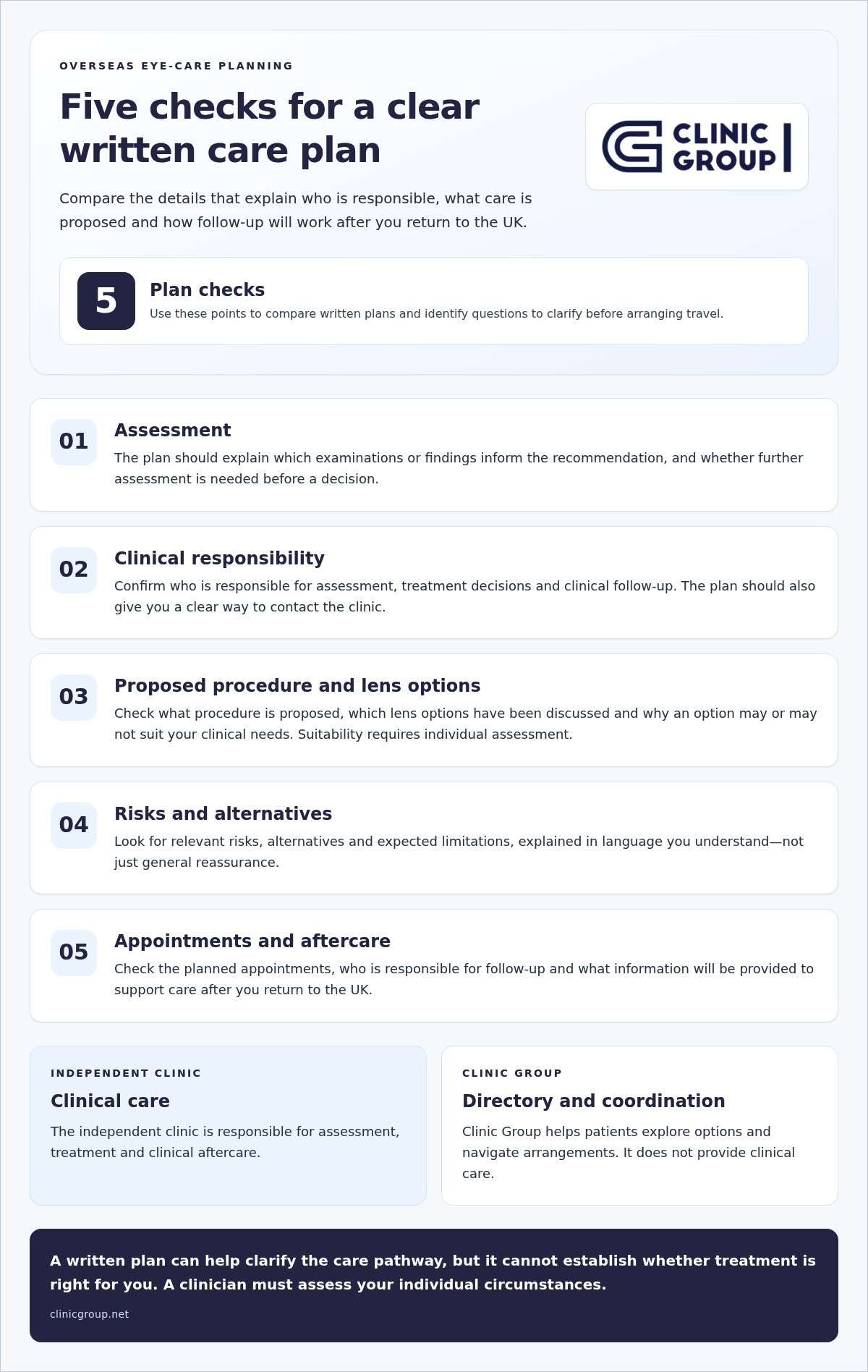
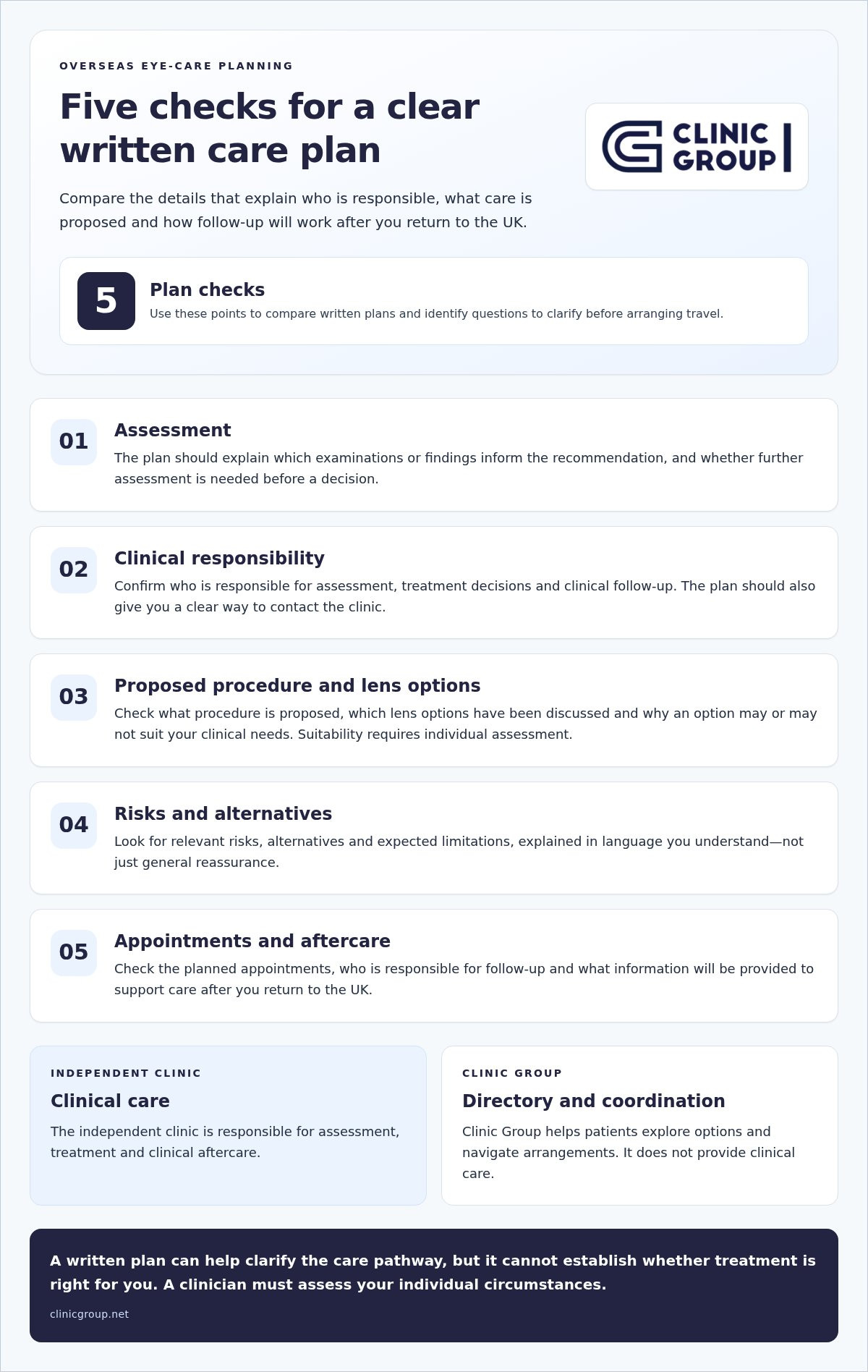
Compare written plans rather than relying on broad descriptions of a clinic or procedure. For cataract surgery abroad, the useful details include who assesses you, who is clinically responsible, how lens options are discussed, and what follow-up is arranged. Request a written plan and itemised quote, then compare what each includes and excludes before deciding.
Which clinical and treatment details belong in a written plan?
A plan should make the proposed care understandable and specific to your assessment. Check that it records the proposed procedure, the clinician responsible for your care, relevant assessment findings, planned appointments and how to contact the clinical team. If anything is unclear, ask for a plain-language explanation before making travel arrangements.
Use these points to compare plans side by side:
| What to compare | What the written plan should explain |
|---|---|
| Assessment | What examinations or findings inform the recommendation, and whether further assessment is needed before a decision. |
| Clinical responsibility | The clinician responsible for assessment, treatment decisions and clinical follow-up, with a clear route for contacting the clinic. |
| Procedure and lens | What procedure is proposed and which lens options have been discussed, including why an option may or may not suit your clinical needs. |
| Risks and alternatives | The relevant risks, alternatives and expected limitations, explained in language you understand rather than as general reassurance. |
| Appointments and aftercare | Planned appointment arrangements, follow-up responsibilities and what information will be provided for care after you return to the UK. |
| Quote details | An itemised written quote showing the proposed elements and exclusions, so you can compare like with like rather than relying on a headline offer. |
How can you assess a clinic’s information responsibly?
Look for specific, verifiable information about the clinic and the clinicians responsible for care. Promotional descriptions alone do not show who will assess you or what happens if the plan changes. If an accreditation is mentioned, establish which organisation or service it applies to and what it covers. Do not assume it applies to every clinician, procedure or part of the patient pathway.
Lens choice deserves particular care. A premium lens is not automatically suitable, and no written plan can promise a particular visual result. Suitability and expected outcomes depend on individual clinical assessment. Ask the clinician to explain the differences between the options discussed, why a particular approach is proposed, and what limitations or risks may apply in your circumstances.
Clinic Group’s LASIK eye-care information provides another example of how to review an overseas eye-care pathway. LASIK is a different procedure, so information about it cannot establish whether another procedure is appropriate for you. To explore Clinic Group’s directory and coordination support, browse its eye-care options. Independent partner clinics provide clinical care, and outcomes cannot be guaranteed.
How can you assess safety and continuity before choosing?
Distance can make it harder to resolve questions or arrange follow-up if responsibilities are unclear. Before deciding on cataract surgery abroad, establish who provides clinical care, how the clinic can be contacted and what support is planned after you return to the UK. A clear pathway does not remove clinical risk, but it helps you understand who is responsible at each stage.
What should you verify about responsibilities and communication?
Ask the independent clinic to identify the clinician and team responsible for your assessment, treatment and clinical follow-up. Keep their written contact details and establish which contact is suitable for routine questions and what instructions to follow if you have an urgent concern. Clinic Group connects patients with verified partner clinics and can support coordination, but it does not provide clinical care.
Before travelling, make sure you can access copies of relevant clinical records and understand how information will be shared with you. Keep the treatment plan, appointment details, clinic contacts and aftercare instructions together in a format you can reach while away and once home. If the plan changes, ask for the updated details in writing so there is no uncertainty about who is responsible.
Verification, written responsibilities and follow-up planning are separate checks. One does not replace the others.
What should you establish about aftercare in the UK?
Agree in writing how post-treatment questions will be handled after your return. The plan should explain how to contact the treating clinic, what follow-up it expects to provide and how clinical records or instructions will be made available. Ask what to do if you cannot reach the clinic or are unsure whether a concern needs prompt attention. The clinical team should explain potential risks and warning signs for your situation. Outcomes cannot be guaranteed.
Do not assume your travel insurance covers elective treatment or complications arising from it. Before booking, ask your insurer directly whether the policy covers the planned procedure, complications and any related travel changes, and obtain its response in writing. The clinic’s aftercare terms and the insurance policy serve different purposes, so read both rather than treating one as a substitute for the other.
- Clinical responsibility: Record which independent clinic and clinician are responsible for your care.
- Contacts and records: Save written contact details and keep copies of relevant clinical information.
- Follow-up: Agree how questions after returning to the UK will be handled.
- Escalation: Keep the clinic’s written instructions for raising an urgent concern.
- Insurance: Obtain written confirmation of what your policy covers, including complications.
For practical questions about care after returning home, the UK aftercare guide for surgery abroad can help you plan what to clarify. You can also explore Clinic Group’s overseas care directory. Independent partner clinics provide clinical care, and this information is general guidance, not individual medical advice.
How should you plan travel and appointments for cataract care abroad?
Plan the journey around clinical advice, not a fixed travel schedule. For cataract surgery abroad, assessment and treatment timings can vary according to your needs and the clinic’s arrangements. You can still plan in a clear sequence: gather information, clarify appointments, arrange travel once the plan is understood, and agree follow-up before booking.
What should you organise before travelling?
Start by gathering relevant medical information and preparing questions for the clinical assessment. Keep a record of current medicines and health details that may help the clinician understand your circumstances. The clinic can explain what information it needs and which appointments must take place before a treatment decision. A guide to pre-surgery consultations can help you prepare questions about the proposed plan, risks, alternatives and aftercare.
- Make an initial enquiry. Share the information requested and ask what assessment is needed before the clinic can recommend a plan.
- Review the clinical proposal. Read the written plan, note who is responsible for care, and ask the treating team to explain anything unclear.
- Confirm appointments. Get proposed dates and locations in writing, including any assessment or follow-up appointments that affect the length of your stay.
- Clarify practical arrangements. Establish who coordinates appointments and travel details. Consider transport and accommodation that allow flexibility if appointments change, and do not assume these arrangements are included.
- Check insurance and paperwork. Read the policy wording and ask the insurer directly about elective treatment and possible complications. Obtain the written plan, an itemised quote and the clinic’s aftercare terms before booking.
These are planning steps, not a clinical timetable. The number and timing of appointments, whether more assessment is needed and when the clinic considers travel appropriate depend on the individual and the clinical team’s advice. Avoid committing to inflexible travel arrangements before those points are clear.
How should you plan the return and follow-up?
Before departure, ask the independent clinic to document its follow-up plan and explain how to contact the clinical team after you return to the UK. Keep the clinic’s contact details, treatment information and instructions accessible. Ask what happens if an appointment needs to change or if you have a question once home, so the route back to clinical advice is clear.
Discuss your proposed return date and fitness to travel directly with the treating clinical team. Do not set travel timing based on another patient’s experience or a general estimate. If the clinic advises changing the plan, ask for the clinical reason and any revised appointment details before confirming travel. Clinic Group can support coordination, but independent partner clinics are responsible for clinical care.
To explore Clinic Group’s overseas eye-care directory and coordination support, browse the available options at your own pace.
How can Clinic Group help you explore overseas eye care?
Exploring care abroad can involve more than finding a clinic. Clinic Group is a medical-tourism platform and directory that connects UK and EU patients with verified independent partner clinics. It supports exploration and coordination, rather than assessing eyes, making clinical recommendations or providing surgery. Clinical decisions and care remain the responsibility of the partner clinic.
What support does Clinic Group provide during exploration?
Coordination support can help you explore relevant clinic options and organise next steps, including clinic matching, assistance with consultation arrangements, optional second opinions and travel logistics. These are coordination services, not clinical assessments or a substitute for direct discussion with the treating team.
Different eye-care procedures have different purposes. Premium lens surgery is one of the separately listed eye-care options in Clinic Group’s directory. A listing is a starting point for learning about the clinic and its services, not a clinical assessment or recommendation. An appropriate clinician must assess your eyes and explain which treatment choices may suit your circumstances. The specialist directory provides a starting point for exploring relevant eye-care information and independent clinic options.
What are sensible next steps before a decision?
Use an initial consultation to understand the proposed clinical pathway, rather than treating it as a commitment to travel. Ask the partner clinic to explain its assessment, the clinician responsible, the recommended plan, its risks and alternatives, and what happens if further examination changes the recommendation. Take time to review the answers and request a written plan you can refer to afterwards.
Before booking, make sure the written information covers the practical and clinical responsibilities that affect your decision:
- Clinical care: Identify the independent clinic responsible for assessment, treatment decisions and follow-up.
- Plan and quote: Request a written treatment plan and an itemised quote, with the proposed elements and exclusions clearly described.
- Aftercare: Understand how follow-up and post-treatment questions will be handled when you are back in the UK.
- Insurance: Read your policy and confirm in writing whether elective care and related complications are covered.
- Travel coordination: Clarify which practical arrangements are part of coordination and what you will need to organise yourself.
Keep the decision in your hands. If the plan, aftercare terms or clinical responsibilities are unclear, pause before booking and ask the responsible clinical team for an explanation. Clinic Group can help you navigate its directory and coordination process, while partner clinics provide clinical care. No outcome can be guaranteed, and suitability depends on individual clinical assessment.
Choose your next step at your own pace
Deciding whether cataract surgery abroad is right for you does not have to begin with a booking. Use an enquiry or consultation to clarify your questions, understand the proposed care and consider whether travelling fits your circumstances. Exploring an option is a way to gather information, not a commitment to treatment.
Clinic Group’s directory and coordination support can help you explore independent partner clinics. Support may include clinic matching, second opinions and travel assistance, while assessment and treatment remain the responsibility of the partner clinic. A clinician must discuss your individual suitability and risks with you. Outcomes cannot be guaranteed, so take the time you need to understand the clinical information before making a decision.
When you are ready, browse the treatment information and decide whether to take a further step. A careful, unhurried choice is a worthwhile outcome in itself.
Whatever you decide, let clear information and your own priorities guide the way forward.
Frequently Asked Questions
Is cataract surgery abroad safe for UK patients?
No general answer can establish whether cataract surgery abroad is safe for a particular patient. Look beyond directory information or promotional claims: check that the written paperwork identifies the independent clinic responsible for care and explains how the proposed plan relates to your assessment. Consider whether you have enough information to make an informed choice, and take time to resolve unanswered questions. Individual risks and outcomes vary, and results cannot be guaranteed.
Can I choose the type of lens used in cataract surgery?
You can share your preferences, but the treating clinician must explain which lens options are appropriate for your eyes. Before a consultation, note the situations where you would most like clearer vision, such as reading labels or recognising signs at a distance. Ask for the proposed lens type and the reason for its selection to be recorded in your treatment paperwork, so you can refer to the discussion later.
How long should I stay abroad for cataract surgery?
The treating clinic should advise how long your individual care pathway requires. There is no single stay length that applies to everyone. As well as confirming planned appointments, consider what you would do if travel plans had to change. Check the flexibility of your accommodation and travel bookings, and avoid relying on a fixed return date until the clinical team has discussed the proposed schedule with you.
Do I need a referral before arranging cataract surgery abroad?
Referral arrangements can vary, so ask the clinic what information it needs before assessing your case. If you have already discussed your vision with an eye-care professional, ask whether a referral letter or previous test information would help the clinic understand your history. Keep copies of documents you send and find out whether further information is needed before the clinic can provide an individual plan.
Will I still need glasses after cataract surgery?
You may still need glasses for some activities after surgery, and your individual result cannot be predicted from general information. Before treatment, ask the clinician how the proposed plan relates to your usual visual tasks, including reading, screen use and distance vision. Do not arrange a new pair of glasses based on assumptions about the result. Ask the clinical team when it would be appropriate to review your prescription.
Can cataract surgery abroad be considered if I have another eye condition?
Only an appropriate clinician can assess whether another eye condition affects your options. When preparing for an assessment, write down the condition’s name, any previous eye procedures and the professionals currently involved in your care. This can help you give the clinic a clear account of your history. Ask whether information from your existing eye-care records is needed before the clinician discusses an individual plan.
What should I do if I have concerns after returning to the UK?
If you need care after returning, tell the UK clinician assessing you that you have had eye surgery abroad. If available, provide your discharge summary, treatment details and documents describing the lens used, as these may help explain your recent care. Keep copies of messages from the treating clinic too. For urgent concerns, seek prompt assessment through an appropriate UK service rather than relying on routine replies from abroad.

Article by
Clinic Group Editorial Team
The Clinic Group editorial team publishes clear, practical guides for UK and EU patients researching medical travel — from dental implants and hair transplants to plastic surgery and eye care — with a focus on verified clinics, transparent “from” pricing, and safe planning.
Disclaimer
This article is for general information only and is not medical advice, diagnosis, or a substitute for an in-person consultation with a qualified clinician. Treatment suitability, risks, timelines, and costs vary by individual. Clinic Group connects patients with independent clinics; those clinics are responsible for clinical care. Always verify credentials, obtain a written treatment plan and itemised quote, and confirm aftercare arrangements and travel insurance cover (elective procedures are often excluded) before booking. Outcomes cannot be guaranteed.