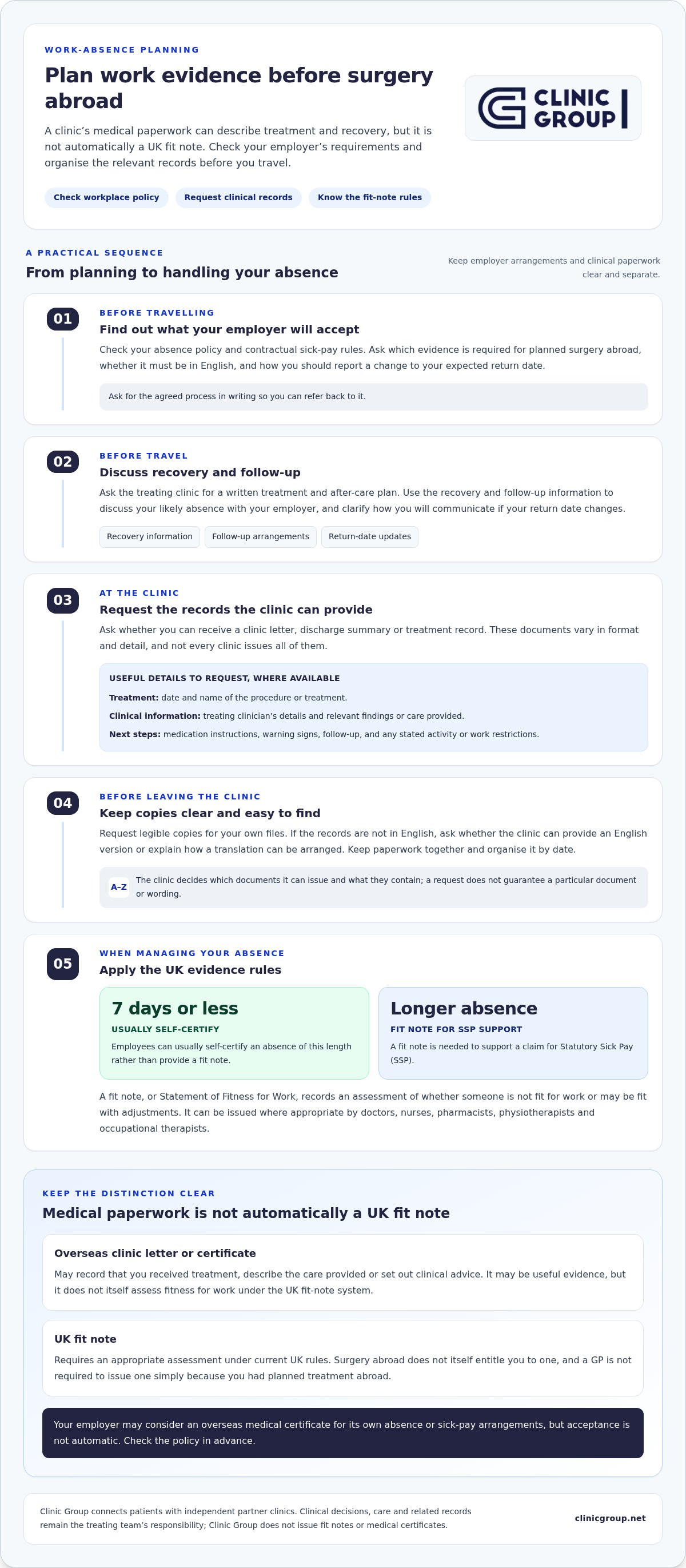
If you’re asking, “can I get a sick note for surgery abroad?”, you can request medical paperwork from the treating clinic, such as a certificate describing your treatment and recovery advice. It is not automatically a UK fit note, and your employer may not accept it. Check your workplace policy before travelling and ask what evidence it requires.
It helps to treat work evidence as a separate part of your surgery-abroad planning. Check your employer’s absence and contractual sick pay policies, ask which documents it will consider, and agree how to report any change to your return date. For absences of seven days or less, you can usually self-certify.
This guide explains the difference between a fit note and an overseas medical certificate, what clinical paperwork to request, and what to clarify with your employer. It also covers fit-note rules and how to plan recovery and follow-up before travelling. Clinic Group connects patients with independent partner clinics; the treating clinic is responsible for clinical care and related paperwork.
Key Takeaways
- When asking “can I get a sick note for surgery abroad?”, distinguish an overseas clinic’s medical evidence from a UK fit note, and check what your employer requires.
- Request the relevant records, such as a clinic letter, discharge summary or treatment record. Each provides information about your care, but they serve different purposes.
- The treating team handles clinical records. You and your employer need to agree how absence evidence will be managed.
- Before travelling, discuss recovery and travel suitability with the clinical team, arrange paperwork and agree how you’ll communicate about returning to work.
- Clinic Group supports treatment planning through its independent partner clinic network. Clinical decisions and records remain the partner clinic’s responsibility.
Can I get a sick note for surgery abroad?
You can request medical paperwork after surgery abroad, but this does not guarantee a UK fit note or your employer’s approval of the absence. Whether a fit note is appropriate depends on current rules and your circumstances. Before travelling, check your employer’s absence policy and agree what evidence it needs.
What does a sick note mean in the UK?
“Sick note” is the familiar term. The official document is a fit note, or Statement of Fitness for Work. It records an assessment of whether someone is not fit for work or may be fit with adjustments. Under current UK rules, doctors, nurses, pharmacists, physiotherapists and occupational therapists can issue fit notes where appropriate.
A fit note differs from a clinic letter or medical certificate. Those documents can record that you received treatment, describe the care provided or set out clinical advice. They do not, by themselves, assess your fitness for work under the UK fit-note system. The general purpose of this type of evidence is described in Medical Certificate.
For an absence of seven days or less, employees can usually self-certify rather than provide a fit note. For a longer absence, a fit note is needed to support a claim for Statutory Sick Pay (SSP). Evidence that surgery took place is not automatically the same as evidence that meets fit-note requirements.
Does surgery abroad automatically mean you can get a UK fit note?
No. Having an operation abroad does not itself entitle you to a UK fit note. A clinician who is able to issue fit notes must assess the situation under the applicable rules. Overseas records may help explain your treatment, but they do not guarantee that a UK healthcare professional will issue a note. A GP is not required to provide one simply because you had planned treatment abroad.
Your employer’s policy also affects how your absence is handled. It may consider a medical certificate from the overseas clinic for its own sick-pay arrangements, but acceptance is not automatic. Ask in advance what evidence is required, whether the certificate must be in English, and how the policy applies to planned surgery and recovery. Keep the response in writing so you can refer to the agreed process.
Clinic Group connects patients with independent partner clinics and supports treatment planning, but does not provide clinical care or issue fit notes or medical certificates. Clinical assessments and records remain the treating team’s responsibility. Before booking, request a written treatment and after-care plan, including information about recovery and follow-up, so you can discuss your likely absence with your employer.
This guide offers general information only. It is not medical advice or an assessment of your fitness for work. Individual circumstances and current guidance affect what documentation may be appropriate.
Which documents can the overseas clinic provide after surgery?
The treating clinic may be able to provide different types of clinical paperwork. Some documents record what happened, others explain care after discharge, while a fit note assesses fitness for work under UK rules. Ask the clinic what records it can provide and request copies for your own files.
What should a discharge summary or clinic letter contain?
A clinic letter may summarise an appointment or treatment. A discharge summary usually records key information when you leave clinical care, while a treatment record may contain more detailed notes about the care provided. Formats and contents vary, so do not assume every clinic issues all three.
Where available, useful details to request include:
- Treatment details: the date and name of the procedure or treatment.
- Clinical information: the treating clinician’s details and relevant findings or care provided.
- Next steps: medication instructions, warning signs, follow-up arrangements and any stated activity or work restrictions.
Ask for legible copies and a written treatment and after-care plan before leaving the clinic. If records are not in English, ask whether the clinic can provide an English version or explain how a translation can be arranged. The clinic determines which documents it can issue and what they contain, so a request does not guarantee a particular document or wording.
Can an overseas certificate replace a UK fit note?
Not necessarily. An overseas medical certificate may confirm that you received treatment or describe a clinician’s recommendations. A UK fit note has a specific purpose within the UK system. The overseas document may be useful evidence, but it does not automatically become a fit note or establish entitlement to workplace or sick-pay arrangements.
Before relying on a certificate, check your employer’s absence policy and ask what evidence it will consider for planned surgery abroad. Clarify whether the document needs to be in English and what information it should include. Even a detailed certificate cannot guarantee that your employer will accept it or that a UK healthcare professional will issue a fit note based on it.
Keep copies of your paperwork together, including the treatment plan and follow-up instructions. Organising documents by date can make it easier to find the relevant record if you need to discuss a particular stage of care. The guide to after-care in the UK after surgery abroad covers planning follow-up once you return home.
For broader treatment information and planning resources, browse Clinic Group’s medical travel guidance.
Who decides whether your absence is supported?
Different people have different responsibilities. The treating team documents your clinical care; a UK healthcare professional may assess whether a fit note is appropriate under current rules; you must report your absence and provide evidence; and your employer applies its absence procedures. One person’s document or decision does not automatically settle the others.
Treating clinic: Provides clinical care and may issue records about the procedure, recovery advice and follow-up. The treating team is responsible for the accuracy of its clinical documents.
UK healthcare professional: May assess your circumstances and issue a fit note where current eligibility and issuing rules allow. An overseas record can inform a discussion, but it does not guarantee an assessment or a particular outcome.
You, the employee: Tell your employer about the planned absence, follow its reporting process and provide the evidence requested. Keep copies of correspondence and clinical documents.
Employer: Applies its sickness-absence policy and considers evidence in line with relevant employment and statutory guidance. The policy may set requirements for contractual sick pay, so do not assume a particular overseas certificate will be accepted.
What can the treating clinic and a UK healthcare professional do?
The overseas clinic can explain the treatment it provided and give you relevant records or after-care instructions. It cannot decide how your UK employer will record the absence. A UK healthcare professional’s assessment or documentation depends on current rules, the information available and your circumstances. Clinic Group does not provide clinical assessments or issue certificates.
Rules on fit notes, self-certification and Statutory Sick Pay can change, and details may depend on your circumstances. Before relying on a particular entitlement or document, check current GOV.UK guidance. Do not assume that one GP practice’s approach to an individual request applies to every practice or patient.
What should you clarify with your employer?
Where possible, start the conversation before booking. Explain that the absence is planned, ask how to report it and check the sickness-absence policy alongside any contractual sick-pay requirements. This gives you time to understand the process rather than resolving documentation questions during recovery.
- Ask what evidence is required for planned surgery and for a recovery period that lasts longer than expected.
- Check how to submit overseas records, whether they need to be in English and whether your employer has a process for further review.
- Agree whom to update if your return date changes and how your employer wants you to communicate during your absence.
Keep your employer’s response in writing, but remember that an advance discussion cannot guarantee how a later absence will be assessed. Your clinical team can explain recovery advice; your employer’s policy and applicable rules determine workplace procedures. For help planning treatment, explore Clinic Group’s treatment-abroad guidance.
How can you prepare for work absence before travelling?
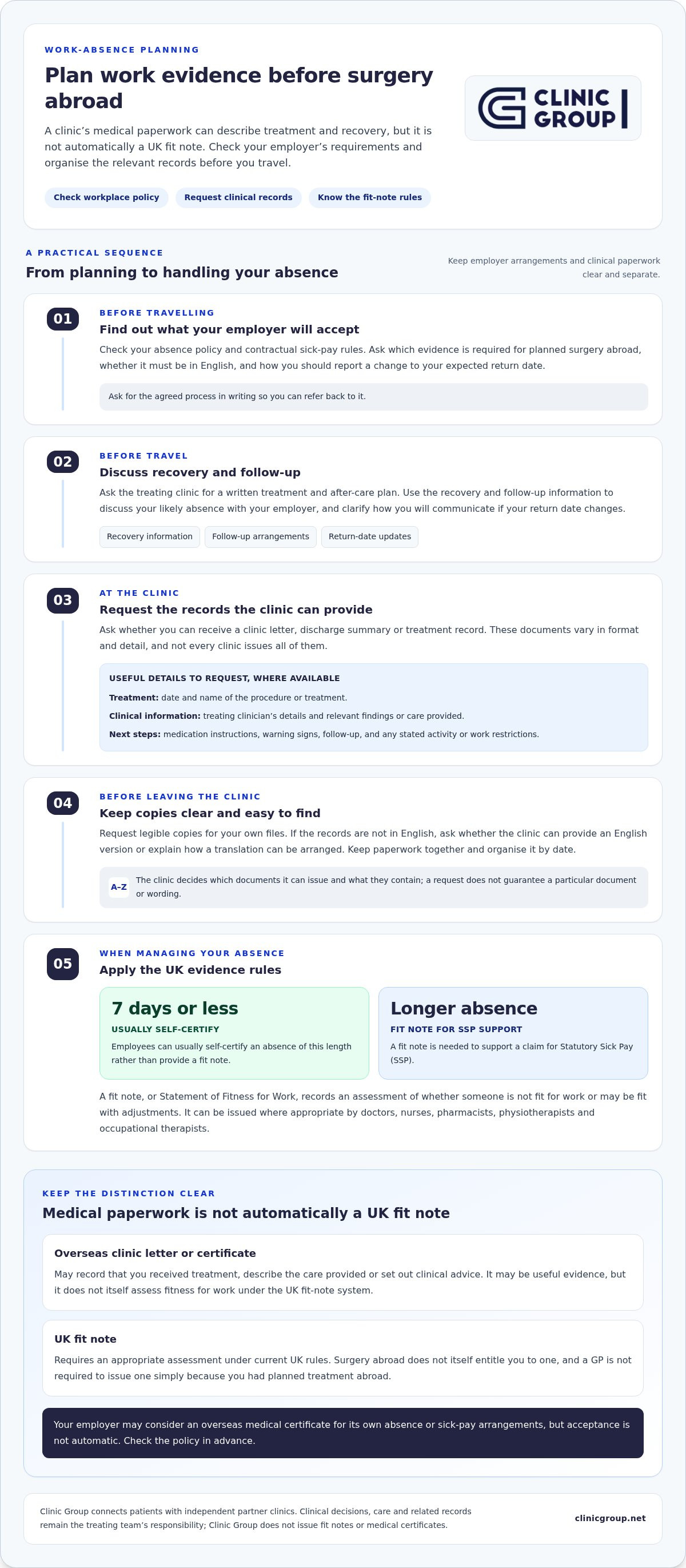
Arrange work communication, clinical paperwork and travel plans before departure, rather than leaving them until recovery. If you are asking, “can I get a sick note for surgery abroad?”, planning ahead can clarify what evidence your employer expects. It cannot guarantee that a certificate will be accepted or a fit note issued.
What should you arrange with work before travelling?
Tell your employer about the planned absence through its usual process. Discuss likely dates as estimates, not guaranteed recovery or return-to-work times, and check how to report any changes. Keep copies of messages and the employer’s evidence requirements so you can refer to them during your absence.
Use this checklist in order:
- Speak to your employer. Check the sickness-absence policy, how to report planned treatment and what documentation may be requested. Ask how and when to provide updates if recovery takes longer than expected.
- Discuss recovery with the treating team. Ask about expected recovery, work-related restrictions and whether travel is suitable for your circumstances. Recovery varies, so do not treat an estimated return date as a clinical guarantee. The pre-surgery consultation guidance can help you prepare questions for this discussion.
- Request a written plan. Before booking, ask the treating clinic for a written treatment and after-care plan, including how follow-up will work and how clinical records will be supplied. Confirm who to contact with post-treatment concerns and make sure you understand the arrangements before travelling.
- Check travel and insurance arrangements. Discuss travel plans with the treating clinical team, including whether the proposed journey fits its advice. Read your insurance terms carefully and confirm the relevant cover before booking. Keep policy details and important clinical documents accessible while away.
- Agree how you’ll communicate your return. Before leaving, clarify whom to contact at work and how to report your readiness to return or a change to the expected date. Follow your workplace process for sharing further evidence rather than assuming the initial dates will remain unchanged.
What should you request from the clinic?
Ask how you will receive your records, such as a clinic letter, discharge information or treatment record, and request legible copies. If the documents are not in English, ask about an English version or translation arrangements. The clinic is responsible for clinical paperwork; it cannot determine what your employer will accept or decide your UK workplace entitlement.
Plan follow-up before departure, including how to reach the treating team and what arrangements apply once you are home. The UK after-care guidance for surgery abroad explains why follow-up planning is part of preparing for treatment away from home.
How can Clinic Group support treatment planning without issuing a sick note?
Clinic Group helps patients organise the planning stages of treatment abroad. It does not provide clinical care or decide whether someone is fit for work. Support includes free consultation and coordination, clinic matching and travel assistance. Treatment planning cannot guarantee that a certificate will be issued or accepted.
What does treatment coordination cover?
A consultation can help clarify your questions and provide a starting point for clinic matching. The treating clinic can then assess your circumstances and prepare information about proposed treatment. Travel coordination can assist with practical arrangements, but it does not replace clinical assessment or advice, or decisions made by your employer.
The treating team is responsible for clinical care, treatment decisions and medical records. Work absence and evidence are handled separately under your employer’s procedures and applicable rules. Coordination can help organise the steps around treatment, but cannot determine workplace entitlement or guarantee a clinical outcome. The UK guide to healthcare abroad provides further context for planning care outside the UK.
What should you have in writing before booking?
Before making arrangements, ask the treating clinic for a written plan explaining the proposed care and follow-up. Clarify how clinical records will be supplied and whom to contact with post-treatment questions. A written plan can help you prepare for discussions about work, but it cannot promise a recovery period or return-to-work date.
Confirm how after-care will be arranged and review your insurance terms, including whether complications related to elective treatment are covered. Check exclusions and how to access assistance rather than assuming a standard policy includes cover for treatment-related complications. Keep relevant insurance details and clinical documents accessible during travel.
This article provides general information, not medical advice or an assessment of fitness for work. Discuss treatment decisions with the treating clinical team. Outcomes cannot be guaranteed.
Make your next step a planned one
Before committing to travel dates, take time to align the practical decisions: understand your workplace process, discuss recovery and travel suitability with the clinical team, and identify what information you still need. If you’re asking, “can I get a sick note for surgery abroad?”, treat work documentation as one part of your preparation, not something to assume will be resolved after treatment.
Before a consultation, write down your questions, including how treatment decisions are made and what follow-up arrangements will apply. Clinic Group’s platform helps you explore treatment information and connect with independent partner clinics, with coordination support that may include clinic matching and travel assistance. Clinical advice and decisions remain with the treating team.
With clear questions and realistic plans, you can approach the next decision with greater confidence and make choices suited to your health and circumstances.
Frequently Asked Questions
Can my GP issue a fit note after surgery abroad?
A GP may be able to issue a fit note, but is not required to do so simply because you had surgery abroad. Other eligible healthcare professionals can also issue fit notes under current rules. Before travelling, check your practice’s process and official guidance. Keep your clinic records together, including procedure details and follow-up advice, in case a UK clinician considers an assessment appropriate.
Will my employer accept a sick certificate from an overseas clinic?
Possibly, but acceptance depends on your employer’s policy and the certificate provided. A document confirming treatment may help explain your absence without serving the same function as a UK fit note. Before travelling, ask what evidence your employer expects, how to submit it and whether it needs to be in English. Do not assume a particular certificate will qualify you for workplace or contractual sick pay.
Is a discharge summary the same as a sick note?
No. A discharge summary records clinical information about your care and may include follow-up instructions. A fit note concerns fitness for work under applicable UK rules. Keep the discharge summary with your other records and check whether your employer or a healthcare professional needs specific details, such as dates or restrictions. It can explain the treatment, but does not automatically meet workplace evidence requirements.
Can I ask for a fit note before having surgery abroad?
A planned operation does not automatically mean a fit note can be issued in advance. The document relates to fitness for work, and eligibility depends on current rules and an assessment. If you’re asking, “can I get a sick note for surgery abroad” before the procedure, do not rely on a future note as approval for leave. Discuss estimated absence dates with your employer and check official guidance before making arrangements.
What if I cannot get a fit note while I am abroad?
Contact your employer promptly, follow its sickness-reporting process and explain what documentation you can provide. Keep copies of messages and any clinical records issued by the clinic. After returning, you can ask an eligible UK healthcare professional whether an assessment is appropriate, but do not assume a fit note will follow. If a health concern is urgent or changing, seek appropriate clinical help rather than waiting to resolve paperwork.
Does a sick note confirm how long recovery will take?
No document can guarantee your individual recovery or return-to-work date. A fit note may reflect a healthcare professional’s assessment, while the treating team can advise on recovery after your procedure. Work capacity can change as you heal. Treat dates as estimates, discuss changes with your employer and contact your clinical team if your recovery differs from the advice you received.
Should I tell my employer that my surgery is abroad?
Follow your employer’s absence and evidence procedures, and provide the information needed to manage your leave. Check how it wants planned treatment reported, which dates it needs and how documents should be submitted. If you are unsure how much health information to share, ask about the appropriate confidential process. Clarifying these arrangements before travelling can help if your plans or recovery change.

Article by
Clinic Group Editorial Team
The Clinic Group editorial team publishes clear, practical guides for UK and EU patients researching medical travel — from dental implants and hair transplants to plastic surgery and eye care — with a focus on verified clinics, transparent “from” pricing, and safe planning.
Disclaimer
This article is for general information only and is not medical advice, diagnosis, or a substitute for an in-person consultation with a qualified clinician. Treatment suitability, risks, timelines, and costs vary by individual. Clinic Group connects patients with independent clinics; those clinics are responsible for clinical care. Always verify credentials, obtain a written treatment plan and itemised quote, and confirm aftercare arrangements and travel insurance cover (elective procedures are often excluded) before booking. Outcomes cannot be guaranteed.