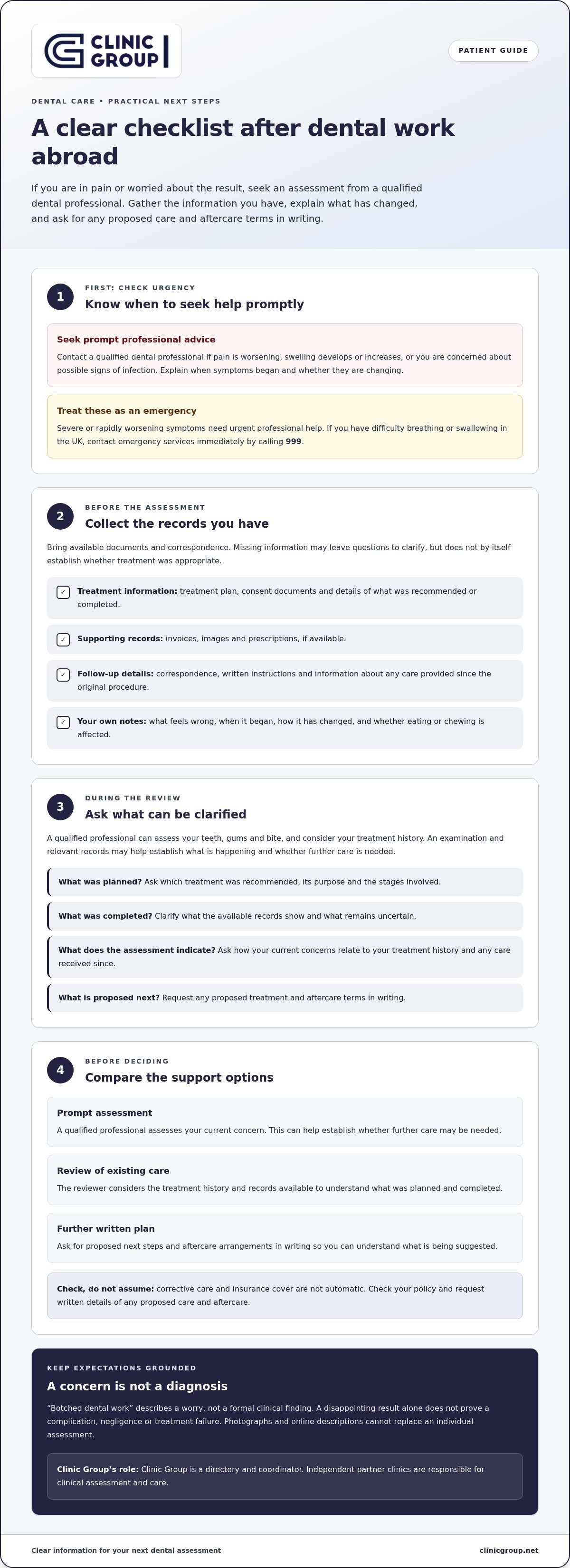
What should you do if botched dental work abroad has left you in pain or worried about the result? Arrange an assessment with a qualified dental professional, and gather your treatment records, plan and receipts. Don’t try to diagnose the problem yourself. Ask for any proposed corrective care and aftercare terms in writing.
It’s understandable to feel uncertain about getting a timely assessment at home, especially if records are missing or the clinic’s advice is unclear. This guide explains practical next steps, what information to request and how to compare assessment and support options without assuming that corrective treatment or insurance cover is automatic.
You’ll also find guidance on setting realistic expectations about care in the UK and communicating with the clinic that treated you. Clinic Group can help you explore its verified partner network; independent partner clinics are responsible for clinical assessment and care.
Key Takeaways
- “Botched dental work abroad” describes a concern, not a diagnosis; a qualified dental professional can assess pain, damage or changes in function and appearance.
- Compare prompt assessment, a review of existing care and a further written plan to understand what each option can clarify.
- Gather your treatment plan, consent documents, invoices, images, prescriptions and correspondence to help inform the next assessment.
- Request proposed treatment and aftercare terms in writing, and check insurance cover rather than assuming corrective care will be covered.
- Clinic Group can help you explore independent partner clinics through consultation, case review and clinic matching; clinical assessment and care remain the partner clinic’s responsibility.
What does “botched dental work abroad” mean, and when should you seek help?
“Botched dental work abroad” is a phrase patients may use when treatment has left them worried, uncomfortable or dissatisfied. It isn’t a diagnosis or a formal clinical category. Only a qualified dental professional who assesses you can determine whether there is a dental problem, what may be causing it and what care could be appropriate.
Concerns can involve pain or physical damage, but they may also relate to how your teeth meet when you bite, whether you can eat comfortably, or how the result looks compared with what you expected. Dental tourism covers people travelling for dental care, as outlined in this general Dental tourism overview. However, a general article cannot establish whether an individual treatment has failed or explain why a concern has arisen.
Seek professional assessment if you have ongoing or worsening symptoms, notice damage, or are having difficulty with everyday functions such as chewing. Don’t rely on photographs or online descriptions to decide what has happened. Clinic Group’s Identico Dental clinic profile is a directory listing, not a diagnosis or a substitute for an assessment by a dental professional.
Is a disappointing result always a dental complication?
Not necessarily. A result may differ from your expectations without that alone proving a clinical complication, negligence or treatment failure. Equally, discomfort or difficulty using your teeth deserves attention, even if you’re unsure whether it is related to the procedure. A professional can assess the teeth, gums and bite, and consider your treatment history before advising you.
Images and online descriptions can provide context, but they cannot show everything a clinical assessment may need to consider. A photograph may not reveal how your bite feels or what is happening beneath the visible surface. Avoid drawing conclusions about the cause or fault from appearance alone; seek an individual assessment instead.
Which symptoms should not be ignored?
Contact a qualified dental professional promptly if pain is worsening, swelling develops or increases, or you’re concerned about possible signs of infection. These symptoms don’t identify a specific cause, but they should not be dismissed or assessed through online comparisons. Explain when they began, whether they are changing and what treatment you had, if you know.
- Severe or rapidly worsening symptoms: seek urgent professional help rather than waiting for a routine review.
- Difficulty breathing or swallowing: treat this as an emergency and contact emergency services immediately. In the UK, call 999.
Do not try to diagnose or treat the problem yourself. A prompt, in-person assessment can help establish what is happening and whether further care is needed. This guidance is general information and cannot replace advice based on an examination.
Why can dental work abroad need further assessment?
Further assessment can help a dental professional understand the treatment you received, the concerns you’re experiencing and what care has taken place since. A concern described as botched dental work abroad doesn’t, by itself, explain what happened or why. Clinical factors can only be assessed by an appropriate clinician reviewing your case, which may include an examination and relevant records.
Possible issues to clarify include differences between the plan discussed and the procedure carried out, information that wasn’t fully understood, or uncertainty about who would provide follow-up care after you returned home. These are possibilities, not conclusions about your case or the quality of care. An unexpected result or symptom alone can’t establish its cause.
How can treatment planning affect the result?
A treatment plan should reflect a patient’s clinical needs and explain the proposed work, its purpose and the stages involved. This matters because some restorative and implant treatments involve linked steps, such as planning, placing or fitting a restoration, and later review. If you’re unsure what was planned or completed, the documents and an assessment can help clarify the sequence. Pain, appearance or an unexpected outcome alone doesn’t prove poor planning.
A clinician reviewing your case may consider:
- What treatment was recommended and what was completed.
- How your current concerns relate to the treatment history.
- Whether any further care has been provided since the original procedure.
Why do communication and follow-up matter?
Clear consent information helps you understand the proposed treatment and its relevant considerations before it goes ahead. Written instructions and accessible clinical records can also help another dental professional understand what was done and what guidance you received. Follow-up arrangements differ between independent clinics, so a review plan or aftercare provision shouldn’t be assumed. A dental aftercare checklist can help you consider what written information to keep for future reference.
If information is missing, note what you do have and identify what remains unclear. For example, you might have an invoice but not a detailed treatment plan, or instructions without a record of the procedure. These gaps can make it harder to build a clear account, but they don’t determine whether the treatment was appropriate. A qualified clinician can explain what they’re able to assess and what additional information would help.
Clinic Group is a directory and coordinator, not a dental provider; independent partner clinics are responsible for clinical assessment and care. If you’re considering a further dental pathway, you can explore Clinic Group’s dental clinic directory as one way to organise an informed next step.
What options can you compare after dental work abroad goes wrong?
The right next step depends on your symptoms, the treatment already carried out and what a clinical assessment finds. You might need an initial examination, a review of previous treatment, or a written plan setting out possible next steps. These routes can overlap, and none guarantees that repair or replacement will be appropriate.
| Route | Clinical assessment | Records and continuity | Aftercare arrangements |
|---|---|---|---|
| Prompt assessment | Focuses on your current concern and whether further care is needed. | Share any records you have; the clinician can explain what information is useful. | Ask what to do next and how any review will be arranged. |
| Review of existing care | Considers the original treatment and your current concerns together. | Previous plans, images and notes may help build a clearer picture. | Clarify who will manage follow-up and how information will be shared. |
| Further written plan | Sets out a clinician’s proposed approach following assessment. | Gives you a record of the findings and recommendations to consider. | Should explain proposed stages, review arrangements and relevant limitations. |
What should a written assessment and plan explain?
Ask for a clear written account of the assessment, the findings and the care being proposed. It should explain the intended stages, relevant alternatives and any limitations that apply to your individual case. A second opinion can help you understand or compare a proposed plan, but it may not produce a particular answer or recommendation. Keep the plan with your existing treatment documents.
If the original clinic provides written dental warranty terms, read what they say about eligibility, exclusions and how to raise a concern. A warranty is separate from a clinical assessment and does not establish what treatment is suitable now.
How can you compare continuity and aftercare?
Continuity means understanding who is responsible for clinical care at each stage and how follow-up is organised. Independent clinics may have different arrangements, so don’t assume that a review, further treatment or transfer of records will happen automatically. Ask for the proposed aftercare and any warranty terms in writing, and retain copies of the responses.
For each option, consider whether the clinician can review your available records, explain who will provide any agreed care, and set out how follow-up concerns should be raised. Written dental treatment safety and follow-up information can help you identify questions to discuss, but your own plan must reflect your assessment. A further procedure may or may not be recommended; the decision depends on clinical findings, your needs and the options available.
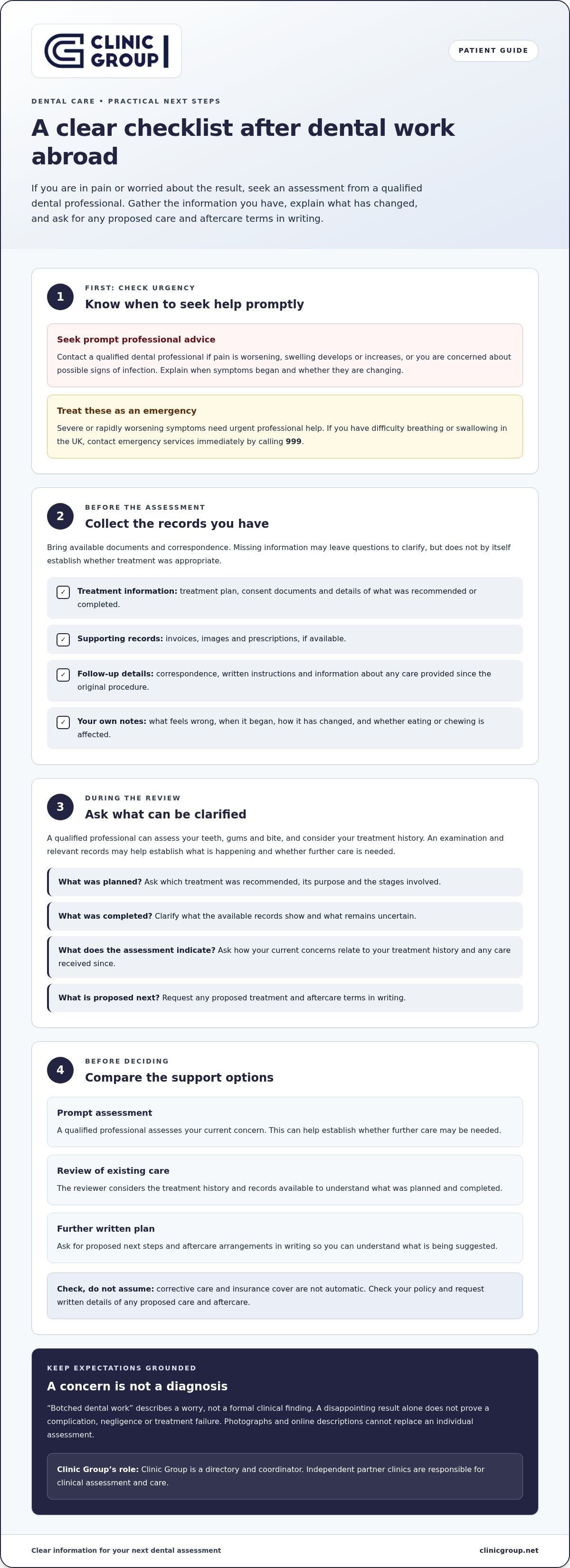
How can you prepare for an assessment and protect your next steps?
A little preparation can make an assessment more focused and help you keep a clear record of decisions. If you’re concerned about botched dental work abroad, organise the information you have without trying to decide what caused the problem. Use this sequence:
- Arrange an assessment. Contact a qualified dental professional and describe your current concern clearly, including whether it is changing.
- Request your records. Ask the clinic that treated you for the treatment plan, consent documents, invoices, images, prescriptions and relevant clinical notes, along with written aftercare terms.
- Record your concerns. Note when each issue began, what you have noticed and how it has changed. Keep to observable details rather than guessing at a diagnosis.
- Ask for a written plan. Before agreeing to further care, request the clinical findings, proposed steps, an itemised quote and aftercare arrangements in writing.
Which documents should you gather before an appointment?
Keep dated records together in one file, whether digital or on paper. Include correspondence with the treating clinic and any instructions received after treatment. Write a brief timeline of appointments, procedures and when concerns began. Note changes in pain, swelling, bite or eating comfort as observations, not conclusions. These details can help the clinician understand your account alongside the records.
- Treatment plan and consent documents.
- Invoices, prescriptions and written instructions.
- Dental images and clinical notes supplied by the clinic.
- Emails or messages about treatment, concerns and follow-up.
A practical dental aftercare checklist can help you keep follow-up information organised. If a record is missing, make a note of what you requested and when; don’t delay urgent assessment while waiting for paperwork.
What should you confirm before agreeing to further care?
Read the proposed plan and ask for any unclear terms to be explained. It should set out the findings, recommended care, expected stages and relevant limitations, alongside an itemised quote and written aftercare terms. Confirm which independent clinic or dental professional is responsible for clinical care and how follow-up questions will be handled. Arrangements vary, so keep the written response.
Check your insurance policy wording directly, including exclusions for planned elective treatment and complications. Cover isn’t automatic. In the UK, don’t assume standard public healthcare will provide a like-for-like repair of elective dental work; access to further care depends on clinical assessment and applicable healthcare criteria. Seek urgent help for severe or rapidly worsening symptoms rather than waiting for an insurance decision.
How can Clinic Group help you explore a dental care pathway?
Clinic Group is a medical tourism platform and directory that helps UK and EU patients explore verified partner clinics. It can coordinate a free consultation and case review, then help match your enquiry with an independent clinic. This may help organise a next step if you’re concerned about botched dental work abroad, but it isn’t a diagnosis or a promise that corrective treatment will be suitable.
The distinction matters: Clinic Group supports coordination, while the independent partner clinic is responsible for clinical assessment and treatment. Any clinical plan is for the clinic to prepare following its assessment, and you decide whether to proceed. A second opinion may be an option if you want another clinical perspective on a proposed plan; it cannot guarantee a particular recommendation or outcome.
What happens during case review and clinic matching?
You can share relevant records and explain what is concerning you, such as a change in comfort, function or appearance. This information helps organise the discussion and potential clinic matching. Coordination support can help manage the enquiry and practical communication, but it does not determine what is wrong or which treatment is clinically right for you. The independent clinic assesses your case and discusses any recommendations with you.
Before making a decision, make sure you understand which organisation is handling coordination and which clinic is responsible for your care. If a further opinion is proposed, clarify whether it involves a clinical assessment by an independent dental professional. A directory match is a route to explore, not a substitute for an examination or a guarantee that a particular clinic will recommend treatment.
What should you have in writing before travelling?
Before booking travel or agreeing to treatment, request the clinic’s written clinical plan and a clear, itemised outline of the proposed care. Ask for the stages, relevant alternatives and limitations to be explained, as well as written aftercare terms. The plan should make clear who will provide clinical care and how follow-up is organised, including who to contact with questions after you return home.
Review your insurance policy wording directly and seek confirmation from your insurer about planned treatment and complications. Don’t assume standard travel insurance includes these situations or that cover is automatic. Also clarify travel coordination arrangements with the relevant parties, keeping written copies of key information. If records or terms are unclear, pause to seek clarification before committing; a written record can help you compare what has been discussed with what is proposed.
Clinic Group can help you explore a pathway through its verified partner network, but clinical decisions remain between you and the independent clinic, and outcomes cannot be guaranteed. If you’re ready to consider your next step, explore dental treatment and request a consultation.
Take your next step with clarity
Uncertainty after dental treatment can make it tempting to reach a quick conclusion. Instead, give a qualified dental professional the chance to assess your individual situation and explain the options. A concern about botched dental work abroad does not, by itself, establish what has happened or what care may be suitable.
You can take time to understand any proposed plan before deciding how to proceed. Make sure you know who is responsible for clinical care, what the next steps involve and how follow-up will be handled. If you’re exploring care through Clinic Group, its role is to help you consider a pathway with an independent partner clinic; the clinic is responsible for assessment and treatment, and outcomes cannot be guaranteed.
A clear, informed decision starts with the right professional assessment. You don’t have to settle every question at once; focus on one considered next step.
Frequently Asked Questions
Can a dentist assess dental work carried out abroad?
Yes. A qualified dental professional can assess your current concerns, but they’ll need to examine you and consider relevant records before reaching a view. For example, details of the materials or implant system used may help explain what was done. If you don’t have those details, say so. An assessment may clarify possible next steps, but it can’t promise a particular diagnosis or treatment outcome.
Will the NHS automatically correct complications from elective dental treatment abroad?
No. Don’t assume that the NHS will automatically provide or fund corrective treatment for elective dental work carried out abroad. The care available depends on your circumstances and an NHS assessment, so check current NHS guidance rather than relying on a prediction about eligibility. If you have an urgent problem, seek appropriate professional help promptly; urgent assessment does not guarantee that later restorative or cosmetic work will be provided.
Does travel insurance cover corrective dental treatment after treatment abroad?
It depends on the wording of your policy, and planned or elective treatment may be excluded. Contact your insurer directly and ask specifically about complications arising after treatment, follow-up care and repatriation, which means transport back to the UK if medically needed. Ask for the insurer’s response in writing and keep it with your policy documents. Don’t assume ordinary travel cover includes corrective dental care or related travel.
Can another clinic repair dental work carried out abroad?
An independent dental professional must assess your case and decide whether any further care is suitable. A clinician may need to examine the area and review what treatment was performed before discussing possible options. For example, a restoration that feels uncomfortable may need assessment before anyone can say whether adjustment or another approach is appropriate. Neither a repair recommendation nor its result can be promised in advance.
What can I do if the original clinic does not respond to my complaint?
Keep a dated record of each message, call and reply, and retain copies of any documents you send. Request the relevant clinical records and a written explanation of the clinic’s response to your concerns. Check the complaint process provided by that clinic and follow its stated steps. If communication remains difficult, keep your requests factual and organised; available complaint routes depend on the clinic and where treatment took place.
Should I travel again for corrective dental treatment?
Whether another trip is suitable depends on an individual clinical assessment, the proposed plan, continuity of care and aftercare arrangements. Before making travel decisions, understand what examinations or treatment are proposed, who will provide follow-up and how concerns will be handled once you return. Ask for these details in writing and consider them alongside your own circumstances. Without case-specific information, it isn’t possible to recommend travel or a destination.
Can Clinic Group guarantee that corrective dental work will succeed?
No. Clinic Group is a directory and coordinator, not a dental provider. Independent partner clinics are responsible for clinical assessment and treatment, and no clinical outcome can be guaranteed. Clinic Group can help patients explore clinic matching and coordination support, but this does not determine whether corrective care is suitable or how treatment will turn out. Discuss clinical questions and expected outcomes directly with the independent clinic assessing your case.

Article by
Clinic Group Editorial Team
The Clinic Group editorial team publishes clear, practical guides for UK and EU patients researching medical travel — from dental implants and hair transplants to plastic surgery and eye care — with a focus on verified clinics, transparent “from” pricing, and safe planning.
Disclaimer
This article is for general information only and is not medical advice, diagnosis, or a substitute for an in-person consultation with a qualified clinician. Treatment suitability, risks, timelines, and costs vary by individual. Clinic Group connects patients with independent clinics; those clinics are responsible for clinical care. Always verify credentials, obtain a written treatment plan and itemised quote, and confirm aftercare arrangements and travel insurance cover (elective procedures are often excluded) before booking. Outcomes cannot be guaranteed.