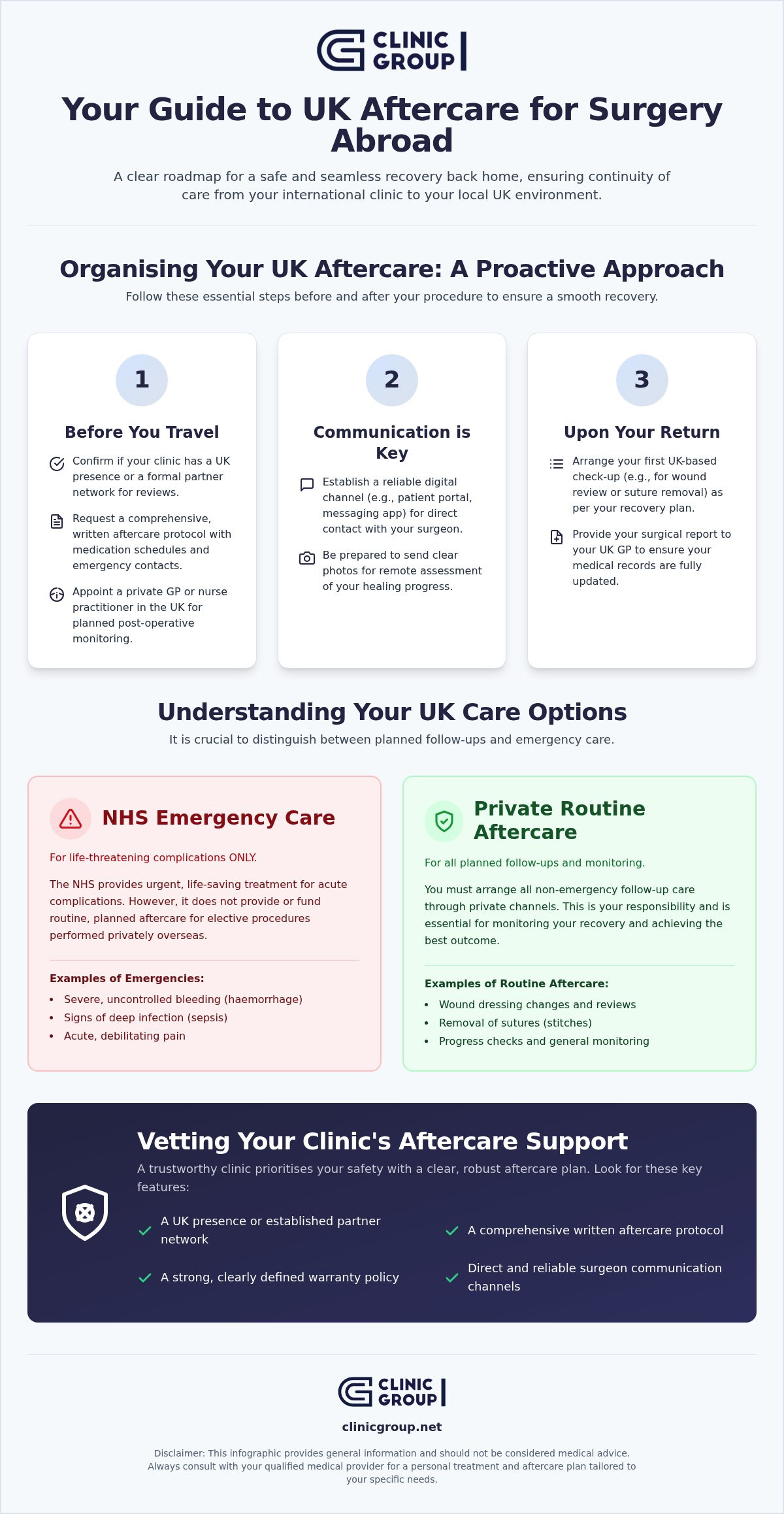
Managing aftercare in the UK for surgery abroad involves arranging private consultations for routine follow-ups, as the NHS does not typically provide planned care for elective overseas procedures. Patients should obtain a comprehensive recovery plan from their international clinic and identify local private specialists for wound reviews and monitoring to ensure a safe, successful outcome.
Imagine landing back at Heathrow after a successful hair transplant or dental procedure in Tirana, only to feel a sudden wave of uncertainty about the days ahead. You've received world-class care, but now you're home, the question of who will monitor your progress or remove your sutures (medical stitches) becomes a priority. It's natural to feel concerned about the logistics of transitioning your medical journey from an international clinic back to your local environment.
You deserve a recovery that's as professional and seamless as the surgery itself. This guide provides a clear roadmap for managing your aftercare in the UK for surgery abroad, ensuring you know exactly what to ask your surgeon before you fly home. We'll explore the distinction between NHS and private responsibilities, how to facilitate communication between your clinic and local providers, and the steps you can take to guarantee peace of mind during your transformation.
Key Takeaways
- Learn how to effectively organise your aftercare in UK for surgery abroad by arranging private medical monitoring for routine post-operative check-ups.
- Identify the specific "flying window" and recovery timelines for various procedures to ensure you return home only when it is medically safe to do so.
- Understand the role of the NHS in your recovery, whilst recognising the distinction between life-saving emergency care and elective post-operative support.
- Discover how to vet international clinics based on their UK presence, partner networks, and the strength of their written warranty policies.
- Gain a practical roadmap for appointing a private practitioner to manage wound care and assess your healing progress once you land back in Britain.
What is aftercare in the UK for surgery abroad?
Aftercare in the UK for surgery abroad refers to the structured medical monitoring and clinical support provided to a patient once they return home following an elective procedure overseas. It acts as a vital bridge between the operating theatre and your final aesthetic or functional result. Arranging aftercare in UK for surgery abroad requires a proactive approach to ensure that the high standards of your initial treatment are maintained throughout the healing process. As the global landscape of medical tourism evolves, patients are increasingly taking control of their recovery by organising local support networks before they even board their flight.
This phase of your journey is vital for several reasons. Primarily, it ensures that wounds heal correctly and allows for the early detection of any signs of infection. Whether you have undergone a facelift or received full mouth implants, the first few weeks are the most transformative. Effective aftercare involves the concept of "Continuity of Care," where you remain in digital contact with your original surgeon whilst utilising local UK resources for physical assessments. Typical components of a robust recovery plan include virtual consultations, local wound dressing changes, and scheduled physical reviews with a private practitioner.
The difference between routine follow-ups and emergency care
It's essential to distinguish between routine follow-ups and emergency medical attention. Routine follow-ups are planned, proactive checks designed to monitor your progress. These might include the removal of sutures (medical stitches) or assessing the stability of dental work. In contrast, emergency care is required for rare, acute complications such as sepsis or a haemorrhage (heavy bleeding). Whilst the NHS will always provide life-saving treatment in an emergency, they do not routinely fund or provide planned follow-up care for private elective procedures. You shouldn't rely on the NHS for routine reviews; these must be arranged through private channels to ensure your recovery remains on track.
Why a written aftercare protocol is essential
A written aftercare protocol is a detailed recovery roadmap provided by your clinic. You should receive this document before you leave the UK for your procedure. It serves as a definitive guide for both you and any local medical professionals you consult. A comprehensive plan should include direct contact methods for your surgeon, emergency out-of-hours numbers, and a precise medication schedule. Verified clinics within the Clinic Group directory prioritising patient safety will always provide these documents. Following a structured recovery guide ensures that every stage of your healing is documented, transparent, and professionally managed.
How can you organise UK-based aftercare safely?
Organising a safe recovery starts long before you board your flight. To secure effective aftercare in UK for surgery abroad, you must establish a logistical framework that connects your international surgeon with local support. This proactive approach ensures you aren't left searching for assistance during the critical first weeks of healing.
The first step involves confirming if your chosen clinic has a UK presence or a formal partner network. Some established providers maintain consultation rooms in major cities for physical reviews. If they don't, you should appoint a private GP or an independent nurse practitioner in the UK for basic post-operative monitoring. This professional should be briefed on your procedure details before you travel to ensure they're comfortable managing your specific case.
Simultaneously, you must establish a reliable digital communication channel with your lead surgeon. Whether through a secure patient portal or a dedicated messaging app, clear lines of communication allow for the rapid exchange of photos and progress updates. Finally, ensure your UK medical records are updated. Your local doctor should ideally have a copy of your surgical report, including the types of implants or materials used, to provide informed care if needed in the future.
Finding private post-surgery support in the UK
Private healthcare providers offer essential services that fill the gap where the NHS cannot provide elective support. You might require blood tests to monitor healing markers or specific imaging to check the placement of implants. Independent cosmetic surgery nurses are particularly valuable; they specialise in wound care, drain management, and stitch removal. However, you must verify the credentials of any UK professional you hire. Check they're registered with the Nursing and Midwifery Council (NMC) or the General Medical Council (GMC). Taking these steps helps mitigate the risks of medical tourism by ensuring that your recovery is overseen by qualified experts who understand the nuances of post-operative healing.
The role of the patient coordinator
A patient coordinator acts as your primary advocate and logistical guide throughout the journey. They facilitate the flow of information between you and the clinical teams in Tirana or Dubai, ensuring that your questions are answered promptly. For complex dental procedures such as full mouth implants, the coordinator manages the timing of your second trip for the final restoration. They ensure your feedback is heard by the surgeon during the healing phase, making the transition between countries feel cohesive. By using a platform that vets these providers, you can browse verified clinics that prioritise this level of integrated communication and support.
Recovery timelines for common treatments abroad
Recovery isn't a race; it's a methodical biological process. Each procedure carries its own set of milestones that dictate when you can return to work, exercise, or even fly home safely. Planning your aftercare in UK for surgery abroad requires a realistic understanding of these windows. For instance, whilst you might feel energetic shortly after a rhinoplasty, the internal tissues continue to settle for up to a year. Aligning your travel plans with UK government advice on surgery abroad is essential for a safe transit, as flying too soon can increase the risk of deep vein thrombosis or excessive swelling.
Your surgeon will provide a strict "do not" list tailored to your procedure. This typically includes avoiding strenuous exercise, direct sun exposure on healing scars, and heavy lifting. Adhering to these rules is non-negotiable for protecting both your health and the final aesthetic result. Managing expectations is part of the process; your "final" look won't be visible the moment the bandages come off.
Dental implant and restoration timelines
Dental medical tourism often follows a two-trip model. The first stage involves placing the implant, followed by a period of osseointegration; this is the biological process where the titanium post fuses with your jawbone. This phase typically takes between three and six months. During this waiting period, you'll wear a temporary restoration. If a temporary crown loosens whilst you're back in Britain, you should contact your patient coordinator immediately to arrange a local private review. Referencing the Clinic Accreditation Guide can help you understand the international standards your clinic should meet regarding these safety protocols.
Plastic surgery and hair transplant milestones
The first 72 hours post-surgery are the most critical for rest and initial healing. By weeks two to six, most patients begin returning to light activities, though monitoring for abnormal scar tissue remains a priority. Hair transplant patients face a unique milestone: the "shedding phase." Between weeks two and eight, the newly transplanted hairs often fall out. Don't panic; this is a completely normal part of the follicle's growth cycle. The permanent hair will begin to emerge from the third month onwards, requiring patience and consistent aftercare in UK for surgery abroad to ensure the scalp remains healthy during the growth journey.
What happens if complications occur after returning to the UK?
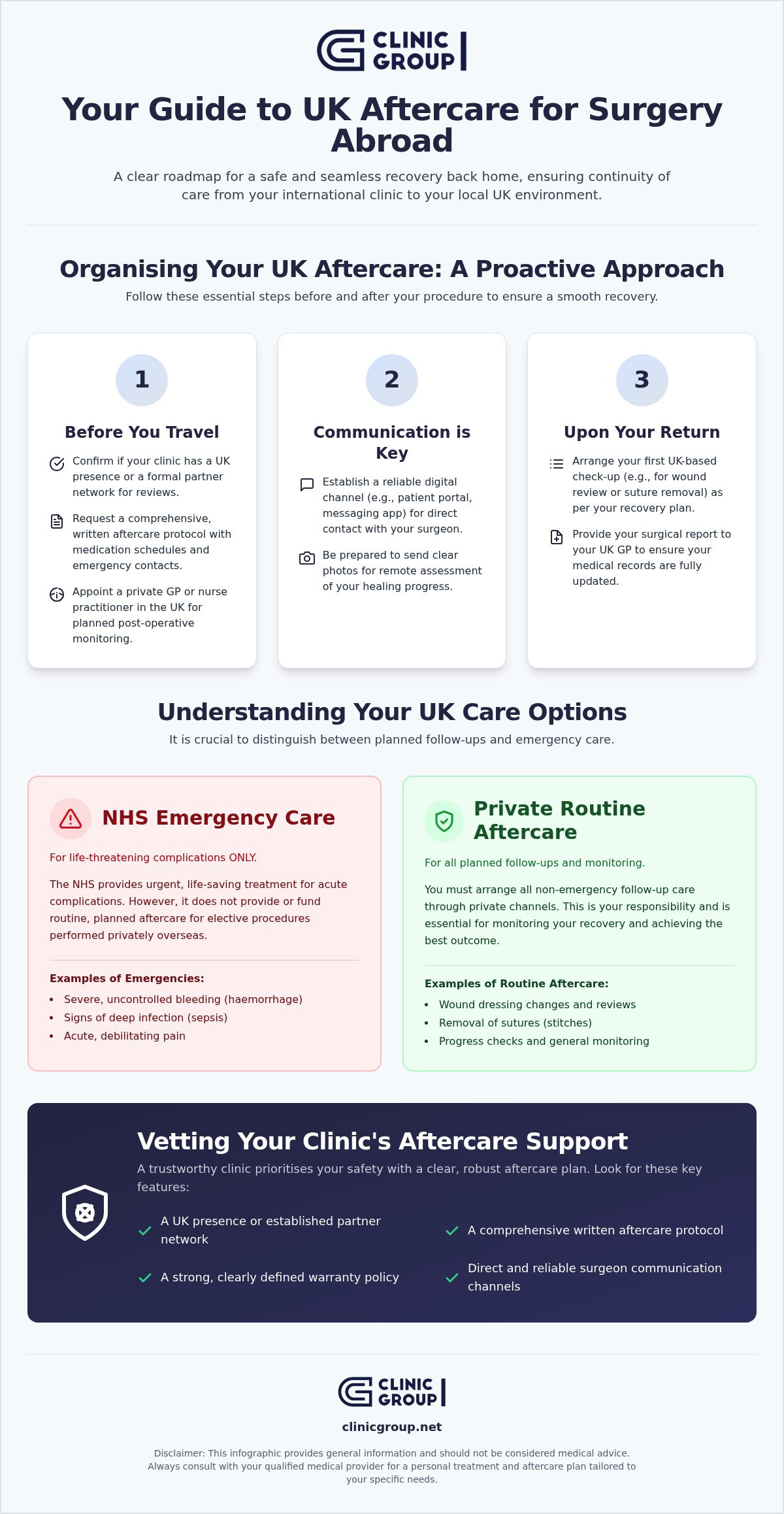
Whilst the vast majority of patients enjoy a smooth recovery, you must prepare for the possibility of the unexpected. Minor concerns, such as standard swelling, bruising, or temporary numbness, are typical milestones in the healing process. However, major complications require a structured and immediate response. Effective aftercare in UK for surgery abroad relies on your ability to distinguish between normal post-operative symptoms and genuine medical emergencies. It's a fundamental reality that the NHS will provide life-saving treatment for acute issues like sepsis or severe haemorrhage (heavy bleeding). Yet, they are not responsible for elective corrections or revising aesthetic results that don't meet your expectations.
To manage non-emergency concerns, you should rely on the warranty provided by your clinic. Many verified clinics in the Clinic Group directory offer written guarantees that cover the clinical costs of corrective work, though you'll typically need to return to the original facility for treatment. This is why specialist medical travel insurance is essential. Standard travel policies often exclude complications arising from elective surgery. Having a dedicated policy ensures that if you need to fly back to Tirana or Dubai for a revision, your travel and accommodation costs are covered, protecting your financial peace of mind.
Contacting your surgeon abroad from the UK
If you notice anything unusual during your recovery, your first point of contact should always be your original surgeon. High-resolution photos and video calls are effective tools for remote assessment, allowing the clinical team to see the healing progress clearly. You should never allow a different surgeon to "tweak" or alter the work without first consulting the original clinic, as this often voids your warranty. Documenting your journey is equally vital; keep a daily recovery log noting your temperature, pain levels, and any visible changes. This data is invaluable for your surgeon when providing advice from a distance.
When to seek immediate UK medical attention
Certain symptoms, known as "red flags," require immediate attention from UK emergency services. These include a high fever, excessive redness that feels hot to the touch or is spreading, and sudden shortness of breath. When presenting to UK doctors, be completely transparent about your surgery overseas. Ensure you have your discharge summary and any material passports, such as an implant passport for dental work, readily available. These documents provide local medical teams with the specific technical details they need to treat you safely and effectively in an emergency situation.
Choosing a clinic with robust aftercare via Clinic Group
Clinic Group acts as a discerning guide, connecting you with international providers who view surgery as a comprehensive journey rather than a single clinical event. When you organise aftercare in UK for surgery abroad, the quality of your chosen clinic's post-operative protocol is just as significant as the surgeon's technical skill. We meticulously vet our partner clinics based on their commitment to transparency, specifically reviewing their written warranty policies and the availability of dedicated patient coordinators. By facilitating the journey for over 5,000 patients every month, our platform provides a level of collective security and established trust that is often missing from independent research.
You can access our extensive Medical Tourism Treatment Guides to gain a deeper understanding of the recovery process. These resources are designed to help you prepare for every phase of your healing, ensuring you know exactly what to expect from the moment you leave the theatre (operating room) until your final result is achieved. This methodical approach ensures that your path from the initial consultation to the final UK-based review is clear and professionally managed. Establishing a reliable framework for aftercare in UK for surgery abroad starts with selecting a clinic that prioritises patient safety and long-term satisfaction.
Verified clinics in Albania and Dubai
Our directory features premier partners in destinations recognised for their clinical excellence and modern facilities. Tirana has emerged as a leading hub for dentistry, where clinics utilise European-standard materials for implants and restorations. Similarly, our hair restoration partners in Dubai maintain exceptionally high standards of care, often including comprehensive patient coordination as part of their standard plans. When you inquire through our platform, always request a personal written quote. This document will detail indicative costs, labelled as "from" figures, and outline the specific aftercare support included in your individual care package.
Taking the next step safely
Whilst digital consultations provide an excellent starting point, an in-person assessment remains the final word in your treatment plan. This ensures that the procedure is perfectly tailored to your unique health profile and aesthetic goals. We encourage all patients to read our Accreditation Guide to understand the rigorous standards we use to verify our partners. Taking control of your appearance involves making informed choices supported by expert curation and a clear recovery roadmap.
Browse our directory of verified clinics
Securing Your Path to a Successful Recovery
A successful transformation relies as much on your recovery as it does on the initial operation. By organising your aftercare in UK for surgery abroad before you travel, you ensure that every stage of healing is professionally monitored. This proactive approach allows you to focus on your results whilst knowing that private clinical support is already in place. It's important to remember that whilst the NHS provides essential emergency care, the responsibility for elective follow-ups remains with you and your chosen clinic.
Choosing a partner through a platform that supports over 5,000 patients every month provides peace of mind. Our verified clinics utilise European-standard materials and offer transparent indicative pricing, with dental implants starting from €360. You deserve a recovery journey that is safe, structured, and entirely focused on your well-being.
Your journey toward a more confident version of yourself is a significant step. With the right preparation and professional guidance, you can navigate your healing process with total clarity and confidence.
Frequently Asked Questions
Will my UK GP provide aftercare for surgery I had abroad?
Your UK GP isn't responsible for routine elective follow-ups or monitoring after private surgery performed overseas. Whilst they'll provide emergency care if your life is at risk, they aren't commissioned to perform dressing changes, stitch removals, or routine check-ups for medical tourism cases. You should arrange these services through private practitioners or independent cosmetic surgery nurses to ensure your aftercare in UK for surgery abroad remains professional and consistent.
What should I do if I have a complication after returning to the UK?
If you experience a non-emergency concern, your first step should be contacting your original clinic and patient coordinator immediately with high-resolution photos. They can provide remote guidance or activate your warranty protocol. However, if you develop red-flag symptoms such as a high fever, sudden shortness of breath, or spreading redness, you must seek immediate attention at a UK Accident and Emergency department. Always bring your discharge summary and material passports for the local team.
Can I fly back to the UK immediately after surgery?
You shouldn't fly immediately after your procedure due to the increased risk of deep vein thrombosis (DVT) and excessive swelling. The flying window varies by treatment; for example, major facial surgery or tummy tucks often require a stay of seven to ten days before travel is safe. Always follow your surgeon's specific discharge instructions regarding travel. Returning to the UK too early can compromise your results and lead to avoidable post-operative complications.
Does the NHS fix "botched" surgery from overseas clinics?
The NHS doesn't routinely provide corrective surgery or revisions for unsatisfactory aesthetic results from private procedures abroad. Their duty of care is limited to providing life-saving emergency treatment if you return with acute issues like sepsis or major infections. If you're unhappy with the functional or aesthetic outcome, the cost of fixing the results falls to you. This is why choosing verified clinics with robust written warranties is essential for your financial protection.
What is a medical travel insurance policy and do I need one?
A medical travel insurance policy is a specialist product designed to cover complications arising specifically from elective surgery overseas. Standard travel insurance typically excludes these risks, meaning you wouldn't be covered for additional hospital stays or corrective flights. It's highly recommended to secure this coverage before you travel. A good policy ensures that if you need to return to your clinic for revision work, your travel and accommodation costs are managed without financial strain.
How do I manage my stitches or dressings once I am back in the UK?
You should never attempt to remove your own stitches or manage complex dressings without professional guidance. Instead, appoint a private nurse or an independent cosmetic surgery practitioner in the UK before you depart for your procedure. They can perform wound reviews and ensure that your healing is progressing as expected. Managing your own aftercare in UK for surgery abroad increases the risk of infection and poor scarring, which can negatively impact your final aesthetic results.
What questions should I ask my surgeon about aftercare before I book?
Before booking, you should ask your surgeon for a written aftercare protocol and a clear explanation of their warranty policy. Essential questions include:
- How will we communicate once I return to the UK?
- What is the emergency out-of-hours contact process?
- Does the clinic have any partner practitioners in Britain for physical reviews?
- What costs are covered if I need to return for corrective work?
Obtaining these answers in writing ensures you have a clear recovery roadmap.
Is it cheaper to have follow-up care in the UK or travel back to the clinic?
For minor tasks like stitch removal or routine wound checks, it's usually more cost-effective to pay for a local private nurse in the UK. However, if significant corrective work is required, travelling back to the clinic is often cheaper if your procedure is covered by a written warranty. Verified clinics often provide the clinical revision at no extra cost, though you'll need to account for your own travel and accommodation unless covered by specialist insurance.

Article by
Clinic Group Editorial Team
The Clinic Group editorial team publishes clear, practical guides for UK and EU patients researching medical travel — from dental implants and hair transplants to plastic surgery and eye care — with a focus on verified clinics, transparent “from” pricing, and safe planning.
Disclaimer
This article is for general information only and is not medical advice, diagnosis, or a substitute for an in-person consultation with a qualified clinician. Treatment suitability, risks, timelines, and costs vary by individual. Clinic Group connects patients with independent clinics; those clinics are responsible for clinical care. Always verify credentials, obtain a written treatment plan and itemised quote, and confirm aftercare arrangements and travel insurance cover (elective procedures are often excluded) before booking. Outcomes cannot be guaranteed.