TL;DR:
- Dental specialists undergo additional years of postdoctoral training to manage complex oral health conditions outside general dentistry. They include nine recognized specialties focusing on specific areas such as orthodontics, periodontics, and oral surgery, working in coordinated care with general dentists. Accessing verified clinics with qualified specialists ensures safe, effective treatment plans and better long-term oral health outcomes.
Dental specialists are defined as qualified dental professionals who have completed an additional two to four years of postdoctoral training in a specific area of oral health, beyond their initial dental degree. The role of dental specialists is to manage complex or highly specific conditions that fall outside the routine scope of general dentistry. Orthodontists, periodontists, endodontists, prosthodontists, and oral surgeons each bring focused expertise that general dentists are not always equipped or trained to provide. For patients navigating a referral or considering treatment abroad, understanding how these professionals fit into the wider dental care system is the clearest path to making confident, informed decisions. Clinicgroup connects patients across the UK and Europe with verified clinics where board-certified specialists practise to European standards of care.
What are the main types of dental specialists and their roles?
Nine dental specialties are formally recognised, each requiring comprehensive examinations and advanced surgical, diagnostic, and technological training beyond dental school. This formalised structure exists because oral health is not a single discipline. The mouth, jaw, gums, and teeth each present distinct clinical challenges that demand dedicated expertise.

The table below summarises the core specialties, their typical training duration, and the conditions they treat.
| Specialty | Additional training | Primary focus |
|---|---|---|
| Orthodontics | 2–3 years | Teeth and jaw alignment, braces, clear aligners |
| Periodontics | 3 years | Gum disease, bone loss, implant placement |
| Endodontics | 2–3 years | Root canal treatment, pulp and nerve conditions |
| Prosthodontics | 3 years | Crowns, bridges, dentures, full-mouth rehabilitation |
| Oral and maxillofacial surgery | 4+ years | Extractions, jaw surgery, facial trauma |
| Paediatric dentistry | 2–3 years | Dental care for infants, children, and adolescents |
| Dental public health | 3 years | Community prevention programmes and oral health policy |
| Special care dentistry | 2–3 years | Patients with physical, medical, or cognitive needs |
| Oral medicine and radiology | 2–3 years | Diagnosis of oral disease, imaging interpretation |
Orthodontists straighten teeth and improve occlusion through staged treatment plans that often span one to three years. Periodontists manage gum disease and perform minor surgical procedures, including bone grafting and implant placement. Endodontists focus on saving teeth through root canal therapy, treating infected or damaged pulp before extraction becomes necessary. Prosthodontists restore function and appearance through crowns, bridges, and full-mouth rehabilitation. Oral surgeons handle extractions, jaw corrections, and facial trauma cases that require theatre-level precision.
Pro Tip: If your general dentist refers you to a specialist, ask specifically which specialty is involved and why. Knowing whether you need a periodontist rather than an oral surgeon, for example, helps you research the procedure, ask better questions, and feel far more prepared on the day.
How do dental specialists complement general dentists?
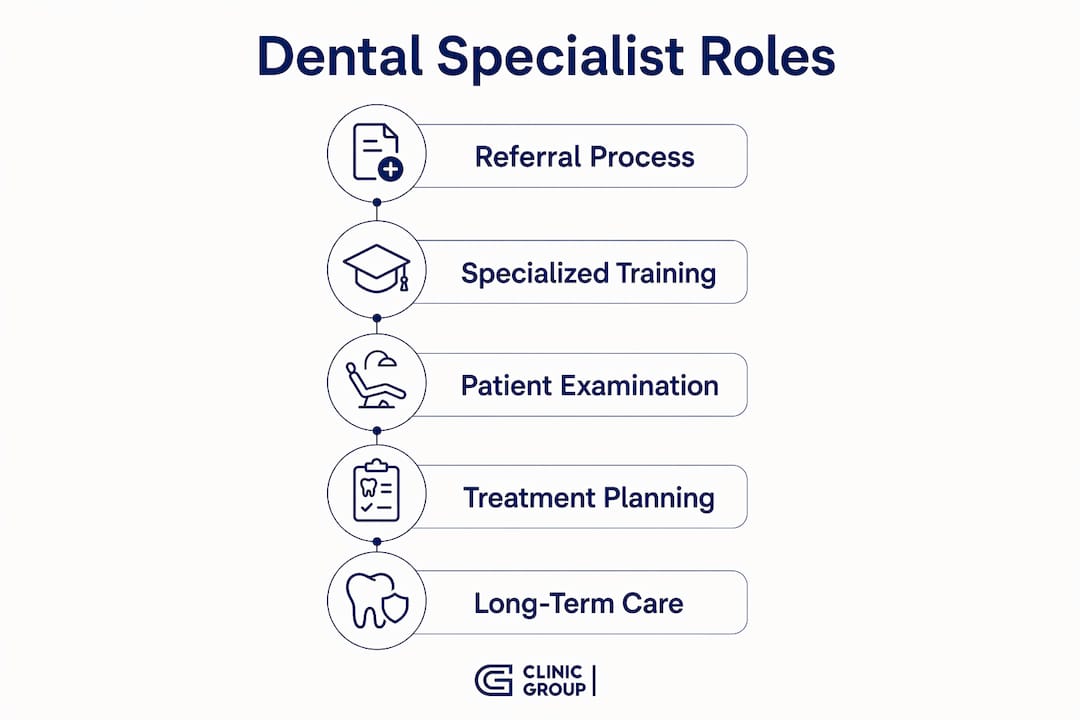
General dentists provide most routine care and act as the primary coordinators of a patient’s oral health. They handle check-ups, fillings, hygiene appointments, and straightforward extractions. When a case exceeds their training or equipment, they refer the patient to the appropriate specialist. This division of responsibility is not a limitation. It is a deliberate clinical structure designed to protect patient safety and improve outcomes.
General dentists act as coordinators of oral care, using specialist referrals strategically based on case complexity and their own capabilities. A dentist who recognises the limits of their experience and refers accordingly is practising at the highest standard. Patients should view a referral as a positive step, not a sign that something has gone wrong.
Common situations that prompt a referral from a general dentist to a specialist include:
- A root canal in a curved or calcified canal requiring an endodontist’s microscope and specialist instruments
- Advanced gum disease with bone loss that needs surgical intervention from a periodontist
- Wisdom tooth removal where the roots are close to the inferior alveolar nerve, requiring an oral surgeon
- A child with complex developmental dental issues needing a paediatric dentist
- Full-mouth tooth loss or severe wear requiring prosthodontic rehabilitation
- Patients with medical conditions such as bleeding disorders or severe anxiety needing special care dentistry
Referrals often depend on professional comfort zones where general dentists limit certain procedures such as implants or complex surgeries to protect patient safety. This is not a failure of the general dentist. It is the system working correctly. The collaboration between generalist and specialist produces better clinical outcomes than either could achieve independently.
What should patients expect when visiting a dental specialist?
The referral process begins with your general dentist providing the specialist with your dental records, X-rays, and a written summary of the clinical problem. Patients benefit from understanding the specific issue the referral aims to address and the decisions the specialist will make. This preparation transforms a potentially anxious appointment into a productive clinical conversation.
Specialist consultations differ from general dentistry appointments in several important ways. The specialist will conduct a focused assessment of the specific problem, which may include advanced imaging such as CBCT scans, detailed periodontal charting, or pulp vitality testing. They will then present a treatment plan with phased stages, clear timelines, and defined goals.
Here is what to expect at each stage of a specialist appointment:
- Initial assessment. The specialist reviews your referral notes, takes additional diagnostic records, and examines the affected area in detail.
- Diagnosis and explanation. They explain their findings clearly, including the severity of the condition and the consequences of leaving it untreated.
- Treatment options. Patients should understand what the specialist will decide, whether that means saving a tooth versus extraction, the extent of surgery required, or the prosthetic planning involved.
- Phased treatment plan. Specialist care involves phased treatments with long-term goals such as tooth preservation or functional alignment, often delivered across multiple appointments.
- Aftercare and follow-up. The specialist communicates outcomes back to your general dentist so that ongoing care remains coordinated.
Pro Tip: Write down three questions before your specialist appointment: what is the diagnosis, what happens if I do not treat this, and what are my alternatives? Specialists respect informed patients and your consultation will be more productive as a result.
Why is the role of dental specialists important for long-term oral health?
Specialists improve outcomes by focusing exclusively on a narrow area of dental health, increasing precision and effectiveness. A periodontist who treats gum disease every day develops a level of clinical judgement and manual skill that a general dentist treating the same condition once a month simply cannot match. This concentration of expertise directly translates into better patient results.
The importance of dental specialists becomes most apparent when conditions are caught and treated before they progress. An endodontist who saves a tooth through root canal therapy prevents the cascade of problems that follows extraction, including bone loss, shifting of adjacent teeth, and the eventual need for an implant or bridge. A periodontist who arrests advanced gum disease protects not just the teeth but the systemic health of the patient, given the established links between periodontal disease and cardiovascular conditions.
Special care dentistry prioritises individualised care to make visits easier and improve overall dental health outcomes for complex cases. This specialty is particularly significant for patients with autism, dementia, physical disabilities, or severe dental phobia, where standard treatment approaches are not appropriate. The existence of this specialty reflects how the functions of dental specialists extend beyond technical procedures into genuinely patient-centred care.
The key benefits of specialist dental care for patients include:
- Accurate diagnosis of conditions that are difficult to identify without specialist training or equipment
- Access to advanced technology in dental clinics such as CBCT imaging, dental microscopes, and laser therapy
- Reduced risk of complications through procedures performed by practitioners with deep, focused experience
- Long-term tooth preservation, which protects bone structure and avoids more complex restorative work later
- Improved confidence and comfort, particularly for patients with anxiety or complex medical histories
- Coordinated care that keeps your general dentist informed and your overall oral health plan on track
How to access dental specialists through verified clinics
Accessing a dental specialist through a verified clinic begins with a consultation, either with your general dentist who will refer you, or directly with a specialist clinic if you already know the treatment you need. The critical factor is choosing a clinic where specialists hold recognised postgraduate qualifications and practise within a regulated clinical environment. Specialist dental training includes advanced surgical, diagnostic, and technological competencies beyond general dental education, and patients deserve to verify those credentials before committing to treatment.
For patients considering specialist dental care abroad, pricing transparency and aftercare planning are as important as clinical quality. Understanding how dental pricing works before you travel removes uncertainty and allows you to compare options fairly. Clinicgroup supports patients through every stage of this process, from matching them with the right specialist clinic to coordinating travel logistics, partner hotel accommodation, and post-treatment follow-up. The platform’s verified clinic network in Albania and Dubai offers access to board-certified dental specialists at a fraction of UK costs, without compromising on European standards of care.
Key takeaways
Dental specialists deliver focused, expert care in specific clinical areas that general dentistry cannot always address, and accessing them through verified clinics is the most reliable path to safe, effective treatment.
| Point | Details |
|---|---|
| Specialist training depth | Dental specialists complete two to four years of postdoctoral training in a focused clinical area. |
| Nine recognised specialties | Orthodontics, periodontics, endodontics, prosthodontics, oral surgery, and four others each address distinct conditions. |
| General dentist as coordinator | General dentists refer patients to specialists based on case complexity and their own clinical limits. |
| Phased treatment approach | Specialist care is delivered in stages with long-term goals such as tooth preservation or functional alignment. |
| Verified clinic access | Choosing clinics with board-certified specialists and transparent pricing protects both outcomes and patient safety. |
Why specialist dental care deserves more attention than it gets
From Clinicgroup’s experience connecting patients with dental specialists across Europe and the Middle East, one pattern stands out clearly. Patients who understand the roles of dental professionals before their appointment consistently report better experiences and greater satisfaction with their treatment outcomes. The anxiety surrounding a specialist referral almost always comes from uncertainty, not from the treatment itself.
What we have observed is that the integration of multidisciplinary dental teams is accelerating. Clinics that combine periodontists, prosthodontists, and oral surgeons under one roof are delivering treatment plans that would have required months of back-and-forth referrals a decade ago. This shift benefits patients directly, particularly those travelling for complex restorative work such as full-arch implants or combined orthodontic and surgical corrections.
The advice we give every patient is straightforward. Do not wait for a problem to become severe before asking your general dentist whether a specialist opinion is warranted. Early referral to a periodontist, for example, can arrest gum disease before bone loss becomes irreversible. The cost of prevention is always lower than the cost of reconstruction. Clinicgroup’s network exists precisely to make that specialist access faster, more affordable, and less stressful for patients who deserve expert care without the wait.
— Clinic
Explore specialist dental care with Clinicgroup
Clinicgroup connects patients across the UK and Europe with verified clinics offering access to board-certified dental specialists in Albania and Dubai. Whether you need periodontal treatment, endodontic therapy, full-mouth prosthodontic rehabilitation, or specialist implant surgery, the platform matches you with the right clinic and supports every step of your journey. That includes the initial consultation, travel and accommodation arrangements, transparent pricing, and structured aftercare. Browse the full range of specialist dental treatments available through Clinicgroup’s verified clinic network, and take the first step towards expert care at a cost that works for you.
FAQ
What is the role of dental specialists in patient care?
Dental specialists provide expert diagnosis and treatment for complex or specific oral health conditions that fall outside the routine scope of general dentistry. They complete two to four years of additional postdoctoral training in a focused clinical area such as periodontics, endodontics, or prosthodontics.
When does a general dentist refer a patient to a specialist?
Referrals occur when a case requires advanced expertise or equipment that the general dentist does not have, such as complex root canals, surgical gum treatment, wisdom tooth removal near a nerve, or full-mouth rehabilitation.
How many types of dental specialists are there?
Nine dental specialties are formally recognised, including orthodontics, periodontics, endodontics, prosthodontics, oral and maxillofacial surgery, paediatric dentistry, special care dentistry, dental public health, and oral medicine and radiology.
What should I bring to a dental specialist appointment?
Bring any X-rays or dental records your general dentist has provided, a list of current medications, and a written note of your symptoms and questions. Patient-centred communication about treatment goals is key to improving both understanding and treatment adherence.
Can I access dental specialists abroad safely?
Yes, provided you choose verified clinics where specialists hold recognised postgraduate qualifications and practise within regulated environments. Clinicgroup’s network in Albania and Dubai connects patients with board-certified specialists who meet European standards of care, with full support for travel, accommodation, and aftercare.