The safest approach in the first 24 to 72 hours after dental implant surgery is a no-chew, spoon-fed diet: cool or lukewarm blended soups, yoghurt, applesauce, and protein shakes. Chew nothing on the implant side, skip straws entirely, and stay away from hot drinks and alcohol.
Once feeling returns to your mouth (usually within a few hours), you can begin sipping cool liquids. From there, the goal is steady, gentle progress rather than rushing back to normal food.
- Do: cool or lukewarm soups, yoghurt, smoothies, mashed potato, protein shakes taken by spoon.
- Don’t: use straws, drink anything hot, drink alcohol on antibiotics, or chew near the implant site while numb.
- Nutrition target: aim for roughly 60 to 80 grams of protein a day through soft, spoonable sources to support healing from day one.
Pro Tip: Keep a food thermometer or just your finger test handy for the first two days. If a soup feels hot on your wrist, it’s too hot for a fresh surgical wound.
Key Takeaways
A structured, phase-based soft diet with a 60 to 80 gram daily protein target gives implant patients the clearest, most reliable path through the first six weeks of healing.
| Point | Details |
|---|---|
| First 72 hours are protected | Stick to cool or lukewarm liquids and spoon-fed soft foods; no straws, no chewing near the implant. |
| Protein target matters | Aim for 60 to 80 grams of protein a day using yoghurt, shakes, eggs, and soft fish. |
| Timeline runs in phases | Liquids give way to soft warm solids by day 4, soft proteins by week 2, firmer textures by weeks 3 to 6. |
| Grafts and full-arch cases take longer | Bone grafts, sinus lifts, and All-on-4 cases can need 6 to 12 weeks of soft-diet care. |
| Heat and suction are the real enemies | Hot food increases bleeding risk and straws can dislodge the healing clot. |
Table of Contents
- How your soft food diet progresses week by week
- What soft foods should you eat, phase by phase?
- What foods and habits should you avoid after implants?
- Which nutrients matter most for implant healing?
- How long does a soft diet last after bone grafts or All-on-4?
- How can you eat comfortably without risking your implant?
- How does Clinicgroup support your recovery after treatment abroad?
- What conventional advice on this gets wrong
- Sources
- FAQ
How your soft food diet progresses week by week
Healing after implant placement isn’t a straight line from liquid to solid. It moves in phases, and jumping ahead a phase too soon is one of the most common ways patients irritate a healing site. Here’s the timeline clinics commonly recommend, adjusted for how most people actually feel day to day.
-
Hours 0 to 4: wait it out. While the anaesthetic is still working, eat nothing. Biting your numb cheek or tongue is a real risk, and you won’t feel it happen. Once sensation starts returning, begin with small sips of cool water or a room-temperature protein shake.
-
24 to 72 hours: liquids and no-chew foods only; for a detailed list of suitable options and recovery advice, see Best Foods After Tooth Extraction For Easy Healing. This is the most protected phase. Stick to blended soups, yoghurt, smoothies, and shakes, all taken by spoon rather than straw. Clinical guidance commonly recommends a liquid diet for the first several hours post-op, extending into cool, soft foods as swelling allows. Alcohol is off the table entirely if you’re on antibiotics, and for at least 48 hours regardless.
-
Days 4 to 7: lukewarm soft solids. Scrambled eggs, mashed potato, soft-cooked pasta, and porridge tend to work well here. You’re still avoiding the implant side when you chew, and everything should be lukewarm rather than hot. A typical progression has patients moving from liquids into soft warm foods across days two to seven, which lines up with how most swelling and tenderness settle in that window.
-
Week 2: soft proteins return, gently. If your clinician has checked the site and given the go-ahead, you can start reintroducing soft proteins, tender fish, well-cooked beans, or finely minced meat, still chewing on the opposite side. This is also when most people feel confident enough to stop babying every bite, though the healing site itself is far from finished.
-
Weeks 3 to 6: gradual testing of firmer textures. You can begin trialling slightly firmer foods, testing small amounts near the implant site rather than committing to a full bite straight away. How quickly you get back to a completely normal diet, and when your final crown or restoration goes on, depends on your individual healing and the type of implant work you had. Single implants generally move faster through this phase than multi-implant or grafted cases.
The pace above assumes a straightforward, single-implant case. If you’ve had anything more involved, the next section explains why your timeline will likely stretch further.
What soft foods should you eat, phase by phase?
Knowing the rules is one thing. Standing in your kitchen wondering what to actually make is another. Here’s what fits at each stage, with meals you can prepare without much effort.
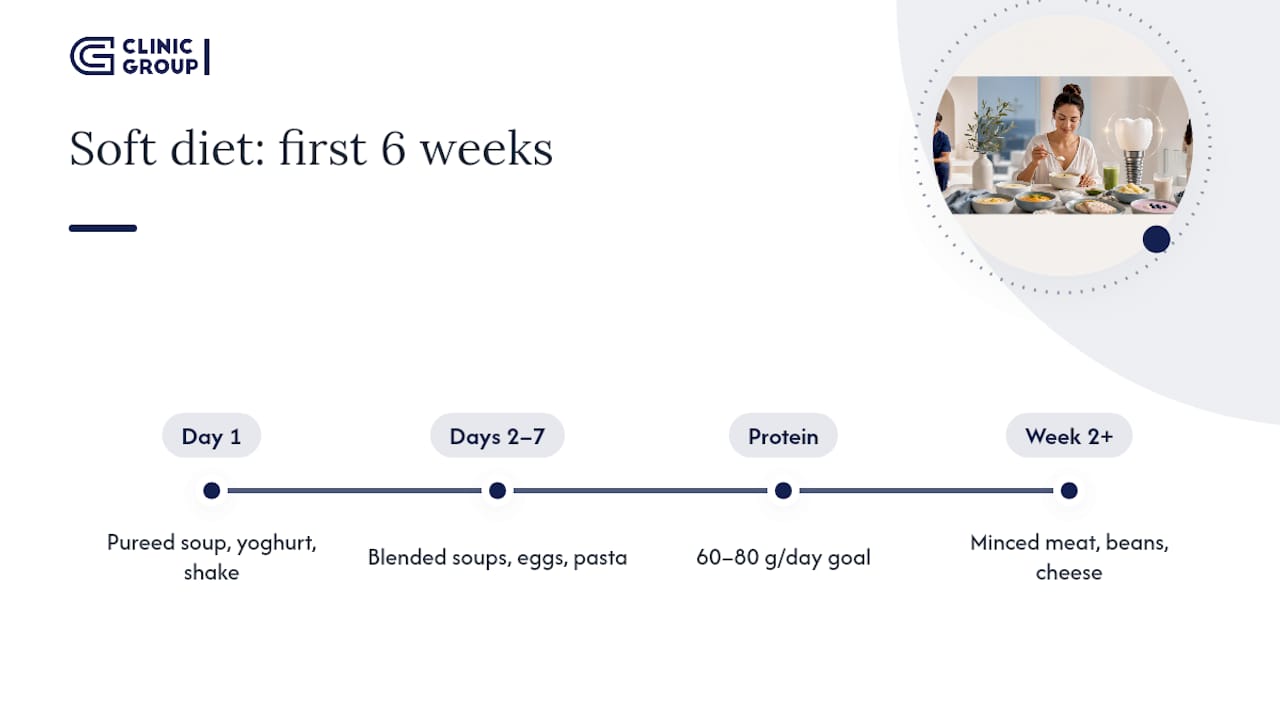
Day 1: cold or lukewarm pureed vegetable soup, plain yoghurt, unsweetened applesauce, a protein shake blended smooth.

Days 2 to 7: blended lentil or potato soup, soft scrambled eggs, mashed sweet potato, soft-cooked pasta with a smooth sauce, flaked soft fish like poached salmon.
Week 2 onward: finely minced chicken or turkey, soft-cooked beans, tender fish fillets, well-cooked vegetables cut small, soft cheese.
Hitting 60 to 80 grams of protein a day is genuinely achievable on soft foods if you plan it rather than leave it to chance. Early protein intake in this range is specifically recommended in the first two weeks to support tissue repair, and higher protein intake in this window is linked to faster wound healing and less reported pain.
A rough 3-day starting menu: Day 1 — pureed vegetable soup, yoghurt with mashed banana, a protein shake before bed. Day 2 — blended lentil soup for breakfast, mashed potato with soft scrambled eggs for lunch, a smoothie with Greek yoghurt for dinner. Day 3 — soft porridge with mashed banana, poached fish with mashed sweet potato, cottage cheese with soft stewed fruit.
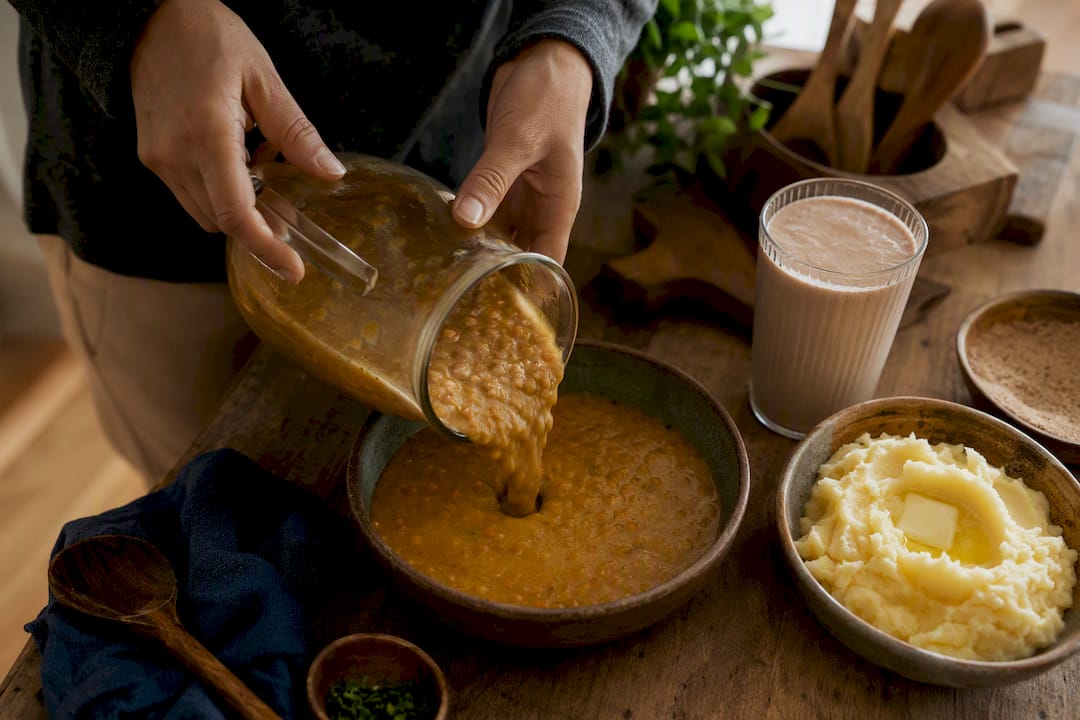
For a full week, simply repeat and rotate these bases, adding soft-cooked pasta and flaked fish once you’re comfortable. Vegetarians can swap fish and eggs for blended lentils, soft tofu, and Greek yoghurt or a plant-based protein shake; if you’re lactose-intolerant, use lactose-free yoghurt and a pea or soy protein shake instead of dairy-based ones.
Pro Tip: Batch-cook soups and purees the day before your surgery and freeze them in single portions. You won’t feel like cooking on day two, and having food ready removes the temptation to reach for something you shouldn’t.
What foods and habits should you avoid after implants?
Some of these restrictions seem obvious. Others catch people out because the food looks soft but behaves badly in the mouth.
- Straws. The suction can dislodge the blood clot protecting your implant site, a leading cause of painful dry socket type complications.
- Smoking. Nicotine constricts blood vessels and markedly increases the risk of implant complications by reducing blood flow to healing tissue.
- Alcohol while on antibiotics. Clinics commonly advise avoiding alcohol entirely while taking prescribed antibiotics, and for at least 48 hours after surgery regardless of medication.
- Very hot foods and drinks. Heat dilates blood vessels and can increase bleeding and swelling at the surgical site.
- Crunchy, seedy, or sticky foods. Think crisps, nuts, seeded bread, toffee, and chewing gum. Sharp fragments can lodge directly in the healing wound.
- Ice-chewing. Cold is fine to sip or hold against your cheek; biting on ice cubes puts direct pressure exactly where you don’t want it.
If your usual breakfast is crunchy cereal, swap it for cooked porridge or soft overnight oats. Missing your morning crunch is a small price against a disrupted clot.
Which nutrients matter most for implant healing?
Protein does the heaviest lifting. Protein, calcium, and vitamin D all play defined roles in wound healing and osseointegration, the process by which bone actually fuses to your implant. Without enough protein, your body simply doesn’t have the raw material to rebuild tissue quickly.
- Protein: aim for 60 to 80 grams a day in the first fortnight. Greek yoghurt, cottage cheese, protein shakes, soft fish, and eggs get you there without any chewing required.
- Vitamin C: essential for collagen formation, the connective tissue that holds healing wounds together. Peer-reviewed research indexed on PubMed supports vitamin C’s role in improved soft tissue healing after oral surgery. Pureed fruit, blended berries, and well-cooked vegetables all deliver it in soft form.
- Calcium and vitamin D: these support the bone-bonding process directly. Yoghurt, fortified milk, and canned soft fish like sardines are easy soft-diet sources.
- Hydration and temperature: favour room-temperature or cool liquids for at least the first 48 hours. Staying hydrated supports circulation and healing generally, but a very hot cup of tea works against you at exactly the wrong moment.
How long does a soft diet last after bone grafts or All-on-4?
If your treatment involved a bone graft, sinus lift, or a full-arch case like All-on-4, expect a longer runway. These more complex procedures commonly require extended soft-diet or non-chewing periods, sometimes stretching to 6 to 12 weeks, compared with the roughly six-week window for a single, straightforward implant.
The reason is structural rather than cautious overkill: grafted bone and multiple integration sites need more time and more protection before they can handle chewing forces safely.
- Lean on fortified smoothies, high-protein purees, and nutrient-dense soups to avoid the fatigue that comes with a long soft-food stretch.
- Build variety into purees, alternating vegetable, lentil, and fish-based bases, so you don’t lose your appetite for the diet itself.
- Contact your clinician if you’re unsure whether you’ve been cleared to progress. Ask specifically: “Am I cleared for soft solids on the treated side?” rather than assuming a general timeline applies to your case.
How can you eat comfortably without risking your implant?
Small habits make a bigger difference than most patients expect during the healing weeks.
- Eat on the opposite side to your implant, and spoon-feed yourself rather than biting, particularly in the first week.
- Wait until numbness has fully worn off before eating anything, even a liquid, to avoid biting tissue you can’t feel.
- Use soft utensils and cut food into small pieces so you’re never tempted to take a large bite.
- Let hot foods cool to lukewarm before eating. If in doubt, wait an extra few minutes.
- After meals, rinse gently with warm salt water. Once your clinician clears it, a soft-bristled brush can approach the healing cap carefully.
Packing a “recovery pantry” before surgery, stocked with yoghurt, soup, protein powder, and applesauce, means you won’t be making decisions about food while you’re still groggy from anaesthetic. Our step-by-step aftercare guide covers the wider recovery picture beyond diet alone.
How does Clinicgroup support your recovery after treatment abroad?
Recovering from implant surgery is manageable at home. It takes a bit more planning when you’ve travelled abroad for treatment, which is where clear aftercare support matters.
Clinicgroup connects UK and Italian patients with verified clinics for dental treatment abroad, and that relationship doesn’t end when you fly home.
- Arranging post-op check-ups with your treating clinic or a partner provider closer to home.
- Advice on sourcing local pharmacy supplies if you need anything your dentist prescribed.
- Remote follow-up with your clinician if questions come up during the healing weeks.
Clinicgroup assists with logistics, clinic-matching, and information. Always follow your treating clinician’s specific aftercare instructions first, since they know your exact procedure and healing progress. If you’re weighing up dental implants abroad and want the aftercare side sorted before you travel, that’s worth raising during your consultation, not after you’ve booked flights.
What conventional advice on this gets wrong
Most soft-diet advice online reads like a list of prohibitions: don’t eat this, avoid that. It rarely tells you what to actually put in your mouth or how to hit a real nutrition target while you’re in pain and tired of yoghurt.
The bigger gap is protein. Patients are told to “eat soft foods” without being told that 60 to 80 grams a day is achievable, and that falling short of it likely slows healing rather than just being a minor inconvenience. Treating nutrition as an afterthought to pain management, rather than as an active part of recovery, is where most generic guides fall down.
What should come first is planning before surgery, not improvising after it. A stocked freezer of purees and a protein shake routine beats scrambling to figure out what’s edible on day two. For patients travelling abroad for treatment, that planning matters even more, since you won’t have your usual kitchen or GP a short drive away.
This article is general information, not a substitute for advice from a qualified doctor. Consult a qualified healthcare professional about your own circumstances before acting on anything here.
Sources
- What to Eat After Getting a Dental Implant Placed: A Day-by-Day Food Guide From a Jersey City Dentist - Limitless Dental - Jersey City
- Post-Op Instructions Dental Implants | Foster City Oral Surgery Specialists
- What to Eat After Dental Implant Surgery (Day-by-Day Diet)
- Implant-Friendly Diet Guide
- PubMed reference (example clinical study)
FAQ
How long do I need to stay on a soft diet after implants?
Most single-implant cases need a soft diet for roughly 6 weeks, with textures progressing gradually; bone grafts and full-arch cases can extend this to 6 to 12 weeks.
Can I drink coffee or tea after implant surgery?
Avoid hot drinks for at least the first 48 hours, since heat can increase bleeding and swelling at the surgical site; once cooled to lukewarm, most patients tolerate coffee and tea fine.
How much protein do I actually need after getting implants?
Aim for roughly 60 to 80 grams of protein a day, particularly in the first two weeks, using yoghurt, protein shakes, soft fish, and eggs.
When can I start chewing normally again?
Gentle chewing on the opposite side to your implant is usually possible by week 2 if your clinician clears the site; firmer textures are typically tested gradually between weeks 3 and 6.
Why can’t I use a straw after dental implant surgery?
The suction created by drinking through a straw can dislodge the protective blood clot over your implant site, raising the risk of painful complications during early healing.