The lowest advertised treatment fee is not the same as the full financial commitment of dental tourism. Your decision should account for the proposed implant or veneer treatment, travel and accommodation, and the possibility of needing care after returning to the UK. A headline quote is only one part of judging whether treatment abroad suits you.
It is understandable to compare dental tourism with treatment options in the UK, especially when weighing an overseas treatment plan against the practicalities of travel. The decision is about more than choosing a destination or procedure. You also need to understand what is proposed, whether it suits your needs, and what support is available around your treatment.
This guide explains what to consider, from travel arrangements and clinic payment terms to potential risks. It also covers how to assess treatment proposals and plan for follow-up care. Use these points to make an informed decision, whether you are comparing options, seeking another opinion or deciding to wait.
Key Takeaways
- Build your travel budget around more than flights and accommodation: treatment timing and the possibility of follow-up visits can also affect the overall commitment.
- Consider how complications such as ongoing pain, infection or a poorly fitting restoration could affect your care after you return home.
- Compare implant and veneer treatment plans by what they include, not just by the advertised treatment fee.
- Understand the payment arrangements and any conditions attached to clinic discounts before deciding how to fund treatment.
- Explore why UK patients travel for dental care and how destination, travel logistics and continuity of care fit into your decision.
Additional travel and accommodation expenses
A treatment trip involves more than the appointment itself. Flights, accommodation, local transport, meals and time away from work can all affect your budget. For dental implants, ask whether the plan has separate treatment stages, as these may require separate trips. Let the number and timing of visits shape your travel plans, rather than choosing dates based only on convenient flights.
Before booking, match your appointment dates to the clinic’s treatment schedule. Confirm which appointments require you to attend in person, how long each visit is expected to take, and whether a review is planned before you leave. A written itinerary helps you coordinate flights, hotel stays and local transport. It also clarifies whether you need to remain nearby between appointments.
Some overseas clinics offer treatment packages that include a holiday. Read the terms to identify what accommodation or transport is included, what you must arrange yourself, and how the dates fit around clinical appointments. For example, a package may cover a hotel stay but not extra nights if an appointment changes. Clarify who is responsible for additional travel or accommodation costs before booking.
Clinic location can affect transport time and appointment planning. For example, the Identico Dental clinic listing can be considered alongside the location of planned appointments. Check how you will travel between your accommodation and the clinic, and allow time for that journey on appointment days. Keep clinic contact details with your itinerary.
Travel and health advisories are another part of preparation. The Organization for Safety, Asepsis and Prevention provides information and checklists for people considering dental care abroad. Review travel notices for your destination before departure, and keep relevant medical details and emergency contacts accessible. Find out how to contact the clinic if a flight delay affects an appointment.
After returning to the UK, arrange follow-up with your dentist and share the overseas treatment records, including images and details of materials used. Send your dental records to the treating team before travelling, then obtain copies of the overseas notes to support continuity of care. If swelling, worsening pain or signs of infection arise, seek prompt dental assessment.
Travel insurance does not automatically cover planned dental treatment or related complications. Read the policy wording for exclusions, follow-up care and travel changes connected with treatment. Check whether the policy covers medical complications separately from routine travel disruption, and keep the insurer’s contact details with your travel documents.
Before committing, clarify who pays for extra accommodation, a replacement journey or corrective work if the plan changes. Put the arrangements in writing, including how to contact the clinic after treatment and what records you will receive. A clear itinerary, package terms and insurance documents help you understand the practical commitments before leaving the UK.
Awareness of dental tourism risks
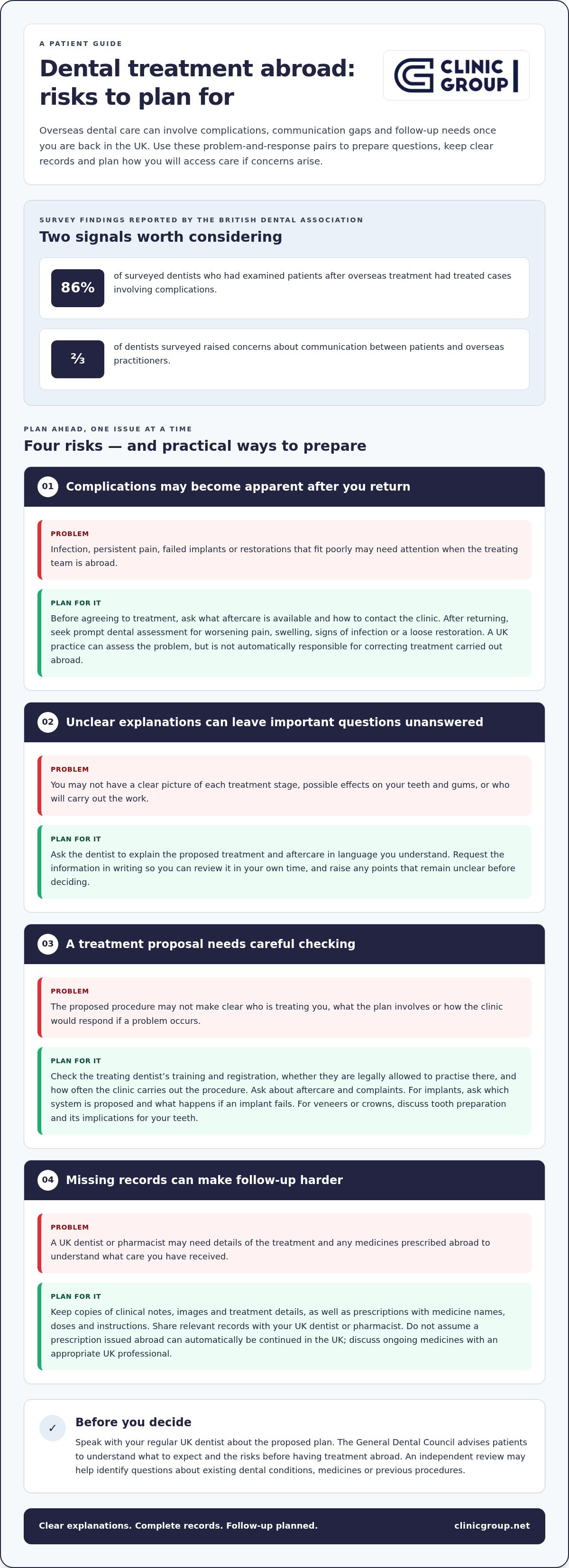
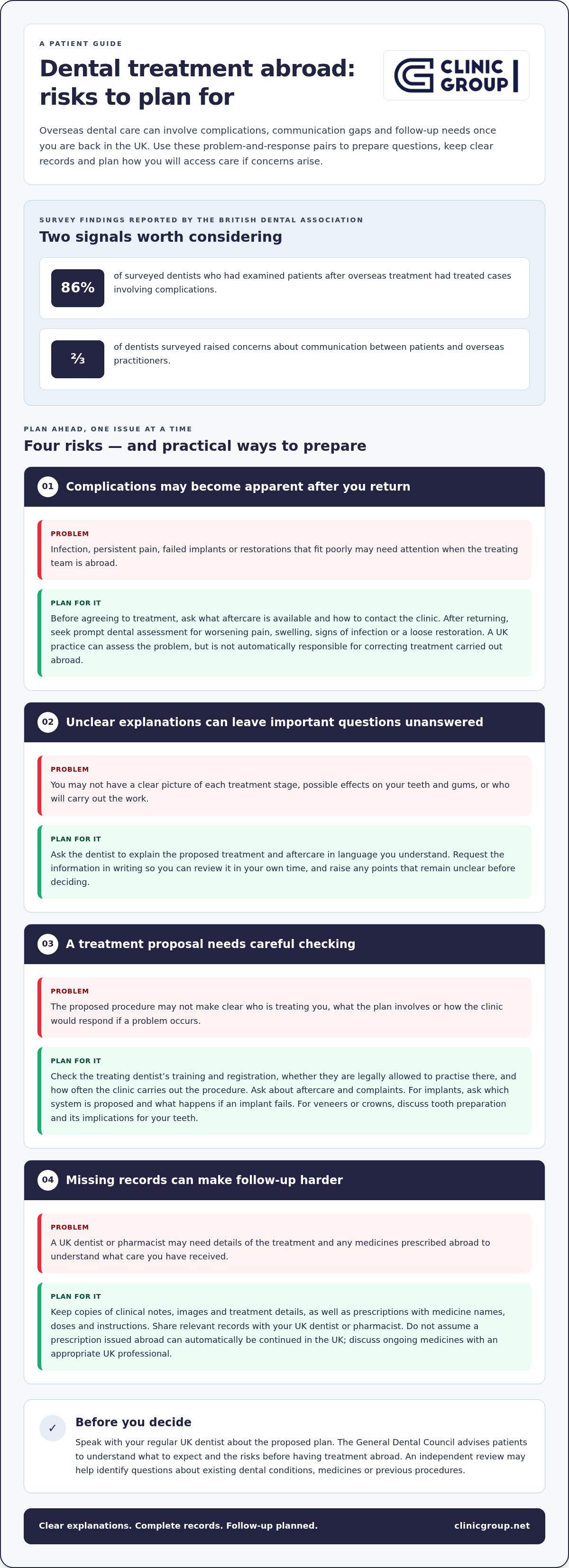
Overseas dental treatment can lead to infection, persistent pain, failed implants or restorations that fit poorly. These problems may appear after a patient returns to the UK, when the treating team is abroad. The British Dental Association reported that 86% of surveyed dentists who had examined patients after overseas treatment had treated cases involving complications. This survey finding underlines why patients should consider follow-up before agreeing to care.
Clear communication helps patients understand a proposed procedure and its aftercare. Two-thirds of dentists surveyed by the British Dental Association raised concerns about communication between patients and overseas practitioners. During your consultation, ask the dentist to explain each treatment stage, possible effects on your teeth and gums, and who will perform the work. Request written information in a language you understand, so you can review it in your own time.
Check the treating dentist’s training and registration, and whether they are legally allowed to practise in that country. Ask how often the clinic carries out the procedure, what aftercare it provides, and how it handles complaints. For implants, ask which system is proposed and what the clinic’s process is if an implant fails. For veneers or crowns, discuss tooth preparation and the implications for your teeth.
The General Dental Council advises patients to understand what to expect and the risks before having treatment abroad. Official health bodies advise people to think carefully before booking dental treatment overseas. Speak with your regular UK dentist before travelling. An independent review of the proposed plan can help identify questions about existing dental conditions, medicines or previous procedures.
For prescriptions and continuing care, keep the overseas prescription and treatment records, including medicine names, doses, instructions, clinical notes and images. Share these with your UK dentist or pharmacist so they can understand what treatment you have had. Do not assume a prescription issued abroad can automatically be continued in the UK. Discuss any ongoing medicines with an appropriate UK professional.
After returning, contact a dentist promptly about worsening pain, swelling, infection or a loose restoration. A UK practice can assess the problem and explain appropriate care, but it is not automatically responsible for correcting treatment carried out abroad. Keep the overseas clinic’s contact details and your treatment documents accessible, so you can explain the procedure and receive relevant advice.
Before agreeing to treatment, establish who to contact if symptoms develop and how the clinic responds to concerns from patients in the UK. Ask what records you will receive and how quickly the treating team can review them remotely. These answers clarify the practical steps for addressing a problem, rather than leaving you to rely on assumptions about aftercare.
Use patient-focused information about overseas treatment to support your research. Compare the written plan, practitioner details and follow-up arrangements before deciding whether the proposed care is suitable for you.
Costs of overseas dental implants and veneers
A headline quote cannot tell you whether two treatment plans include comparable care. For implants, compare the assessment, proposed implant system, restoration and follow-up stages. For veneers, ask how much natural tooth structure may need to be removed and whether alternatives could preserve more of the tooth. These details show what each proposed treatment involves.
UK patients should request a written treatment plan and itemised quotation before booking. It should identify each procedure, materials, appointments and anything excluded from the quoted total. Ask how the plan could change after examination or imaging, and what happens if additional treatment is needed. A clear breakdown makes it easier to compare proposals than a single advertised figure.
Before booking dental treatment abroad, ask who will carry it out, what qualifications and registration they hold, and how the clinic handles follow-up. Request details of the proposed procedure, materials, aftercare, complaints process and contact arrangements. Ask how long veneers or implant restorations are expected to last, and what their long-term implications are for your teeth and gums.
A consultation should establish whether the proposed cosmetic treatment suits your oral health, rather than starting with a fixed package. Share your dental history, medicines and previous treatment, then ask how these details affect the plan. For veneers, discuss tooth preparation and alternatives. For implants, ask what determines suitability and how treatment stages are organised.
Read the quotation alongside the travel plan. Separate clinical items from accommodation, transport and return appointments, so you can see the full commitment. A package may combine treatment with travel arrangements, but the written terms should explain what happens if dates change or complications require extra care.
Compare like with like. One implant proposal may include different treatment stages or restorations from another; a veneer plan may cover a different number of teeth or approach to preparation. Ask for written explanations, including the reason for each recommended procedure. If the plan is difficult to understand, ask for a plain-language explanation before deciding.
Before agreeing, keep copies of the treatment plan, quotation, imaging and correspondence. Share the proposed plan with your regular UK dentist for an independent view. The guide to the benefits and risks of dental travel can help you consider the wider decision alongside the treatment details.
Use these questions to frame your comparison: who provides each stage, what exactly is included, what follow-up is arranged, and who handles concerns after you return? Review the answers with the clinical plan, not just the advertised total. For further patient information on overseas treatment, explore dental travel guidance.
Dental clinic discounts and payment plans
A discount changes the amount payable, but does not explain what treatment is included. For overseas dental care, compare the written plan before considering a promotion. Check which teeth are included, whether crowns or temporary restorations form part of the proposal, and which appointments are covered. A reduced headline offer is useful only when its terms are clear.
Ask the clinic to state how a discount applies: to the full treatment plan, selected procedures or a particular appointment. Confirm whether it depends on booking several treatments together, paying by a specified method or travelling on set dates. These conditions affect how the offer fits your clinical plan and travel arrangements.
Payment plans also vary in their timing and conditions. A written schedule should state when each payment is due, which treatment stage it relates to, and how changes to the plan affect the balance. For example, an implant proposal involving several stages needs clear payment milestones linked to those stages, rather than a single unexplained total.
Ask who handles payments and what documentation you will receive after each transaction. Keep the signed treatment plan, invoices, receipts and correspondence together. If the clinic uses a different language from you, request a written explanation of the payment terms in a language you understand before agreeing. Misunderstanding a financial condition can complicate an already detailed treatment arrangement.
Compare overseas payment options with the practicalities of treatment at home. A UK payment plan, fewer trips or included follow-up care can affect your decision, even if an overseas offer seems attractive at first. Compare the whole arrangement: treatment stages, travel, payment timing and continuity of care.
Before accepting an offer, separate clinical decisions from promotional deadlines. Decisions about crowns, veneers or implants should follow an assessment of your teeth and gums, not the expiry date of a discount. Ask for the treatment plan and payment terms in writing, then take time to understand both documents together.
- Clarify the offer: identify the treatment and appointments it covers.
- Read payment terms: note due dates, conditions and how plan changes are handled.
- Keep records: retain receipts and the agreed treatment details.
- Compare the full arrangement: include travel and follow-up, not only the promotional terms.
Clinics in different countries may use different payment processes and terminology. Ask for a plain-language explanation of unfamiliar terms, and check that the documents describe the treatment you discussed with the dentist. A clear written agreement helps you assess the financial commitment alongside the clinical plan, without relying on verbal assurances or promotional wording.
Which countries are most popular with UK dental tourists?
Popularity alone is a poor guide to choosing where to receive dental care. For UK patients considering locations represented by the partner network, these include Albania, particularly Tirana, and Dubai in the United Arab Emirates. This is not a ranking of destinations by UK patient numbers. The right comparison depends on the treatment plan, travel arrangements and follow-up needs.
Tirana is Albania’s capital and the main location for the partner clinics described here. Start by matching the clinic location to your proposed treatment itinerary. Ask where consultations, procedures and reviews take place, and whether each stage requires an in-person visit. If your plan involves several appointments, location and scheduling may matter more than a destination’s general popularity.
Dubai, in the United Arab Emirates, is another location represented by a small number of partner clinics. If you are comparing Tirana and Dubai, assess each proposed clinic and treatment plan separately. Consider the journey, appointment dates, accommodation and how you will share treatment records with your UK dentist. A destination name alone does not describe the care offered.
Use the same questions for either location. Identify the dentist who will perform each stage, review their qualifications and registration, and ask how the clinic explains treatment details. If the consultation or written documents use another language, establish how you will receive clear explanations. Understanding the plan helps you compare clinical proposals rather than relying on broad claims about a country.
Distance can also affect continuity of care. Before committing to treatment in Tirana or Dubai, match the proposed appointments to your travel dates and ask what reviews are planned before you leave. Then consider how your UK dentist will receive records, including clinical notes and images. A clear handover makes it easier to discuss subsequent care at home.
Country-level comparisons can hide important differences between clinics and individual treatment plans. Two proposals in the same city may differ in recommended procedures, materials, appointment sequence and aftercare. Compare these details directly. For example, an implant plan should explain its stages, while a veneer plan should describe the proposed tooth preparation and restoration.
Treat Albania and Dubai as starting points for researching partner clinic locations, not as guarantees of suitability. Review the written clinical plan, the team’s credentials, communication arrangements and travel schedule together. These practical details provide a more useful basis for choosing than an unsupported popularity ranking or a destination’s reputation alone.
Clinic Group: Dental Treatment Directory
Clinic Group’s Dental Treatment Directory helps UK patients explore dental care options through partner clinic listings, mainly in Tirana, Albania, with a small number in Dubai. It can be a useful next step after you have compared treatment plans, travel arrangements and follow-up needs. Clinic Group provides directory and guide information, not dental treatment. The treating clinic is responsible for clinical decisions and care.
Use the listings and Medical Tourism Treatment Guides to continue researching implants, veneers and the practical considerations of treatment abroad. Review clinic information alongside your written treatment plan and questions for the dental team, so you can make an informed decision about whether overseas care suits your circumstances.
Make your next step an informed one
Before committing to dental tourism, decide what would make an overseas treatment plan suitable for you. This may include understanding the proposed clinical approach, feeling confident about communication and knowing how you would manage care after returning to the UK. Weighing these priorities keeps the decision centred on your health, rather than on a destination or promotion alone.
Clinic Group’s Dental Treatment Directory can help you explore dental options. Hair Transplant Referrals and Plastic Surgery Provider Listings relate to different treatment decisions—much like individuals seeking hair restoration might turn to dedicated clinics such as DHI South Africa—while the dental directory is the relevant starting point for implant and veneer enquiries. Use the information to continue your research and identify the questions that matter most before discussing treatment with a clinic.
A considered decision begins with clear priorities and a treatment plan you understand. Take the next step at a pace that feels right for you.
Frequently Asked Questions
What are the possible risks?
Potential problems include infection, persistent pain, failed implants and restorations that do not fit properly. You may also need additional care after returning, which can be difficult to arrange across countries. Before agreeing, consider how the clinic will respond to complications, what records it will provide and how your UK dentist can assess any concerns afterwards.
Are standards the same everywhere?
No. Dental standards, regulations and approaches vary between countries, so a familiar treatment name does not necessarily mean the same clinical process or materials. Ask who will perform each stage, what qualifications they hold, and how the clinic handles sterilisation and patient records. Request clear written explanations so you can understand the proposed care and compare it with advice at home.
Is it cheaper to get dental implants or veneers abroad?
It may seem cheaper based on the advertised treatment fee, but that alone does not establish the overall value. The proposed procedure, materials, number of appointments, travel and follow-up arrangements all affect the comparison. Ask for a written treatment plan and itemised quotation, then compare equivalent care with a UK option. Consider whether complications could require further travel or treatment after you return.
Should I speak to my own dentist first?
Yes. An independent opinion from your regular dentist can help you understand whether the proposed treatment suits your dental history and current oral health. Share the overseas plan and any imaging, then ask what questions it raises about your teeth, gums or previous treatment. If you do not have a regular dentist, another local dentist can review the proposal independently.
What happens when it goes wrong?
Contact the treating clinic promptly and describe your symptoms, when they began and any changes. Seek dental assessment in the UK for issues such as worsening pain, swelling or a loose restoration. Keep copies of the treatment plan, images, clinical notes and messages. A UK practice may assess the problem, but it is not automatically responsible for correcting work completed abroad.
What questions should I ask before going ahead?
Ask who will carry out each procedure, what qualifications they hold, and how to contact the treating team after you return. Clarify the proposed materials, expected restoration lifespan, aftercare arrangements and complaints process. Request written answers, including what happens if you are unhappy with the result. For crowns, veneers or implants, ask about long-term effects on your teeth and gums.
What should happen at the consultation?
The consultation should review your medical and dental history before a treatment plan is proposed. Established family practices such as Hour Dental exemplify this approach, prioritising comprehensive dental evaluations before recommending major restorative treatments. Explain any long-term health conditions, medicines, previous dental work, smoking or alcohol use, and earlier surgery or anaesthetic. The clinician can then assess how these details relate to the proposed care. Ask for time to discuss alternatives, expected stages, and any records or imaging needed for planning.
What is dental tourism and why do UK patients travel abroad for dental treatment?
Dental tourism means travelling to another country to receive dental treatment. UK patients may consider it because of advertised treatment fees, perceived waiting times, or the chance to combine appointments with a holiday. The practical choice depends on more than the destination: treatment suitability, the written plan, communication, travel arrangements and access to follow-up care all matter.

Article by
Clinic Group Editorial Team
The Clinic Group editorial team publishes clear, practical guides for UK and EU patients researching medical travel — from dental implants and hair transplants to plastic surgery and eye care — with a focus on verified clinics, transparent “from” pricing, and safe planning.
Disclaimer
This article is for general information only and is not medical advice, diagnosis, or a substitute for an in-person consultation with a qualified clinician. Treatment suitability, risks, timelines, and costs vary by individual. Clinic Group connects patients with independent clinics; those clinics are responsible for clinical care. Always verify credentials, obtain a written treatment plan and itemised quote, and confirm aftercare arrangements and travel insurance cover (elective procedures are often excluded) before booking. Outcomes cannot be guaranteed.