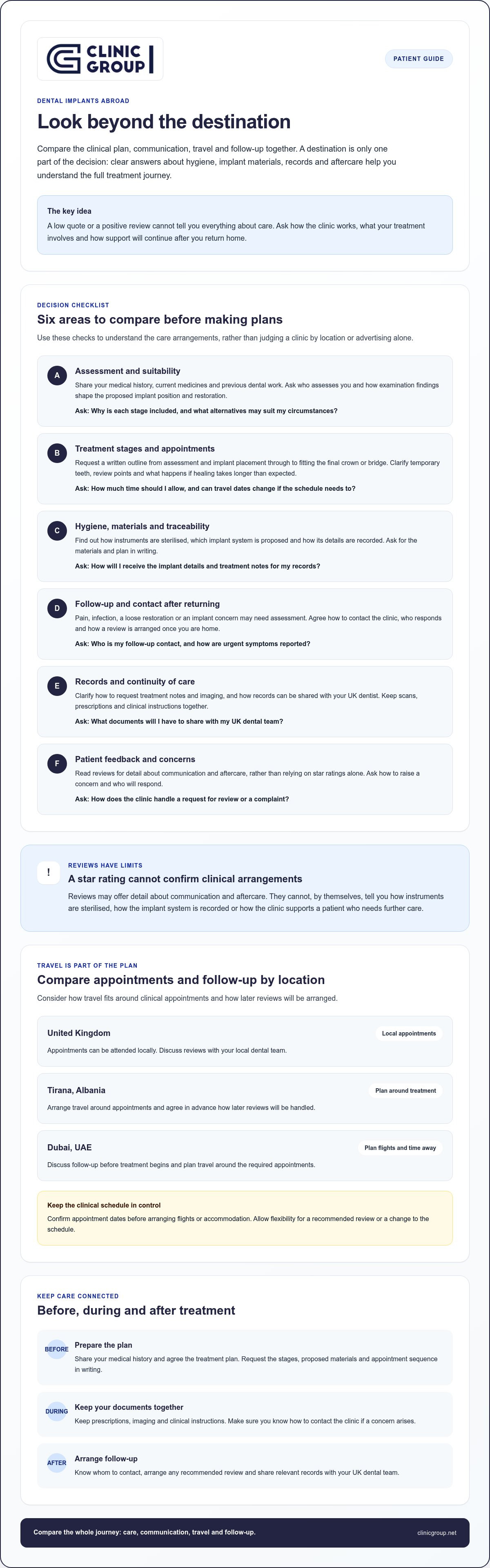
The best place to get your teeth done abroad isn’t simply the country with the lowest quote. For UK patients considering dental implants, a stronger choice is a clinic that can explain its hygiene procedures, implant materials, traceability and follow-up arrangements. The country matters, but so does the care available before treatment and after you return home.
It’s sensible to compare destinations and patient reviews when planning treatment abroad. But reviews alone cannot tell you how a clinic sterilises instruments, records the implant system used or supports patients who need further care.
This guide explains how to compare clinics and countries, including Albania and Dubai, using practical questions about assessment, hygiene, materials, patient feedback and aftercare. It also covers travel and follow-up considerations, so you can weigh the whole treatment journey rather than choosing on one factor alone.
Key Takeaways
- Compare destinations by the full treatment journey, including travel, appointments and access to follow-up care, not by location alone.
- Understand how implant treatment may be divided across visits and what that means for planning time away from home.
- Learn which questions about dentist qualifications and clinic oversight can help you assess care abroad.
- Read patient reviews for detail about communication and aftercare, rather than relying on star ratings alone.
- Find out what to look for in hygiene procedures, implant materials and traceability before making a decision.
Is dental treatment abroad (dental tourism) a good idea in 2026?
The best place to get your teeth done abroad depends on clinical care, travel and follow-up. Compare the full treatment journey before deciding whether an overseas appointment suits you.
Comparing dental treatment destinations
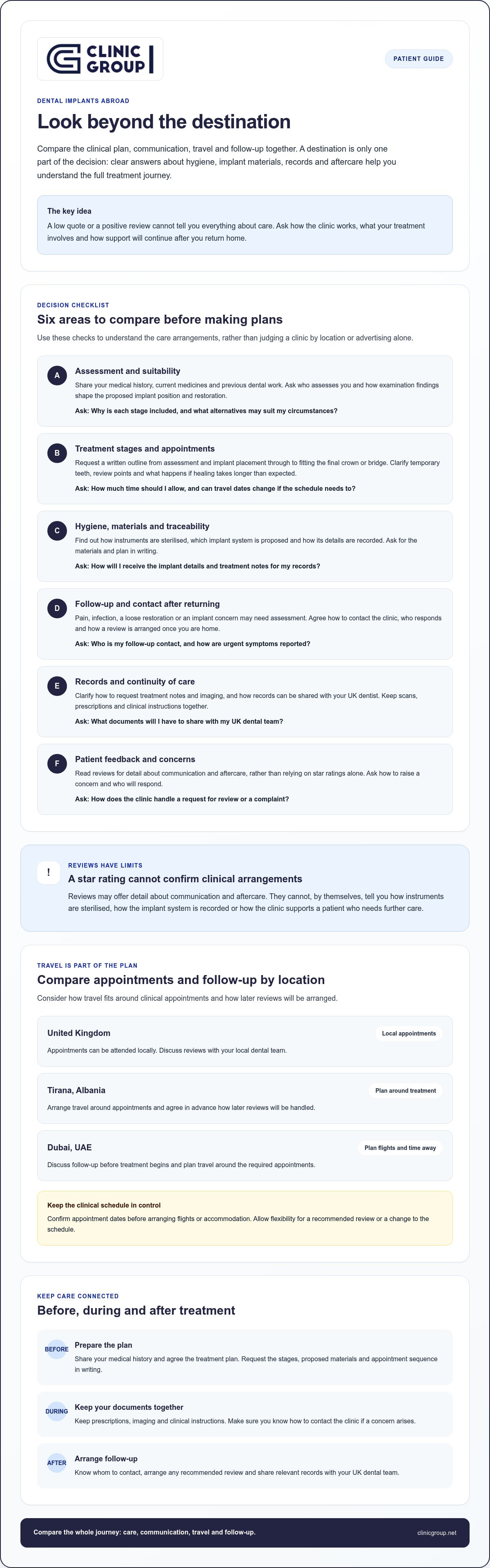
UK appointments avoid international travel, while treatment in Tirana or Dubai involves planning flights and overseas appointments. Consider how easily you can attend later reviews and share records with your UK dentist. The best place to get your teeth done abroad is the destination whose clinical arrangements and follow-up suit your circumstances, not the one with the most prominent advertising.
| Location | Appointments and travel | Follow-up consideration |
|---|---|---|
| United Kingdom | Attend appointments locally | Discuss reviews with your local dental team |
| Tirana, Albania | Plan travel around treatment appointments | Agree how later reviews will be arranged |
| Dubai, UAE | Plan flights and time away for appointments | Discuss follow-up before treatment begins |
Weigh the clinical plan, travel arrangements and continuity of care together.
Risks after overseas dental treatment
Pain, infection, a loose restoration or an implant concern may need assessment after you return. Distance can complicate a review, especially if your UK dentist does not have your treatment notes or implant details. Before travelling, agree how to obtain your records and whom to contact with concerns. Keep scans, prescriptions and clinical instructions together so you can share relevant details promptly.
Planning appointments across treatment stages
Implant treatment may involve separate stages, so ask what each appointment involves and how long you should allow at the destination. Clarify whether temporary teeth are planned, when the final restoration is expected and what follow-up is required. These details help you arrange travel around clinical needs instead of assuming the procedure fits into one visit.
Questions before booking overseas dental work
Ask who assesses you, who performs each procedure and how follow-up is handled. Request the treatment stages and proposed materials in writing, and clarify how your records can be shared with a UK dentist. Ask how to contact the clinic if you have a concern after returning. Clear answers help you understand the care arrangements before planning travel.
Rules for bringing prescriptions or medical devices into the UK depend on the item. Keep prescriptions and device documentation with you, and establish the requirements that apply to each item before travelling.
Before travelling, share your medical history and agree the treatment plan. During care, keep prescriptions and records. After returning, arrange follow-up and share your records with your UK dental team.
How Do I Choose Which Country Is Best for Dental Implants?
Compare destinations by how clearly the clinic explains your treatment, organises appointments and supports continuity of care after you return. A practical choice should suit your clinical needs and travel circumstances.
Treatment stages and appointments
Ask the clinic to describe each stage, from assessment and implant placement to fitting the final crown or bridge. Clarify what determines readiness to move between stages, what signs prompt a review and how the final teeth are checked for fit and bite. This gives you a clearer picture of the care journey than a brief procedure description.
Discuss how appointments are arranged if healing takes longer than expected or the restoration needs adjustment. Find out whether the treatment plan allows flexibility in travel dates and how the clinic communicates changes. Before booking flights or accommodation, make sure the schedule allows you to attend the clinical appointments your dentist considers necessary.
Safety and complaints when treatment goes wrong
Ask how to raise a concern with the clinic and who will respond after you return to the UK. Clarify how to request your records, including treatment notes and imaging, and how the clinic handles requests for a review. Keep written responses and clinical documents together so you can explain what happened if you seek further assessment.
Before travelling, find out how to report urgent symptoms and what information the clinic needs to assess them. Ask whether there is a named follow-up contact and how the clinic communicates clinical instructions. These arrangements matter because a concern may arise when you are no longer near the treating team.
Suitability depends on your dental condition and overall health. Provide an accurate medical history, including current medicines and previous dental work, so these factors can be considered during assessment. Comprehensive family practices such as blueridge.dentist highlight how routine examinations, professional cleanings and digital X-rays form the basis of a thorough assessment. Ask how examination findings affect the proposed implant position and final restoration. Your plan should explain why each stage is included and which alternatives may suit your circumstances.
Travel and accommodation arrangements should support, not dictate, the clinical schedule. Confirm appointment dates before making travel plans, and allow flexibility to attend any review the clinic recommends. If arrangements are bundled, ask which appointments and travel dates they cover, who handles changes and how you will receive updated instructions.
- Request a written outline of the clinical stages and appointment sequence.
- Clarify how to contact the clinic and obtain records after returning home.
- Coordinate travel dates around clinical appointments and possible schedule changes.
- Share your medical history and ask how it informs the treatment plan.
Choose the destination where the clinical arrangements, communication and travel schedule work together for your care.
Are dental tourism patients more vulnerable?
Distance can make it harder to understand who is responsible for your care and how to access information later. Before agreeing to treatment in Tirana or Dubai, examine the clinic’s oversight, the dentist’s role and the documents you will receive.
Clinic regulation checks
Ask for the clinic’s full legal name, its location and the authority responsible for overseeing its activities. Then ask how you can check the clinic’s current status with that authority. These details help distinguish an identifiable clinical organisation from a booking contact or marketing name.
The General Dental Council advises patients to receive an assessment from a qualified dentist before getting a treatment plan. Ask who will conduct that assessment and whether it includes your dental history and an examination. The proposed plan should link its recommendations to findings about your teeth and gums.
Ask how the clinic handles consent, stores clinical notes and responds to complaints. Find out who can provide copies of your records if you need them after returning to the UK. These questions clarify the clinic’s processes without assuming that regulatory arrangements are identical across countries.
Dentist experience and qualifications
Establish who will assess you, place any implant and fit the final restoration. One dentist may not perform every part of a procedure, so ask for each clinician’s name and role. Request details of relevant qualifications and experience in the proposed treatment, such as implant placement, rather than dentistry in general.
The General Dental Council states that dentists practising in the UK must be registered with it. That register covers UK practice; it does not establish an overseas dentist’s registration. For treatment abroad, ask which local professional authority oversees the dentist and how to check their current status.
Discuss your individual case with the treating dentist, not only a coordinator. Share previous dental work, relevant medical conditions and current medicines. Ask the dentist to explain how those details affect the examination and proposed plan. For example, ask which assessment findings support the recommended implant position or restoration.
Cosmetic treatment also needs a clear explanation of its effect on natural teeth. If veneers are proposed, ask how much tooth preparation is planned, which alternatives have been considered and why the recommendation suits your case. “Minimally invasive” should be explained in practical terms, including what the procedure involves for your teeth.
- Get each treating dentist’s name and role in writing.
- Ask which authority oversees the clinic and dentist.
- Request an individual assessment before accepting a proposed plan.
- Clarify how consent, records and complaints are handled.
Use the answers to understand who is responsible for each part of your care.
Patient reviews and satisfaction surveys
Patient feedback can help you understand communication, appointments and aftercare at a dental clinic. Compare detailed accounts with the treatment plan, not just the star ratings.
Testimonials and case studies
A testimonial describes one patient’s experience; a case study may show the treatment stages and follow-up in more detail. Look for the procedure performed, the patient’s starting concerns and how the clinic handled reviews after treatment. For example, an account of dental implants is more relevant to your decision than a general story about a routine check-up.
Check whether a review explains how long the patient stayed, what happened at each appointment and whether they needed further care. Photos can illustrate a result, but they don’t explain the examination, materials or clinical decisions behind it. Guidance on checking clinic reviews can help you assess what a testimonial does and doesn’t tell you.
Compare reviews on independent platforms and the clinic’s own website. Repeated comments about clear explanations or difficulty arranging follow-up may suggest questions to raise. Read positive and critical feedback, and note whether the clinic responds with specific information rather than a generic reply. A considered response can help you understand how concerns are handled.
Patient satisfaction claims
A satisfaction claim is useful only when its basis is clear. Check whether it describes a survey, testimonials or the clinic’s own feedback, and whether it concerns dental implants or another service. Ask how responses were gathered and whether patients were asked about healing and follow-up, not just their first impression after treatment.
Do not treat a high rating as a measure of clinical suitability. Patients may value friendly staff or smooth travel arrangements, while a review says little about their diagnosis or long-term dental health. A dentist’s assessment, written treatment plan and identifiable implant materials answer different questions from a general satisfaction score.
Reviews cannot establish whether a proposed procedure suits your health. Before booking, tell the dental clinic about relevant medical conditions, medicines, allergies and previous dental work. Ask how the dentist assesses your gums, bite and jawbone before recommending implants. For veneers, ask what tooth preparation is planned and whether alternatives have been considered.
If you are travelling within Europe, read feedback with the whole journey in mind. A review mentioning flights, appointment timing and communication after returning home may be more useful than one focused only on the clinic visit. Compare accounts from patients who had the same procedure and similar follow-up needs, rather than assuming another person’s experience predicts yours.
Use reviews to prepare focused questions, then weigh the answers against the clinical documents. For example, ask about treatment stages, the records you will receive and how to raise a concern. Keep copies of the plan and correspondence so the details remain accessible after travelling.
- Compare feedback about the same procedure, such as implants or veneers.
- Look for specifics on appointments, communication and follow-up.
- Separate travel satisfaction from information about clinical care.
- Use reviews to frame questions, not to replace an individual assessment.
Clinic hygiene, implant materials and traceability
For dental treatment abroad, look beyond photographs and clinic descriptions. Ask how instruments are sterilised, which implant system the dentist plans to use and which records you will receive. These details help you understand hygiene procedures and maintain a clear treatment history after returning home.
Start by asking about the clinic’s sterilisation process. Find out how reusable instruments are cleaned, packed and sterilised between patients, and how staff check equipment is ready for use. B-class autoclave sterilisation is a measure used by accredited international facilities. Ask the clinic to explain its own process in plain language, including how instruments are stored after sterilisation.
Also ask how the treatment room is prepared before your procedure. Ask whether staff use fresh gloves and protective equipment for each patient, and how they keep clean instruments separate from used ones. These practical questions help you understand the clinic’s routine without relying on a general claim about high standards.
Implant traceability means being able to identify the device used in your care. Before treatment, ask for the implant manufacturer and system name. After the procedure, request documentation recording the implant details, including its identifying reference or batch information where available. Keep this with your dental records so another clinician can understand your treatment history.
Clarify which materials are used for each part of the restoration. The implant fixture sits in the jaw; a crown or bridge attaches to it. Ask the dentist to identify the proposed fixture and the material planned for your visible teeth, such as zirconia or another restorative material. The written plan should distinguish these components rather than describing everything simply as an “implant”.
Material names alone do not explain why an option suits your mouth. Ask how the dentist’s examination informs the choice, and how the selected crown or bridge fits your bite and treatment plan. If you receive product labels or implant documentation, keep copies with your scans and post-treatment instructions.
Dental tourism involves records passing between a clinic abroad and your UK dental team. Ask who will provide your treatment summary, how to obtain copies and whom to contact with questions after returning home. A clear record should identify the procedure and materials, rather than leaving your UK dentist to rely on memory or photographs.
- Ask the clinic to explain its instrument sterilisation and storage routine.
- Get the implant system and restorative materials recorded in writing.
- Keep implant identification details with your treatment records.
- Request a treatment summary to share with your UK dental team.
Clinic Group: Dental Treatment Directory
Clinic Group’s Dental Treatment Directory helps UK patients explore dental care through its partner clinic network, located mainly in Tirana, Albania, with a small number of clinics in Dubai. It can be a useful next step if you have compared treatment plans and want to explore listed options for dental implants abroad.
Use the directory alongside the questions in this guide: consider clinical assessment, hygiene procedures, implant traceability, dentist qualifications and follow-up arrangements. Clinic Group also publishes Medical Tourism Treatment Guides to help you understand practical aspects of planning care abroad. The directory connects patients with clinics; the treating clinic and its dental professionals are responsible for treatment decisions and clinical care.
Clinic Group also features Hair Transplant Referrals and an Ophthalmology Clinic Directory.
Contact Clinic Group to discuss your next step.
Make your next step an informed one
Choosing the best place to get your teeth done abroad is not a decision to make from photographs or a brief conversation alone. Use your research to prepare for a clinical discussion: explain your priorities, ask how the proposed plan addresses them and make sure you understand the records and follow-up arrangements.
Clinic Group’s Dental Treatment Directory can help you explore listed dental options. The platform also offers Hair Transplant Referrals and Plastic Surgery Provider Listings. For dental implant enquiries, focus on the treating clinic’s assessment and written plan, and consider whether the travel and aftercare arrangements suit you.
A considered decision is one you can explain to yourself: why this treatment, why this clinic and how care continues after you return home. Take the next step when you feel ready.
Clear questions and careful planning can help you approach your decision with greater confidence.
Frequently Asked Questions
Is it really cheaper?
It can be, but a lower advertised treatment fee does not establish a lower overall spend. Compare the written treatment plan with travel, accommodation, time away and any return appointments. For example, a quote covering implant placement but excluding the final crown is not directly comparable with one covering both stages. Ask for an itemised breakdown, then compare the same treatment and inclusions across each option.
What Is the Best Dental Clinic in the World?
There is no single clinic that is best for every patient or procedure. A suitable choice depends on your dental needs, the clinician’s experience with that treatment, the proposed materials and how follow-up is arranged. For example, while major restorative work demands specific surgical expertise, practices such as Dental Plus illustrate how routine check-ups, professional hygiene, and digital imaging form the foundation of ongoing oral care. Compare the individual treatment plan and clinical team rather than relying on a global ranking.
How many trips abroad will I need?
Standard implant treatment abroad typically involves two visits. The first is for implant placement; the later visit is for fitting the permanent crown or bridge after the implant has integrated with the jawbone. That healing period is commonly three to six months. Before arranging travel, ask what each visit includes and whether your plan requires temporary teeth or additional appointments.
Is it safe to get dental implants abroad?
Dental implants abroad involve the same need for careful assessment and clear clinical records as treatment at home. Before deciding, understand who will examine you and perform the procedure, how the clinic sterilises instruments, and how implant materials are recorded. For example, ask for the implant system details and a copy of your treatment summary. These help you understand the care planned and maintain a useful record.
Is the dental tourism industry really growing?
A reliable answer needs comparable figures for the same destinations and time periods. Clinic advertising or individual patient stories may show that people travel for dental care, but they cannot establish an industry-wide growth trend. Look for independently collected data that defines dental tourism and measures it consistently. Without that context, treat broad growth claims cautiously and focus on the clinic and treatment you are considering.
Which countries are best for dental treatment abroad for UK patients?
No destination is best for every UK patient. Albania and the United Arab Emirates, including Dubai, are options within Clinic Group’s partner network. Compare the specific clinic, proposed treatment, dentist’s qualifications, appointment schedule and follow-up arrangements in each destination. A country’s reputation cannot establish whether an individual clinic or treatment plan suits your needs; assess the clinical details alongside the travel involved.
How do dental tourism destinations compare for quality, price and travel time from the UK?
Compare clinics rather than assuming a country has one standard for quality or pricing. To assess care, examine the dentist’s role, assessment process, hygiene procedures and records. For price, compare itemised treatment plans with the same inclusions. For travel, check the route, transfers and appointment dates. These factors show how each option fits your needs more clearly than a destination label alone.
What are typical prices abroad for implants, crowns, veneers and full-mouth restorations?
There is no typical price that applies to every patient or clinic, and this guide does not provide treatment prices. The amount depends on the treatment plan, materials, number of teeth involved and what the quote includes. For a meaningful comparison, request an itemised written quote covering the proposed procedure, restorations, appointments and follow-up. Compare like-for-like plans rather than headline figures.

Article by
Clinic Group Editorial Team
The Clinic Group editorial team publishes clear, practical guides for UK and EU patients researching medical travel — from dental implants and hair transplants to plastic surgery and eye care — with a focus on verified clinics, transparent “from” pricing, and safe planning.
Disclaimer
This article is for general information only and is not medical advice, diagnosis, or a substitute for an in-person consultation with a qualified clinician. Treatment suitability, risks, timelines, and costs vary by individual. Clinic Group connects patients with independent clinics; those clinics are responsible for clinical care. Always verify credentials, obtain a written treatment plan and itemised quote, and confirm aftercare arrangements and travel insurance cover (elective procedures are often excluded) before booking. Outcomes cannot be guaranteed.