Why undergo plastic surgery abroad: a UK patient’s guide
TL;DR:
- Patients choose abroad plastic surgery mainly for lower costs, faster procedures, and privacy.
- However, lower prices often reflect less regulation, limited aftercare, and increased risks, requiring careful verification.
Patients choose to undergo plastic surgery abroad primarily for three reasons: lower upfront cost, faster access to procedures, and privacy. Advertised prices in destinations such as Albania, Turkey, and Dubai can be substantially lower than UK private fees, making overseas surgery genuinely attractive. The central caution, however, is that a lower headline price often reflects different regulatory requirements, reduced mandatory aftercare, and limited legal recourse if something goes wrong. NHS guidance is clear: verify surgeon credentials, confirm clinic accreditation, and agree a written aftercare plan before committing to any procedure abroad.
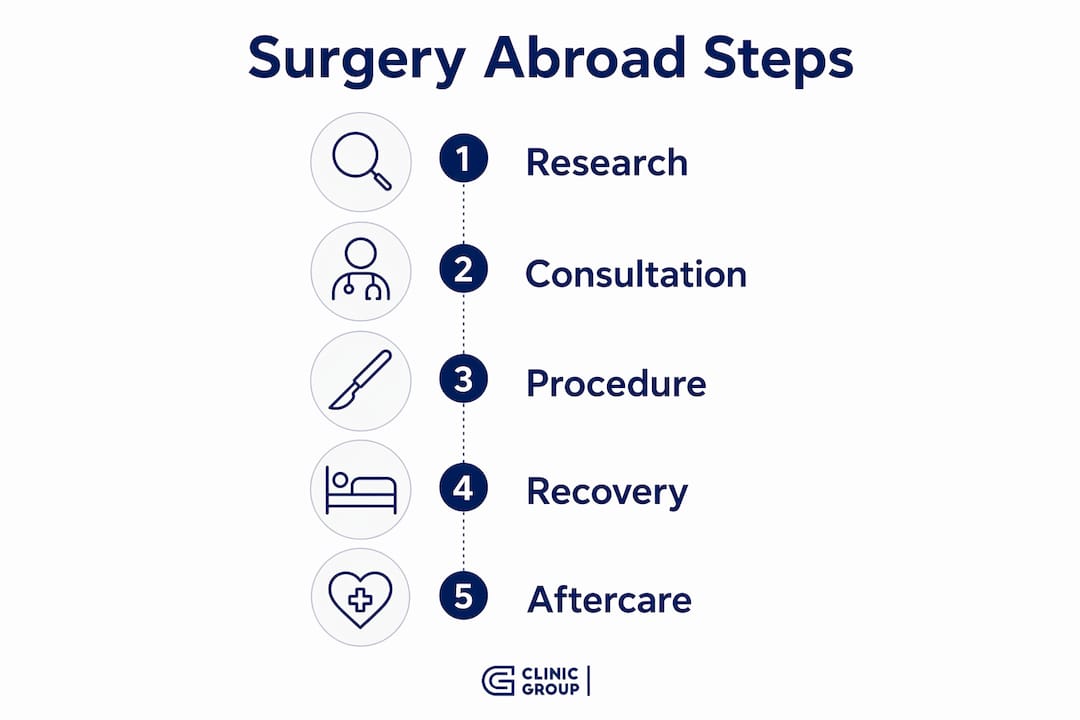
Table of Contents
- Why do people choose plastic surgery abroad?
- What are the clinical safety risks of having surgery abroad?
- Why are “surgery plus holiday” packages risky?
- Who is responsible for your aftercare once you return to the UK?
- How can you reduce risk when planning surgery abroad?
- What does surgery abroad actually cost in total?
- What should you do if complications arise after surgery abroad?
- How Clinicgroup helps reduce risk for patients considering surgery abroad
- Key takeaways
- A patient-first perspective on planning surgery abroad
- Clinicgroup: verified clinics, transparent pricing, coordinated care
- Useful sources and further reading
- FAQ
Why do people choose plastic surgery abroad?
Cost is the most consistent driver. UK private fees reflect regulatory and indemnity requirements that overseas providers are not always subject to, including mandatory malpractice insurance, NHS-standard infection controls, and built-in post-operative follow-up. Remove those costs and the headline price drops considerably.
Beyond cost, patients cite several other motivations:
- Shorter waiting times. High-volume specialist clinics in some destinations can schedule procedures within weeks rather than months.
- Specialist availability. Certain procedures, such as high-definition liposuction or specific rhinoplasty techniques, are performed at greater volume in dedicated overseas centres.
- Privacy. Travelling abroad allows patients to recover away from colleagues, family, or social circles.
- Perceived customer service. Many overseas clinics compete aggressively for international patients and invest heavily in concierge-style support.
- Combining treatment with travel. The idea of recovering in a warmer climate is appealing, though professional bodies warn this can compromise outcomes (more on that below).
A systematic review published in Globalization and Health found that while cost is the primary motivator, perceived expertise, availability, and customer service also influence decisions, and patients rely heavily on anecdote and social media rather than clinical evidence. That reliance on informal sources is among the more significant risks in the decision-making process.

What are the clinical safety risks of having surgery abroad?
The risks are real and specific. They are not reasons to rule out overseas surgery categorically, but they must be weighed honestly against potential savings.
Regulatory differences are the starting point. In the UK, the General Medical Council, the Royal College of Surgeons, and the Healthcare Commission collectively set and enforce standards for surgeon registration, facility inspection, and patient rights. Overseas, those protections vary widely. A clinic that looks professional online may operate under minimal regulatory oversight. BAPRAS advises that patients should not assume overseas standards match those they would expect at home.
- Infection control. Sterilisation protocols and theatre standards differ between countries and between individual facilities.
- DVT and pulmonary embolism risk. Flying soon after surgery significantly raises the risk of deep vein thrombosis. BAPRAS recommends waiting several days after breast surgery or liposuction and about a week or more after facial procedures or abdominoplasty before boarding a flight.
- Anaesthetic standards. The training and certification of anaesthetists varies internationally.
- Aftercare gaps. Once you return to the UK, the overseas clinic has limited ability to monitor or manage your recovery. Many UK surgeons will not take over aftercare for procedures performed abroad because they do not know the original technique, implants used, or the legal liability involved.
BAAPS estimates the average cost to the NHS for emergency aftercare per patient following problematic surgeries abroad at around £15,000. That figure alone reframes what “saving money” actually means in a worst-case scenario.
Pro Tip: Ask any prospective clinic for its documented complication and infection rates, and request a written protocol for emergencies and patient repatriation. A reputable clinic will provide both without hesitation.
Why are “surgery plus holiday” packages risky?
Clinics market combined surgery-and-holiday packages because they are commercially effective. They reduce the psychological barrier to booking by framing a medical procedure as a lifestyle experience. The clinical reality is quite different.
- Recovery requires rest, not activity. Sightseeing, swimming, and sun exposure all interfere with healing. Sun on fresh scars can cause permanent pigmentation changes.
- Flying too soon is a genuine medical risk. DVT risk is elevated after surgery, and a long-haul flight taken before the recommended waiting period can be dangerous.
- Holiday insurance almost always excludes elective surgery complications. NHS guidance on treatment abroad confirms that most standard travel policies are invalidated by planned treatment; specialist medical travel insurance is required.
- Package pricing can obscure what is and is not included. A “complete” package may exclude anaesthetist fees, post-op garments, or extended stays if complications arise.
The practical advice from professional bodies is straightforward: if you want to visit the destination as a tourist, do so before the procedure. Plan your post-operative period as a medical recovery, not a holiday.
Who is responsible for your aftercare once you return to the UK?
This is the question most patients do not ask until something goes wrong. The answer is uncomfortable: responsibility is genuinely unclear, and the NHS’s obligations are more limited than many patients expect.
In the UK, a standard surgical pathway includes staged post-operative appointments with the operating surgeon, wound checks, and access to the clinical team if complications arise. Overseas clinics vary enormously in what they offer after you leave the country. Some provide telemedicine follow-up; many do not.
The NHS position is defined by its own guidance: life-threatening emergencies will be treated. For non-life-threatening complications or unfavourable outcomes, NHS trusts may decline to provide corrective care or may treat the patient as a private patient and bill accordingly. Routine corrective surgery following an overseas procedure is not an NHS entitlement.
Before booking, confirm the following in writing:
- A detailed aftercare plan covering the first six weeks post-operatively.
- A named local emergency contact at the clinic, available outside office hours.
- The full name and qualifications of the operating surgeon and anaesthetist.
- The clinic’s protocol for managing complications after the patient has returned home.
For common procedures, BAPRAS recommends remaining in the destination country for at least 5–7 days after breast surgery or liposuction, and 7–10 days after more complex procedures, before flying. Budget for that time when calculating total cost.
How can you reduce risk when planning surgery abroad?
A structured approach to research and planning removes much of the uncertainty. Follow these steps before signing anything.
- Verify the surgeon’s credentials. Confirm board certification in plastic and reconstructive surgery, not just general surgery. Check whether the surgeon is registered with a recognised body in their country. Researching clinic credentials before travelling is one of the most effective risk-reduction steps available.
- Insist on speaking with the operating surgeon. Sales staff and patient coordinators are not clinicians. Request at least two consultations with the surgeon who will perform the procedure, not a representative.
- Allow a cooling-off period. The NHS recommends a minimum two-week cooling-off period between final consent and surgery for cosmetic procedures. Do not book a clinic that pressures you to sign and pay immediately.
- Request itemised pricing in writing. A single “all-in” figure is a red flag. Ask for a breakdown covering surgeon fees, anaesthetist, facility, implants or materials, pre-operative tests, and post-operative care.
- Confirm accreditation. Ask for the clinic’s accreditation documents. Recognised international marks include JCI (Joint Commission International) accreditation. A clinic accreditation guide can help you understand what different quality marks mean.
- Arrange specialist medical travel insurance. Standard holiday policies will not cover elective surgery complications. Specialist medical travel insurance that includes repatriation cover is essential.
- Discuss the plan with your UK GP. Your GP knows your medical history and can flag contraindications that an overseas clinic may not be aware of.
- Budget for contingencies. Set aside funds for an extended stay if recovery is slower than planned, and for private UK aftercare if needed.
Pro Tip: Keep a stamped, signed copy of your informed consent document and the clinic’s insurance details. Store digital copies in cloud storage accessible from your phone while travelling.
What does surgery abroad actually cost in total?
The advertised price is rarely the total cost. Patients who plan only around the headline surgical fee often find the real figure is considerably higher once all components are included.
| Cost component | Notes |
|---|---|
| Surgical fee | The figure most clinics advertise; confirm what it includes |
| Anaesthetist fee | Sometimes separate; always ask |
| Facility and theatre fees | May or may not be bundled |
| Implants or materials | Particularly relevant for breast augmentation; confirm brand and grade |
| Pre-operative tests | Blood work, ECG, imaging; often not included |
| Return flights | Book flexible fares in case recovery extends your stay |
| Accommodation | Budget for the full recommended post-op period, not just the procedure day |
| Local transfers | Airport, clinic, hotel; adds up over multiple appointments |
| Specialist medical insurance | Non-negotiable; cost varies by procedure and destination |
| Extended stay contingency | Allow for at least three to five additional nights if complications arise |
| Private UK aftercare | If the overseas clinic cannot provide remote follow-up |
| Revision surgery | If the outcome requires correction; rarely covered by the original fee |
Beyond these line items, currency fluctuation is a practical consideration. A procedure priced in euros or Turkish lira will cost more in pounds if sterling weakens between booking and travel. Some clinics lock in a price at booking; others do not.
BAAPS and BAPRAS both note that the apparent savings from overseas surgery can be substantially reduced or eliminated once emergency aftercare costs are factored in. The £15,000 NHS emergency aftercare figure cited by BAAPS is a useful benchmark when stress-testing your budget assumptions.
What should you do if complications arise after surgery abroad?
Act quickly and document everything. The first 72 hours after recognising a complication are the most important.
- Contact the overseas clinic immediately. Most reputable clinics have an emergency line. Report symptoms in writing (email or messaging app) so you have a timestamped record.
- Seek local emergency care if needed. If you are still in the destination country and symptoms are serious, go to the nearest emergency department. Do not wait for the clinic to respond.
- On return to the UK, contact your GP or NHS 111. For life-threatening symptoms, call 999 or go to A&E. The NHS will treat emergencies regardless of where the procedure was performed.
- Notify your insurer immediately. Medical travel insurance policies typically require prompt notification; delayed reporting can invalidate a claim.
- Gather all documentation. Collect medical records, surgical notes, implant details, photographs of the complication, receipts, and all correspondence with the clinic.
- Understand the legal position. Pursuing legal action against an overseas provider is genuinely difficult. Jurisdiction, language, and the absence of a shared regulatory framework all create barriers. Evidence gathered promptly, including written records and photographs, is your strongest asset if you do pursue a complaint.
The UK government’s Travel Aware guidance notes that once treatment is complete, the overseas clinic’s primary concern may be to discharge the patient as quickly as possible. Do not assume ongoing support will be forthcoming without a written agreement in place before surgery.
How Clinicgroup helps reduce risk for patients considering surgery abroad
Clinicgroup operates as a verified clinic-matching platform, connecting UK and European patients with board-certified specialists in Albania and Dubai. The service is designed specifically to address the gaps that make unassisted medical tourism risky.
- Verified clinic credentials. Partner clinics in the Clinicgroup network are assessed against documented quality standards before being listed. Patients can request accreditation documents directly.
- Board-certified specialists. All surgeons in the network hold recognised specialist qualifications in their field, whether plastic surgery, dentistry, or hair restoration.
- Transparent, itemised pricing. Clinicgroup provides cost breakdowns covering all components of the treatment journey, not a single opaque figure.
- Travel and logistics coordination. The platform assists with flight timing, partner hotel arrangements, and local transfers, reducing the practical complexity of planning.
- Written aftercare pathways. Each treatment journey includes a documented aftercare plan, with defined follow-up points and a named contact for post-operative queries.
- Pre-op consultation support. Clinicgroup facilitates consultations with the operating surgeon before travel, not just with administrative staff.
Researchers recommend transparency and verified accreditation as the most practical levers for reducing harm in medical tourism. That is the framework Clinicgroup is built around.
Pro Tip: Ask Clinicgroup for the clinic’s accreditation documents and a standardised pre-operative checklist before confirming any booking. Both should be available without delay.
Key takeaways
Surgery abroad can offer genuine savings and access advantages, but only when approached with the same rigour you would apply to any significant medical decision. Verify the surgeon and clinic, calculate the true total cost, plan adequate recovery time, arrange specialist insurance, and never treat the post-operative period as a holiday.
| Point | Details |
|---|---|
| Verify surgeon and clinic | Confirm board certification and accreditation documents before paying any deposit. |
| Calculate total cost honestly | Include flights, accommodation, insurance, contingency nights, and potential UK aftercare. |
| Plan recovery time carefully | BAPRAS recommends staying several days in-country before flying, depending on the procedure. |
| NHS aftercare is limited | The NHS treats emergencies but may decline or bill for non-life-threatening corrective care. |
| Clinicgroup reduces planning risk | Verified clinics, itemised pricing, and written aftercare plans are standard across the network. |
A patient-first perspective on planning surgery abroad
The conversation around cosmetic surgery abroad tends to split into two camps: uncritical enthusiasm driven by price, and blanket warnings that treat every overseas clinic as dangerous. Neither position serves patients well.
The evidence is more nuanced. Research published in peer-reviewed literature, including a large-scale review of over 2,300 patients at a high-volume centre in Colombia, demonstrates that well-regulated, high-volume centres can achieve outcomes comparable to leading practices in the United States. The key phrase is “well-regulated and high-volume.” The problem is not overseas surgery as a category; it is the absence of a reliable way for patients to distinguish credible providers from inadequate ones.
At Clinicgroup, the position is straightforward: patient safety is the first filter, not an afterthought. The clinics in the network in Albania and Dubai are selected because they meet documented standards, not because they offer the lowest price. Transparent pricing, written aftercare agreements, and access to the operating surgeon before travel are non-negotiable requirements for network membership.
Patients who approach overseas surgery with thorough preparation, verified credentials, and a realistic budget for the full cost of the journey, including contingencies, can access high-quality care at a meaningful saving compared with UK private fees. Those who book on price alone, without checking credentials or planning aftercare, are taking a risk that the headline saving rarely justifies.
Clinicgroup: verified clinics, transparent pricing, coordinated care
For patients who have decided that surgery abroad is the right option, the difference between a safe experience and a difficult one often comes down to how the clinic was selected and whether aftercare was agreed in writing before travel.
Clinicgroup connects UK patients with verified plastic surgery clinics in Albania and Dubai, where board-certified surgeons perform procedures including rhinoplasty, liposuction, and breast augmentation at transparent, itemised prices. Every booking through the platform includes clinic matching, travel logistics support, partner hotel arrangements, and a written aftercare pathway. There are no hidden fees and no pressure to commit before you are ready.
To explore plastic surgery options through Clinicgroup’s verified network, or to request a free clinic-matching enquiry, visit the treatments page and submit a no-obligation consultation request. A patient coordinator will respond with clinic options, credential summaries, and a full cost breakdown for your specific procedure.
This article is general information, not medical advice. Confirm current clinical guidelines and your suitability for any procedure with a qualified medical professional before making any decision.
Useful sources and further reading
- NHS: Cosmetic surgery abroad — NHS guidance on safety standards, the two-consultation rule, aftercare obligations, and what to expect if complications arise.
- NHS: Treatment abroad checklist — Practical pre-travel checklist covering insurance, documentation, and questions to ask before booking.
- BAAPS: Cosmetic tourism — The British Association of Aesthetic Plastic Surgeons’ position on overseas cosmetic surgery, including the NHS emergency aftercare cost estimate.
- BAPRAS: Cosmetic surgery abroad — The British Association of Plastic, Reconstructive and Aesthetic Surgeons’ patient guidance on regulatory differences, DVT risk, and aftercare.
- Royal College of Surgeons: Having surgery abroad — Guidance from the Royal College of Surgeons on choosing a surgeon and understanding your rights.
- UK Government Travel Aware: Surgery abroad — Official government advice on risks, insurance, and how to prepare for treatment overseas.
- Clinicgroup: Plastic surgery treatments — Clinicgroup’s verified plastic surgery options in Albania and Dubai, with itemised pricing and clinic credentials.
- Clinicgroup: Clinic accreditation guide — A practical guide to understanding accreditation marks and what they mean for patient safety.
FAQ
Why do people undergo plastic surgery abroad?
The primary motivations are lower upfront cost, faster access to procedures, and privacy. BAPRAS notes that UK prices reflect regulatory and indemnity costs that many overseas providers do not carry, which accounts for much of the price difference.
What is the most regretted cosmetic surgery?
Regret tends to be highest when patients have not had adequate consultations, felt pressured to decide quickly, or experienced complications without proper aftercare. The NHS recommends a minimum two-week cooling-off period before consent to reduce impulsive decisions.
Which countries are considered leading destinations for cosmetic surgery?
Turkey, Colombia, Thailand, and Albania are among the most frequently cited destinations for cosmetic surgery medical tourism. ISAPS data referenced in peer-reviewed research identifies Colombia as a global leader, with 35.9% of patients at high-volume centres coming from abroad.
What happens if something goes wrong after surgery abroad?
The NHS will treat life-threatening emergencies regardless of where the procedure was performed. For non-life-threatening complications, NHS trusts may decline corrective care or treat the patient as a private patient and bill accordingly. Specialist medical travel insurance with repatriation cover is essential before travelling.
How does Clinicgroup help patients considering surgery abroad?
Clinicgroup matches patients with verified clinics in Albania and Dubai, providing itemised pricing, written aftercare plans, and travel logistics support. All surgeons in the network hold recognised specialist qualifications, and accreditation documents are available on request before any booking is confirmed.