TL;DR:
- Health tourism involves traveling abroad for medical or wellness services to access higher quality, lower costs, or faster treatment. It is categorized into medical, wellness, and hybrid types, each with distinct risks and requirements for verifying provider credentials and planning aftercare. Proper research, accreditation checks, and thorough planning are essential to ensure safe, effective treatment outcomes.
Health tourism is defined as the practice of travelling internationally for non-emergency healthcare services, seeking better quality, lower costs, or faster access than what is available at home. A 2025 paper in Discover Public Health describes the sector as quality-seeking care abroad, encompassing both clinical procedures and wellness-focused travel. Globalisation, improved transport, and digital communication have made this kind of travel more accessible than ever, with patients from the UK, Italy, and across Europe now routinely combining treatment with international travel. Understanding the full scope of health tourism, from its definition to its risks and practical planning steps, is the foundation for making a safe and informed decision.
What is health tourism and how is it defined?
Health tourism is the umbrella term for all travel undertaken primarily to access healthcare or wellness services abroad. Within that umbrella, two distinct categories exist: medical tourism and wellness tourism. Recognising the difference between them is the first step toward understanding what kind of trip you are actually planning.

Medical tourism, as defined by the CDC, involves travelling internationally to receive medical care. Common procedures include cosmetic surgery, dental care, fertility treatment, orthopaedic surgery, and cancer treatment. Patients choose this route primarily for cost savings, shorter waiting times, or access to specialists not available locally.
Wellness tourism, by contrast, is voluntary travel aimed at promoting health through physical, psychological, or spiritual activities. Yoga retreats, spa programmes, meditation centres, and longevity check-ups all fall under this category. The traveller is not seeking to treat a diagnosed condition but to maintain or improve their general wellbeing.
A third, hybrid category is growing in relevance. Patients increasingly combine a clinical procedure, such as a dental implant or hair transplant, with a recovery stay at a wellness resort. This blend reflects how the health tourism definition has evolved beyond traditional tourist profiles, requiring updated frameworks from both providers and policymakers.
What are the main types of health tourism and how do they differ?
The distinction between medical and wellness tourism matters because the risks, costs, and preparation involved are fundamentally different. The table below summarises the key differences.
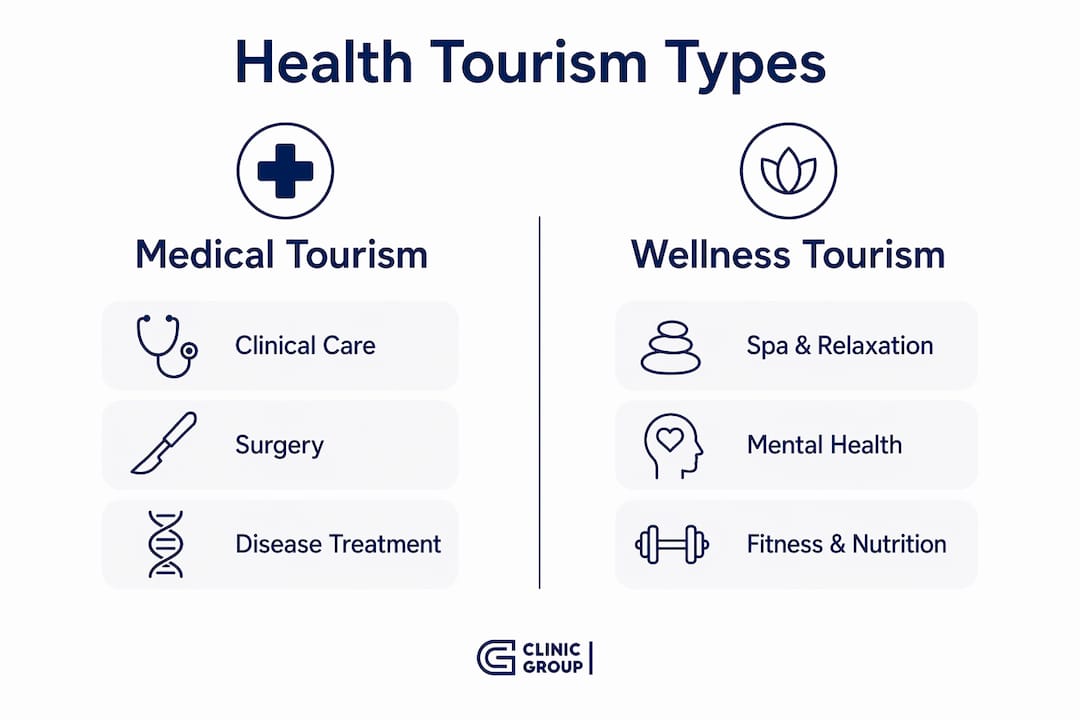
| Category | Primary purpose | Typical treatments | Traveller goal |
|---|---|---|---|
| Medical tourism | Clinical treatment | Dental implants, cosmetic surgery, fertility, orthopaedics | Treat a condition or improve appearance |
| Wellness tourism | Health promotion | Yoga retreats, spa therapy, meditation, IV therapy | Prevent illness or improve wellbeing |
| Hybrid health tourism | Treatment and recovery | Surgery followed by wellness stay | Combine clinical outcome with recuperation |
For medical tourism, the stakes are higher. You are undergoing clinical procedures in a foreign healthcare system, which means verifying the credentials of both the clinic and the individual surgeon or dentist is non-negotiable. For wellness tourism, the risks are lower but still present, particularly around the qualifications of practitioners offering therapies such as PRP or nutritional IV drips.
Pro Tip: Before booking any treatment abroad, confirm whether your provider falls under the medical or wellness category. Medical providers should hold nationally recognised clinical licences; wellness providers should carry professional certifications from bodies such as the International Spa Association or equivalent national regulators.
Why do people choose health tourism? Key benefits explained
The growth of health tourism is directly linked to four core advantages that patients consistently cite: cost, speed, access, and experience. Each of these addresses a genuine gap in domestic healthcare provision, particularly for patients in the UK and across Europe.
The benefits most frequently reported by patients include:
- Cost savings. Dental implants, rhinoplasty, and hair transplants in Albania or Dubai can cost a fraction of equivalent UK private prices. Savings of 50 to 70 per cent are common across cosmetic dentistry and aesthetic procedures.
- Shorter waiting times. NHS waiting lists for non-urgent procedures can stretch to months or years. Abroad, the same procedure can often be scheduled within days or weeks.
- Access to unavailable treatments. Some procedures, regenerative therapies, or specialist techniques are not offered by domestic providers. Health tourism opens access to treatments that simply do not exist locally.
- Skilled clinicians. Many popular destinations attract board-certified specialists trained in Europe or the United States, working in modern facilities equipped to European standards.
- Combined travel and recovery. Patients can recover in a comfortable, often scenic environment, which many find preferable to returning home immediately after a procedure.
The CDC notes that treatment costs abroad are usually paid out of pocket, meaning patients must plan financially. This also means transparent pricing from verified providers is not a luxury. It is a requirement.
Which countries are popular health tourism destinations?
Popular health tourism destinations vary by region and treatment type, but several countries consistently attract high volumes of international patients. For UK and European patients, Albania and Dubai have emerged as particularly strong options, combining European-standard care with significant cost advantages.
| Destination | Treatment specialties | Typical cost saving vs UK |
|---|---|---|
| Albania | Dentistry, cosmetic surgery, hair transplants | 60–70% |
| Dubai | Aesthetics, anti-aging, wellness, dentistry | 30–50% |
| Turkey | Hair transplants, cosmetic surgery, dentistry | 50–70% |
| Mexico | Dentistry, bariatric surgery, orthopaedics | 40–65% |
| South Korea | Cosmetic surgery, dermatology, cancer screening | 30–50% |
The CDC identifies Mexico, Canada, the Caribbean, and South America as popular destinations for US residents, reflecting how geography shapes patient flows. For UK patients, shorter flight times to Albania and the UAE make these destinations particularly practical.
Albania has grown rapidly as a dental and cosmetic surgery hub, with clinics in Tirana operating to EU-adjacent standards and employing specialists trained across Europe. Dubai attracts patients seeking premium aesthetics, anti-aging therapies, and wellness programmes, with a healthcare infrastructure that meets international accreditation benchmarks.
South Korea leads in cosmetic surgery and advanced dermatology, drawing patients from across Asia and increasingly from Europe. Turkey remains dominant in hair transplants, with Istanbul home to hundreds of specialist clinics. Mexico serves primarily North American patients seeking affordable dentistry and bariatric procedures.
Pro Tip: Choose your destination based on the specific treatment you need, not general reputation. A country that excels in hair transplants may not have the same depth of expertise in fertility treatment. Always verify that your chosen clinic holds relevant accreditations for your specific procedure, and confirm that aftercare is available either locally or coordinated with your home provider.
What are the risks and safety considerations in health tourism?
Health tourism carries genuine risks that every patient must understand before travelling. Euronews reported in 2025 that EU MEPs are calling for stronger patient protections, citing infections, inadequate aftercare, and legal ambiguity as recurring concerns. These are not edge cases. They are documented patterns that arise when patients prioritise cost over verification.
The primary risks include:
- Post-operative infections. Antibiotic-resistant organisms are a documented risk in medical tourism, particularly following surgical procedures. A qualitative study on patient safety identifies infection risk as one of the most serious concerns for patients returning from treatment abroad.
- Continuity of care failures. Loss of medical documentation and difficulties arranging follow-up care at home are among the most common complications reported by medical tourists.
- Variable regulatory standards. Patient protections, complaint procedures, and clinical oversight differ significantly between countries. What is legally required of a clinic in the UK may not apply in your destination country.
- Unverified providers. The CDC warns that patients often rely on informal recommendations from social media or friends, which can lead to choosing clinics without proper vetting.
- Insurance gaps. Standard travel insurance rarely covers elective procedures abroad. Specific medical travel insurance is required, and many patients overlook this entirely.
Mitigating these risks requires active research, not passive trust. Checking clinic credentials before committing to any provider is the single most effective protective step a patient can take. Reading verified patient reviews adds a further layer of assurance.
How to plan a health tourism journey step by step
Planning a health tourism trip effectively reduces risk and improves outcomes. The process below reflects the approach that Clinicgroup recommends to every patient considering treatment abroad.
- Define your treatment need. Establish clearly whether you require a clinical procedure or a wellness programme. This determines which type of provider and destination is appropriate.
- Research destinations and clinics. Use verified platforms to compare clinics, read patient reviews, and confirm accreditations. Learning how to schedule appointments abroad before you travel avoids logistical problems on arrival.
- Request a consultation. A reputable clinic will offer a remote consultation before you commit. Use this to ask about the surgeon’s qualifications, the facility’s sterilisation protocols, and what aftercare is included.
- Plan your finances. Obtain a written, itemised quote. Confirm what is and is not included, such as accommodation, transfers, and follow-up appointments. Arrange medical travel insurance that covers the specific procedure.
- Organise travel and accommodation. Book flights and accommodation that align with your recovery timeline. Many verified networks, including Clinicgroup, offer partner hotel arrangements close to the clinic.
- Prepare your medical documentation. Bring copies of your full medical history, current medications, and any relevant test results. Ensure your home GP is informed of your plans.
- Coordinate aftercare. Before you travel, confirm how post-treatment care will be managed. All-inclusive healthcare packages that include follow-up are the most reliable option for continuity of care.
Pro Tip: Before you leave the foreign clinic, request a full written summary of your treatment, including the materials used, dosages, and the treating clinician’s contact details. Share this with your GP on return. This single step resolves the majority of continuity-of-care problems.
Key takeaways
Health tourism is a structured, patient-driven sector that rewards careful preparation and penalises shortcuts, particularly when clinical procedures are involved.
| Point | Details |
|---|---|
| Clear definition matters | Health tourism covers both medical procedures and wellness travel. Knowing which applies to you shapes every subsequent decision. |
| Cost savings are real but require verification | Savings of 50 to 70 per cent are achievable, but only with transparent pricing from accredited providers. |
| Destination choice should match treatment type | Albania and Dubai lead for dentistry and aesthetics; South Korea and Turkey specialise in cosmetic surgery and hair transplants respectively. |
| Risks are manageable with the right preparation | Verifying credentials, arranging medical travel insurance, and coordinating aftercare eliminate the majority of documented risks. |
| Continuity of care is the critical planning step | Ensuring your home GP receives full treatment documentation is the most overlooked and most important part of any health tourism journey. |
Our perspective on health tourism in 2026
At Clinicgroup, we have seen health tourism mature considerably over the past decade. What was once a niche choice for cost-conscious patients has become a mainstream option for people who simply want timely, high-quality care without the delays or costs they face at home.
The most significant shift we have observed is in patient expectations. People are no longer willing to accept vague pricing, unverified clinics, or aftercare that ends the moment they board their return flight. They want transparency, documentation, and a provider who remains accountable after the procedure is complete. That shift is healthy, and it is pushing the entire sector toward higher standards.
What concerns us is the persistence of informal booking channels. Social media groups and word-of-mouth recommendations still drive a significant proportion of medical tourism decisions, and the consequences when things go wrong are serious. The EU MEPs calling for stronger patient protections in 2025 are responding to real cases, not hypothetical ones.
Our position is straightforward. Health tourism works well when patients use verified networks, ask the right questions, and plan their aftercare before they travel. It carries avoidable risks when patients prioritise the lowest price without scrutinising what that price actually includes. The difference between a positive outcome and a complicated one is almost always preparation.
— Clinic
Plan your health tourism journey with Clinicgroup
Clinicgroup connects patients from the UK, Italy, and across Europe with verified clinics in Albania, Dubai, and other leading destinations. Every clinic in the network is assessed for clinical standards, patient safety protocols, and aftercare provision. Transparent pricing, board-certified specialists, and support with travel logistics and accommodation are included as standard.
Whether you are considering dental implants or cosmetic surgery, a hair transplant, or a non-surgical aesthetic treatment, Clinicgroup matches you with the right provider for your specific needs. You can also browse verified clinics by destination and treatment type to compare options before committing. Get in touch to arrange a free consultation and take the first step toward a safe, well-planned treatment abroad.
FAQ
What is the difference between health tourism and medical tourism?
Health tourism is the broader term, covering both clinical procedures and wellness travel. Medical tourism specifically refers to travelling abroad for medical treatment such as surgery, dentistry, or fertility care.
Which countries are the most popular health tourism destinations for UK patients?
Albania and Dubai are leading destinations for UK patients seeking dentistry, cosmetic surgery, and aesthetic treatments, offering significant cost savings alongside European-standard care. Turkey and South Korea are also widely chosen for hair transplants and cosmetic procedures respectively.
Is health tourism safe?
Health tourism is safe when patients choose verified, accredited clinics, arrange appropriate medical travel insurance, and plan their aftercare in advance. Risks increase significantly when bookings are made through unverified channels or based solely on informal recommendations.
What treatments are most commonly sought through health tourism?
The most frequently sought treatments include dental implants, cosmetic surgery, hair transplants, fertility treatment, and non-surgical aesthetics such as Botox and fillers. Wellness programmes including IV therapy, anti-aging check-ups, and spa retreats are also growing in demand.
How do I verify a clinic before travelling abroad for treatment?
Check that the clinic holds nationally recognised clinical accreditations, read independently verified patient reviews, and request the treating clinician’s qualifications before booking. Using a verified network such as Clinicgroup provides an additional layer of assurance, as clinics are assessed before being listed.