TL;DR:
- Many UK patients are choosing dental implants abroad due to lower costs and comparable quality, often requiring two trips spaced months apart. Reputable clinics should provide transparent treatment plans, verified implant documentation, and structured aftercare, including a UK follow-up review. Careful clinic selection and thorough documentation are essential to ensure safe treatment and long-term success.
Thousands of UK patients are choosing to get dental implants overseas, drawn by the prospect of significant savings without sacrificing quality. Yet for every patient who books with confidence, another hesitates because the process feels unclear. What exactly does the treatment involve? Is it genuinely safe? How do you know which clinic to trust? This guide is here to explain dental implants abroad in plain terms, covering the procedure itself, realistic costs, quality checks, and the aftercare arrangements that often matter more than where you choose to fly.
Table of Contents
- Key takeaways
- What dental implants abroad actually involve
- Cost of dental implants abroad vs. the UK
- Choosing a safe clinic abroad
- Aftercare: the part most patients underestimate
- How to plan your dental implant trip
- My perspective on getting implants abroad
- Plan your treatment with Clinicgroup
- FAQ
Key takeaways
| Point | Details |
|---|---|
| Two-trip protocol is standard | Most patients travel twice, spaced 3 to 6 months apart, for surgery and then crown fitting. |
| Savings are substantial | UK single implant costs reach £2,500 to £4,500; leading overseas destinations charge significantly less. |
| Accreditation is not a guarantee | JCI and ISO certifications confirm governance systems, not clinical outcomes, so additional checks matter. |
| Documentation protects you | Implant serial numbers, warranties, and pre-treatment imaging are essential for future care and warranty claims. |
| Aftercare quality is decisive | A structured 6-month review with a UK-registered clinician is the strongest predictor of long-term success. |
What dental implants abroad actually involve
A dental implant, in clinical terms, is a titanium fixture surgically placed into the jawbone to replace the root of a missing tooth. The full restoration comprises three parts: the implant body (the titanium post inserted into the bone), the abutment (a connector piece), and the crown (the visible tooth-shaped cap fitted on top). Understanding these components is the first step in knowing what you are buying when you seek treatment internationally.
The procedure follows a staged protocol because of a biological process called osseointegration. This is where the jawbone gradually fuses around the titanium post. Osseointegration typically takes three to six months, which is why treatment cannot be completed in a single visit for most patients.
The standard two-trip timeline
- First trip (3 to 5 days): Initial consultation, CBCT scan and X-rays, surgical placement of the implant post, temporary restoration if needed.
- Healing period (3 to 6 months): You return home while osseointegration occurs. Your overseas clinic should provide written post-operative instructions and a point of contact for queries.
- Second trip (5 to 7 days): Final crown or prosthesis fitting, abutment placement, bite adjustments, and a documented completion review.
Some clinics offer same-day implants (also called immediate-load implants) for suitable candidates. These place a temporary crown on the day of surgery. They carry a higher risk of failure if bone density is insufficient, so the offer should always be preceded by thorough diagnostic imaging, not just a promotional claim.
Pro Tip: Ask your overseas clinic to provide a written treatment plan with implant brand details before you book flights. Any reputable clinic will supply this without hesitation.
Mini implants are another variant. They are narrower than standard implants and used where bone volume is limited. They suit certain situations well, but they are not a universal alternative, and patients should be cautious of clinics that recommend them purely because the procedure is faster.
Cost of dental implants abroad vs. the UK
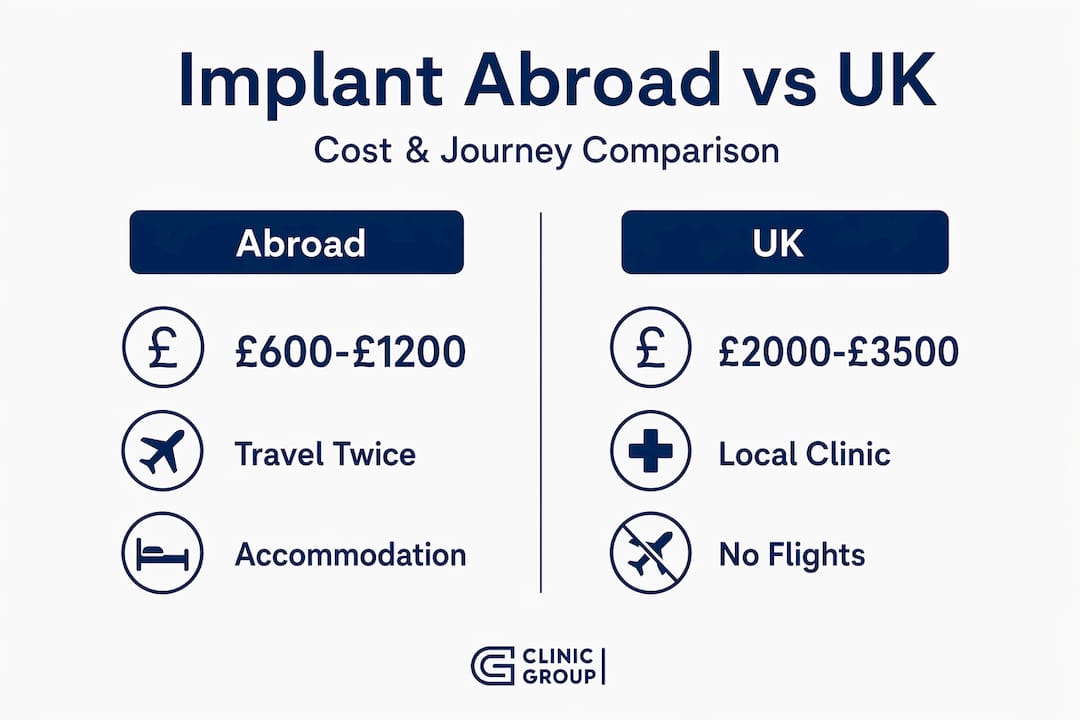
Cost is the primary driver behind dental tourism for implants, and the numbers do justify attention. UK single implant pricing typically runs from £2,000 to £3,500, and can exceed that figure with premium materials or complex bone grafting. For patients needing multiple implants, the total rapidly becomes prohibitive.
How prices compare internationally
| Country | Typical single implant cost (approx.) | Notes |
|---|---|---|
| United Kingdom | £2,000 to £3,500 | NHS rarely covers implants |
| Albania | £600 to £900 | European standards, growing popularity |
| Hungary | £700 to £1,100 | Established dental tourism destination |
| Turkey | £500 to £900 | Large clinic network; quality varies |
| Poland | £650 to £1,000 | Strong reputation for quality and value |
| Dubai | £900 to £1,400 | Premium facilities, regulated environment |
These figures are indicative. Your actual cost depends on several factors:
- Implant brand: Recognised brands such as Straumann, Nobel Biocare, or Osstem carry different price points. Budget clinics sometimes use unverified generic brands, which affects longevity and warranty.
- Crown material: Zirconia crowns are more durable and natural-looking than acrylic or metal-ceramic alternatives, and cost more.
- Bone grafting: If bone volume is insufficient, a graft procedure adds cost and extends the timeline.
- Clinic tier: A clinic operating from a hospital-grade facility with a full anaesthesiology team charges more than a standalone practice, but that overhead often reflects genuine clinical investment.
You also need to factor in flights, accommodation, and any incidental travel costs, typically £300 to £600 for a European destination per trip. Even accounting for two trips, the total for most patients remains considerably below UK pricing.
Pro Tip: When comparing quotes from overseas clinics, ask for an itemised breakdown that lists implant brand, crown material, any additional procedures such as bone grafting, and what aftercare is included. This makes genuine comparisons possible rather than comparing a headline number against a comprehensive package.
For a clear explanation of how dental pricing works and what is typically included in quotes, it helps to understand benchmark structures before approaching clinics.
Choosing a safe clinic abroad
This is where many patients underinvest their attention, and where the consequences of a wrong choice are most significant. The good news is that reputable clinics abroad are genuinely identifiable if you know what to look for.
Accreditation: what it means and what it does not
JCI accreditation and ISO certification confirm that a clinic has documented quality management systems and governance frameworks in place. They do not guarantee the clinical outcome of your specific procedure. Think of accreditation as a sign that a clinic takes process seriously, not as a warranty on your implant.
ISO 9001 certification covers general quality processes. JCI accreditation is more demanding and specific to healthcare settings. Both are worth seeking, but neither removes the need for your own due diligence.
What to check before you commit
- Implant brand documentation: Reputable clinics provide an implant passport, serial number records, and a signed warranty in English. Serial number verification through the manufacturer’s portal is a step few guides mention, but it confirms authenticity.
- Surgeon credentials: Ask for the lead surgeon’s qualifications, years of implant experience, and professional registration details. Board-certified specialists should be willing to share this.
- Digital diagnostic equipment: CBCT scanning (cone-beam computed tomography) is the standard for implant planning. Clinics relying only on basic X-rays are working with incomplete information.
- English-language records: All treatment records, prescriptions, and post-operative instructions should be provided in English. This is non-negotiable for continuity of care at home.
- Transparent pricing: Written itemised quotes before any deposit is paid.
Red flags worth walking away from: vague or verbal warranties with no documentation, refusal to name the implant brand before booking, pressure to commit without a formal consultation, and no named surgeon assigned to your case.
Always check clinic reviews from verified patients before proceeding, and consider researching clinic credentials independently through professional regulatory bodies.
Aftercare: the part most patients underestimate
The surgery is only one part of a successful implant outcome. What happens in the months after you return home carries at least equal weight. This is where many patients who chose the cheapest available option run into trouble.
Remedial treatment in the UK following complications from overseas dental work averages between £500 and £5,000 per case. Those are not exceptional outliers. They represent a pattern that emerges when aftercare is either absent or entirely delegated to a clinic you may never return to.
Key aftercare considerations include:
- The 6-month review: A structured aftercare pathway including a 6-month review with a UK-registered clinician is the strongest predictor of long-term implant success. Arrange this before you travel, not after.
- Implant traceability at home: Without documented implant traceability, UK dentists managing complications often cannot source compatible replacement components locally. You may need to return abroad for remedial work.
- Hybrid aftercare models: Some clinics and platforms now coordinate with UK-based dental partners to provide post-treatment reviews. This significantly reduces the gap in care that occurs between your final overseas visit and a problem arising months later.
- Warranty enforcement: A warranty is only useful if it is enforceable. Ask how warranty claims are processed if you are back in the UK and whether the overseas clinic has a formal mechanism for handling them.
- Document storage: Keep your implant passport, serial number certificates, treatment records, and imaging files in one accessible place. Future UK dentists will need this information.
Full-arch implant rehabilitations carry specific long-term considerations. Research shows that full-arch prosthesis survival reaches approximately 80% at five years and 60% at ten years, with technical complications arising in virtually all cases by the sixth year. Realistic budgeting for ongoing maintenance is part of responsible planning for complex cases.
How to plan your dental implant trip
Once you have identified a credible clinic, the logistics of organising treatment abroad are more straightforward than many patients expect. Scheduling medical appointments abroad follows a clear process when you work with a platform that manages the coordination for you.
A practical step-by-step approach:
- Initial consultation (remote): Share X-rays, photographs, and a written summary of your dental history with the clinic. Receive a written treatment plan and itemised quote in return.
- Clinic verification: Confirm accreditation, surgeon credentials, implant brand, and aftercare provisions before paying any deposit.
- First trip booking: Schedule 3 to 5 days for consultation, CBCT scanning, and surgery. Travel after your procedure date is confirmed in writing, with your surgeon named.
- Post-surgery period: Follow the clinic’s written recovery instructions. Arrange your 6-month UK review with a local dentist, providing them with your implant documentation.
- Second trip booking: Approximately 3 to 6 months after surgery, return for crown fitting and final review. Allow 5 to 7 days to accommodate any adjustments.
- Post-treatment: Store all records securely. Attend your UK follow-up appointment and report any issues to both your UK dentist and the overseas clinic’s aftercare contact.
Travel coordination, partner hotels, and airport transfers can all be managed through a medical tourism platform, removing the logistical burden and reducing the risk of miscommunication at each stage.
My perspective on getting implants abroad
From everything I have seen in how patients approach dental care internationally, the biggest mistake is treating this as purely a price decision. Patients who focus only on finding the lowest quote often end up with the highest total cost once UK remedial care is factored in.
What I have found actually separates successful outcomes from difficult ones is not the country chosen. It is the quality of documentation patients leave with and the aftercare arrangement they have in place before they fly home. The implant brand matters. The serial number matters. The name of your surgeon and their willingness to be accountable after the procedure matters enormously.
I have also noticed that the hybrid aftercare model, where the overseas clinic coordinates with a UK partner practice for the 6-month review, is genuinely changing patient confidence in this space. It removes the isolation of returning home with a healing implant and no local clinical contact.
My honest advice: treat the cheapest quote as a starting point for questions, not a reason to book. Verified clinics with transparent processes exist at genuinely affordable prices. The goal is not to avoid going abroad. It is to go abroad well-prepared.
— Clinic
Plan your treatment with Clinicgroup
Clinicgroup connects patients with verified dental clinics in Albania and Dubai, where board-certified specialists use recognised implant brands and operate to European standards of care. Every patient receives transparent, itemised pricing before any commitment is made, and full documentation including implant brand certificates and serial numbers is provided as standard.
The Clinicgroup network covers the full patient journey. That includes clinic matching based on your specific case, travel coordination, partner hotel arrangements, and structured aftercare support. Explore available dental treatments or get in touch with the Clinicgroup team for a personalised clinic recommendation tailored to your needs and budget.
FAQ
What is a dental implant abroad?
A dental implant abroad refers to the procedure of having a titanium implant post, abutment, and crown placed by an overseas dental specialist, typically at significantly lower cost than in the UK while using comparable clinical techniques and materials.
How many trips do I need for dental implants overseas?
Most patients require two trips. The first covers consultation, scanning, and surgical placement, lasting 3 to 5 days. The second, scheduled 3 to 6 months later, covers crown fitting and a final review over 5 to 7 days.
How much can I save with affordable dental implants abroad?
UK single implant costs typically range from £2,000 to £3,500. Popular destinations such as Albania, Hungary, and Poland offer comparable treatment from around £600 to £1,100, representing savings of over 60% even after travel costs.
Is it safe to get dental implants overseas?
Treatment at accredited clinics with board-certified specialists, documented implant brands, and structured aftercare pathways is considered safe for suitable candidates. The key is thorough clinic verification and having a clear aftercare plan in place before you travel.
What documents should I receive after treatment abroad?
You should receive an implant passport with serial number details, a signed warranty in English, pre- and post-treatment imaging, a full treatment record, and written post-operative care instructions. These documents are critical for any future UK dental care or warranty claims.