A BBL recovery is measured in months, not days. The BBL recovery timeline typically spans 3 to 6 months, while some restrictions can continue for several weeks. Healing progresses in stages, so returning to familiar routines does not necessarily mean recovery is complete.
Planning ahead can make BBL recovery easier to manage. Think about which parts of daily life may need adjustment, from getting dressed and preparing meals to asking for help with routine tasks. Recovery can also feel uncertain while your body changes and usual activities are limited. Knowing what to expect can help you prepare questions and make practical plans before surgery.
The following sections explain how compression garments, sitting arrangements and a gradual return to activity fit into recovery. They also cover warning signs that need prompt attention and ways to support emotional wellbeing while healing. Use this information to understand the stages ahead and have focused conversations with your surgical team about your care plan.
Key Takeaways
- Follow the prescribed compression garment schedule, including guidance on when to remove it for washing or bathing.
- Plan for sitting restrictions and use pressure-off seating as directed to reduce pressure on healing tissue.
- Return to work, driving and exercise gradually; the type of activity and your recovery affect the timing.
- Contact your surgical team the same day for a temperature of 38°C or above; call 999 for chest pain, sudden breathlessness or coughing up blood.
- Recovery can feel emotionally demanding as well as physical, so know what support is available and raise concerns with your care team.
How Long Do You Wear a Compression Garment After a BBL?
Compression garments are generally worn for up to 8 weeks after a Brazilian butt lift, following the surgeon’s schedule. Final results can take up to 6 months to show fully, as swelling settles and transferred fat changes during healing.
Using a compression garment
A compression garment is close-fitting support worn over treated areas after surgery. During the first week, patients are advised to wear it 24/7, except when showering. It can help manage swelling and support the treated areas as they heal, but it must fit properly and be worn as directed.
After the first week, continue according to the surgeon’s instructions, which may extend garment use for up to 8 weeks. Don’t change the schedule or tighten the garment to alter its effect. A garment that causes unusual discomfort, rubbing or pressure needs attention from the surgical team, especially near incision sites.
Garment use also needs to work alongside sitting restrictions. Avoiding direct pressure on the buttocks can remain part of recovery for up to 8 weeks. A garment doesn’t make prolonged sitting safe; follow separate instructions for sitting, walking and resting, including any limits on time spent on the toilet.
Drainage from incision sites can occur early after surgery. Fluid leakage usually stops after 48-72 hours. Keep the garment and wound-care routine consistent with the surgeon’s directions, and avoid placing garment edges or seams over incisions in ways that cause rubbing. If leakage continues or changes, contact the surgical team.
Garments and everyday clothing
Everyday clothing is worn over or instead of the post-operative garment, according to your care plan. Loose, comfortable clothing is advised for up to 4 weeks after a BBL. It can reduce friction against the garment and make dressing easier without pressing firmly on the buttocks.
Choose clothing that fits comfortably over the garment without rolling, pinching or pulling it out of place. Tight waistbands or seams that dig into your skin may press on areas where the garment should lie smoothly. Check the fit after dressing, and adjust your clothing rather than folding or altering the garment.
Plan clothing changes around your washing and bathing instructions. During the first week, remove the garment for showering, then put it back on as directed. Have clean clothing ready and avoid leaving the garment off longer than necessary. The recommended wear schedule does not replace wound care.
As swelling changes, the garment’s fit may feel different. Don’t compensate by adding extra compression or switching to a smaller size without instructions. Follow the agreed schedule through recovery. Final results may take up to 6 months to show fully, so allow time for the shape to develop.
Gradual return to exercise and daily activities
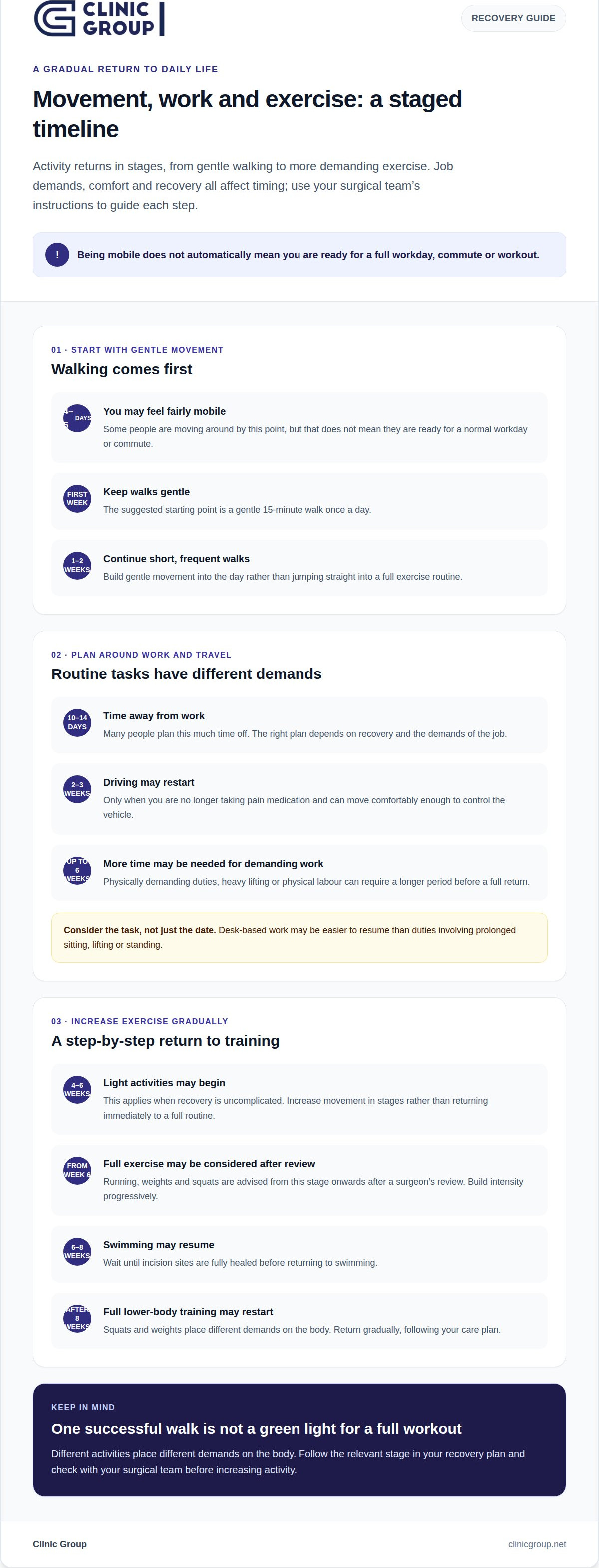
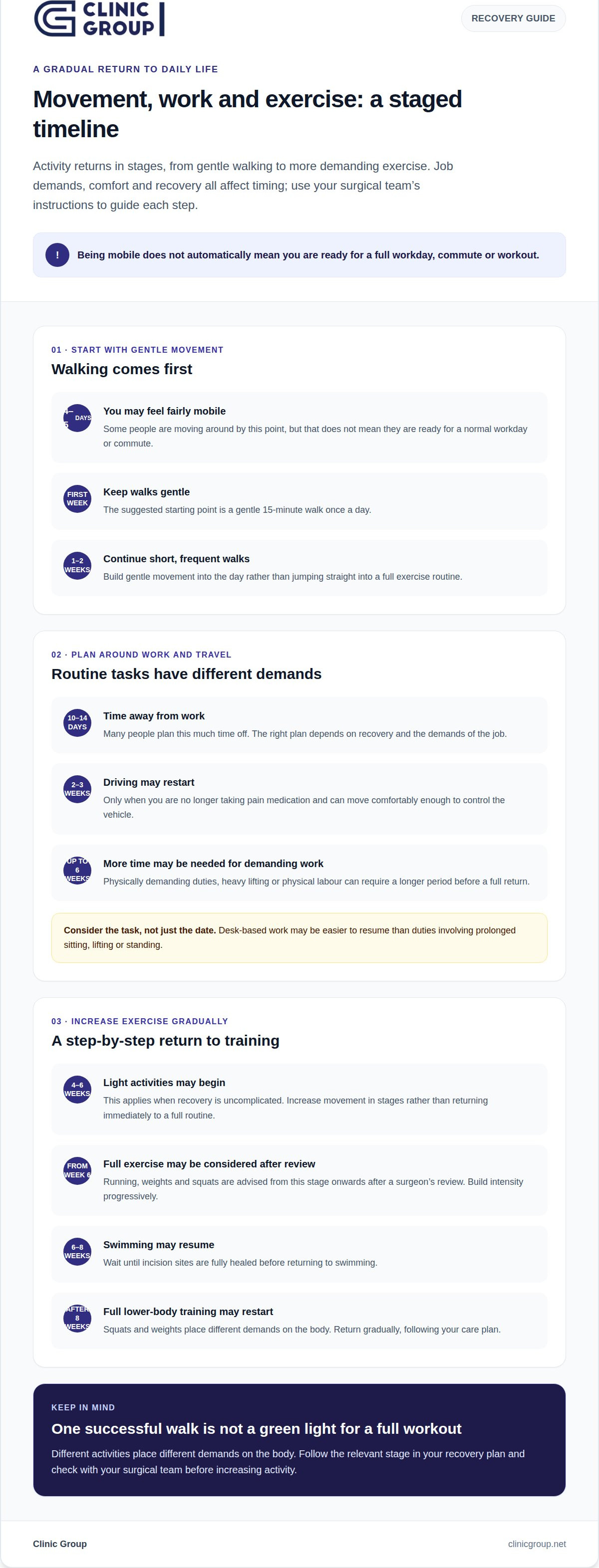
After a Brazilian butt lift, activity generally resumes in stages, beginning with gentle walking and progressing towards exercise. The pace matters: healing tissue and transferred fat need time before the buttocks can tolerate heavier loads and repeated movement.
Returning to work and driving
Returning to work and driving means restarting routine tasks when they no longer interfere with healing or safe movement. Many people plan to take 10-14 days off work after surgery, although job demands and recovery affect the plan.
Desk-based work may be easier to resume than duties involving prolonged sitting, lifting or standing. Physically demanding work can require up to 6 weeks before full duties resume. Driving typically restarts after 2-3 weeks, provided you’re no longer taking pain medication and can move comfortably to control the vehicle.
Short, frequent walks during the first 1 to 2 weeks help maintain gentle activity. Some patients are fairly mobile within 4-5 days, but that doesn’t mean they’re ready for a normal workday or commute.
Resuming exercise gradually
Resuming exercise gradually means increasing movement in stages rather than returning immediately to a full training routine. During the first week, gentle walking for 15 minutes once a day is advised; short, frequent walks continue through the first 1 to 2 weeks.
Light activities can begin within 4-6 weeks when recovery is uncomplicated. Full exercise, including running, weights and squats, is advised from week six onwards after a surgeon’s review. These activities place different demands on the body, so build intensity progressively rather than treating one successful walk as readiness for a full workout.
Swimming is typically resumed after 6-8 weeks, once incisions are fully healed. This timing helps avoid exposing healing incision sites before they have closed.
Exercise and lifting restrictions
Restrictions on exercise and lifting help limit strain while your body heals and the transferred fat settles. Household lifting, gym weights and lower-body training place different loads on the buttocks, so don’t treat them as interchangeable.
Heavy lifting and physical labour may require up to 6 weeks before a full return to work. Full lower-body exercise, including squats and weights, can restart after 8 weeks, building back gradually. The distinction between returning to general exercise from week six and full lower-body training after 8 weeks helps prevent a rushed return.
Walking remains the practical starting activity, while intense training waits for the relevant recovery stage. If you’re planning treatment abroad, explore Clinic Group’s treatment information as part of planning your care and recovery arrangements.
Sitting restrictions and pressure-off seating
After a Brazilian butt lift, sitting arrangements are adjusted to limit direct pressure on the buttocks while the transferred fat heals. Returning to ordinary sitting is gradual, and the pillow, sitting duration and position should all follow one plan.
Resuming sitting with a BBL pillow
A BBL pillow supports your thighs so your buttocks sit beyond the seat rather than directly against it. It can help when sitting is necessary, but it does not remove the need to follow pressure restrictions or limit how long you stay seated.
Use the pillow for the first 3 weeks as directed. During weeks 3-4, guidance advises using it when sitting longer than 20-30 minutes. Place it beneath the thighs, not beneath the buttocks, and check that your position hasn’t shifted during a car journey or at a desk.
Consider each sitting task separately. A meal, work call and journey involve different periods of sitting; using a pillow does not make those periods unlimited. Stand or walk when appropriate, and choose a seat that lets you keep pressure off the treated area.
Sitting restrictions and cushions
Sitting restrictions control when direct pressure can return and how long a sitting period lasts. Direct pressure is commonly avoided for at least two weeks, while modified or restricted sitting often continues for 2-6 weeks.
During weeks 4-6, some surgeons may allow soft sitting on a cushioned surface for 15-20 minutes at a time. This is a limited step, not a signal to sit normally for longer. A cushion changes the surface, but the duration still matters; keep the interval within the advised limit.
Normal sitting can return gradually by 6-8 weeks. After stopping the BBL pillow at 3 weeks, guidance recommends increasing sitting intervals by 15-20 minutes each day. Treat that increase as a gradual progression, not permission to jump straight to a long journey or extended desk session. Follow the schedule provided for your recovery.
Sitting and sleeping positions
Positioning also matters when resting or sleeping, because lying flat on the back places pressure on the buttocks. Many surgeons advise avoiding back sleeping for 4-8 weeks; most advise against lying flat until after 6 weeks.
Side sleeping or lying tilted forwards towards the tummy can help keep weight away from the buttocks. For the first 6 weeks after a Petite BBL or XL BBL, guidance describes a side-sprawl position tilted forwards. Use pillows to maintain the position, and arrange them so you aren’t lying directly on the treated area.
Check your position before settling at bedtime and when you wake. Apply the same principle during the day on recliners and sofas: notice where your weight rests and adjust to avoid direct pressure. Follow the operating team’s instructions if they provide a different positioning plan.
Symptoms requiring urgent contact with a surgeon
Some swelling, bruising and discomfort follow Brazilian butt lift surgery, but a few warning signs need immediate attention. Contact the surgical team the same day for a temperature of 38°C or above. In the UK, call 999 for chest pain, sudden breathlessness or coughing up blood. Don’t wait for a routine appointment if these symptoms occur.
For surgery in the UK, consider the surgeon’s relevant specialist training and experience, the operating facility, and the arrangements for follow-up and urgent contact. Ask how aftercare is managed, especially if you’ll recover away from the operating clinic. These details help you understand whom to contact if a concern arises.
After fat transfer, follow the surgical team’s aftercare instructions to support healing: avoid pressure on the buttocks, wear the compression garment as directed, and return to activity gradually. Avoid smoking for at least 4 weeks after surgery. These steps support recovery, but they can’t guarantee how much transferred fat will survive.
Which symptoms need prompt attention?
Swelling and bruising typically peak 5-7 days after surgery. Most discomfort, swelling and bruising resolve within 2-4 weeks. A change that worsens rather than improves deserves attention, especially if it affects movement or prevents you from following your care plan.
Measure your temperature if you feel feverish. At 38°C or above, contact the surgical team that day and explain when the fever began. For chest pain, sudden breathlessness or coughing up blood, call 999 immediately. Don’t try to manage these symptoms by resting, adjusting a BBL pillow or waiting to see whether they pass.
When reporting a concern, explain what has changed, when it began and whether it is getting worse. Keep the surgical team’s contact details and written instructions accessible, including while travelling. This can help you communicate clearly when you need prompt advice.
How can recovery affect mood and travel?
Recovery can affect your mood as well as your comfort. Bruising, swelling and temporary changes to daily routines may feel difficult, particularly while your appearance is changing. If low mood or anxiety disrupts your sleep or ordinary activities, speak to someone you trust and tell your care team.
Driving and flying require separate planning. Driving typically resumes after 2-3 weeks if you’re off pain medication. Air travel is generally possible by 6 weeks after surgery. Plan around follow-up arrangements and sitting restrictions, and don’t assume that being mobile means a long journey is suitable.
If you’re away from the operating clinic, keep your aftercare plan and contact details with you. Explain where you are, when the surgery took place and what symptoms have changed. For urgent symptoms, use the emergency number rather than waiting for a reply from the clinic.
Emotional wellbeing during recovery
Emotional recovery deserves attention alongside swelling, bruising and physical healing after a Brazilian butt lift. The first 5-7 days can bring visible bruising and swelling, while discomfort and restricted movement may affect sleep, privacy and usual routines.
Some patients feel uncertain when their appearance changes from day to day. Swelling can make early results difficult to judge, and the final shape takes longer to emerge. Medical specialists note that final Brazilian butt lift results can take up to 6 months to show fully. Avoid using the first few weeks as a final assessment of the procedure.
Recovery can feel demanding when familiar activities need adjusting. Sitting restrictions may affect meals, work and travel, while compression garments and limited exercise can change how you feel in your clothes. Naming a specific difficulty, such as trouble sleeping comfortably or needing help with household tasks, makes it easier to ask for practical support.
Build a simple daily routine around the surgical team’s instructions. Keep written guidance in one place, plan gentle walks as advised, and arrange help with lifting or chores. A trusted friend could help with meals or errands, and regular check-ins can offer company without requiring you to explain everything repeatedly.
Emotions can fluctuate while your activity is limited and your body heals. If worry builds, pause before comparing photographs or seeking reassurance in online comments. Instead, note what has changed, when it began and whether it affects sleep or daily life. Share those details with the surgical team at a planned follow-up.
Contact the surgical team about persistent distress, worsening discomfort or concerns that interfere with following aftercare instructions. A temperature of 38°C or above requires same-day contact; chest pain, sudden breathlessness or coughing up blood requires a call to 999. Emotional strain should not distract from these urgent physical warning signs.
If liposuction is part of your procedure, you may notice changes in more than one treated area. Keep expectations grounded in the recovery stages rather than expecting every area to heal at the same pace. Focus on manageable milestones, such as completing a walk or following that day’s care plan.
Ask for support early. A clear conversation with someone you trust or with the surgical team can turn a general worry into a practical question about rest, discomfort or instructions. You don’t need to wait until a concern feels severe before raising it.
Clinic Group
Clinic Group helps patients explore plastic surgery provider listings when considering treatment abroad and planning the care around it. Its directory can help you understand available options and identify clinics within its verified partner network, which is based almost entirely in Tirana, Albania, with a small number of partners in Dubai, UAE.
Recovery planning should include clear instructions for follow-up, sitting restrictions and urgent contact after surgery. Use this guide to prepare questions about aftercare, then discuss your recovery plan with the treating clinical team. Clinic Group is a directory and referral platform, not the clinic providing surgery or post-operative medical care.
If you’re exploring treatment options abroad, contact Clinic Group to discuss the information you need.
Plan your next step with confidence
Use the BBL recovery timeline as a planning framework, not a measure of personal progress. Before making decisions, consider what support and practical arrangements would help you manage recovery alongside everyday commitments. A clear plan can make it easier to discuss your needs and identify unanswered questions.
Keep your questions together for the treating team, particularly those affecting your care arrangements or confidence about proceeding. You can also discuss what information you need before deciding. Take time to feel informed and comfortable with your next step.
Thoughtful preparation can help you approach recovery with greater clarity and confidence.
Frequently Asked Questions
How Long Is BBL Recovery?
Full recovery after a Brazilian butt lift typically takes 3 to 6 months, although everyday activities return gradually before then. The BBL recovery timeline depends on healing, the areas treated and how quickly restrictions can be eased. Think of recovery in stages: early wound care, gradual return to routine, then continued changes in swelling and shape. Follow the operating team’s instructions rather than using appearance alone to judge readiness.
How Should I Sleep After a BBL?
Sleep on your side or front rather than putting direct pressure on your treated buttocks. A body pillow may support your position and help prevent you rolling onto your back while asleep. Arrange pillows to support your torso and legs without pressing on incisions. If you wake on your back, reposition yourself. Follow the operating team’s specific advice about sleep position and when to resume sleeping on your back.
When Can I Drive or Fly After a BBL?
Driving may usually resume after 2-3 weeks if you’re no longer taking pain medication and can move safely to control the vehicle. Air travel may be possible by 6 weeks after surgery. Before travelling, consider sitting restrictions, access to follow-up and the ability to respond to new symptoms. Plan the journey around your clinical team’s advice, rather than treating a flight date as proof that recovery is complete.
Do I really need to wear the faja for 6 weeks?
Not every patient has the same garment schedule, and “faja” refers to a compression garment. Post-operative instructions commonly advise wearing compression for up to 8 weeks, with the first week worn 24/7 except when showering. The fit matters too: it should support the treated area without causing painful pressure or rubbing. Don’t stop at 6 weeks or extend wear based on online advice; use the schedule given for your operation.
How long can you not sit after BBL surgery?
Direct pressure on the buttocks is commonly restricted for at least two weeks, and sitting may need modification for longer. Some patients gradually resume normal sitting by 6-8 weeks. A BBL pillow can shift pressure towards the thighs, but it doesn’t make prolonged sitting suitable. For example, plan breaks during a journey and follow the recommended sitting intervals instead of remaining seated continuously.
How much fat typically survives the transfer?
About 60-80% of transferred fat is commonly estimated to survive after the grafts settle, but the retained amount varies between patients. The body absorbs some transferred fat as healing progresses, so early fullness doesn’t necessarily reflect the lasting result. Changes in shape take time to assess; avoid treating an early photograph or temporary swelling as a reliable measure of how much fat has survived.
Is Lymphatic Massage Needed After a BBL?
Lymphatic drainage massage is not automatically required for every patient; it depends on the post-operative plan. Some surgeons may approve gentle massage within a few days, while others recommend a different approach. Massage can put pressure on healing tissue, so don’t book or begin sessions without the surgical team’s approval. If they approve it, follow their directions on technique and frequency, and stop to report pain or unexpected changes.
Is Recovery Different After a Mini BBL, Skinny BBL or 360 Lipo and BBL?
Recovery can differ because the areas treated, extent of liposuction and amount of fat transfer affect what needs to heal. A “mini” or “skinny” label alone doesn’t establish shorter restrictions, and adding 360 liposuction may involve additional treated areas. Your written post-operative plan should specify how sitting, garments, wound care and activity apply to the procedures performed. Use that plan rather than comparing recovery with someone else’s experience.

Article by
Clinic Group Editorial Team
The Clinic Group editorial team publishes clear, practical guides for UK and EU patients researching medical travel — from dental implants and hair transplants to plastic surgery and eye care — with a focus on verified clinics, transparent “from” pricing, and safe planning.
Disclaimer
This article is for general information only and is not medical advice, diagnosis, or a substitute for an in-person consultation with a qualified clinician. Treatment suitability, risks, timelines, and costs vary by individual. Clinic Group connects patients with independent clinics; those clinics are responsible for clinical care. Always verify credentials, obtain a written treatment plan and itemised quote, and confirm aftercare arrangements and travel insurance cover (elective procedures are often excluded) before booking. Outcomes cannot be guaranteed.